CCS2 vs. NACS vs. GB/T: A Distributor’s Guide to Connector Standards in 2026
Home / Blog / Guidelines / CCS2 vs. NACS vs. GB/T: A Distributor’s Guide to Connector Standards in 2026
25 May, 2026
CCS2 vs NACS
EV charger distributor guide
EV connector types 2026
GB/T connector
If you're sourcing EV chargers in 2026, the connector decision is largely settled by geography: CCS2 for Europe and most of the Middle East, NACS (SAE J3400) for North America, and GB/T for mainland China. The hard part isn't picking a standard — it's stocking the right mix, anticipating retrofits, and understanding where the corners of each market still demand legacy or dual-port hardware. This guide walks distributors through what's changed, what hasn't, and where the real margin opportunities sit.
The Short Answer: Geography Still Decides the Plug
Despite years of speculation about a single global standard, 2026 looks remarkably tidy. NACS has consolidated North America, CCS2 owns Europe, and GB/T continues unchallenged inside China. Trying to fight the regional default is a losing game — your customers' vehicles already have a plug, and they aren't switching.
What has changed is the within-region complexity. North American sites now routinely need both NACS and CCS1 outlets on the same dispenser. European fleet depots are starting to specify MCS for heavy trucks alongside CCS2. And in China, the ChaoJi (GB/T 2.0) rollout is quietly reshaping the high-power DC segment.
For distributors, this means connector strategy = inventory strategy. Stock for the dominant standard in each market, but plan retrofit cables and adapters as a recurring revenue stream.
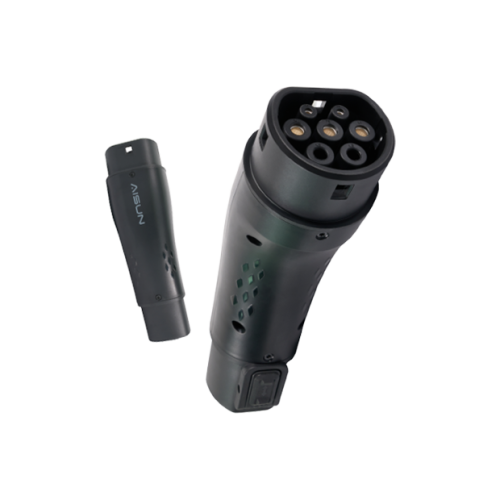
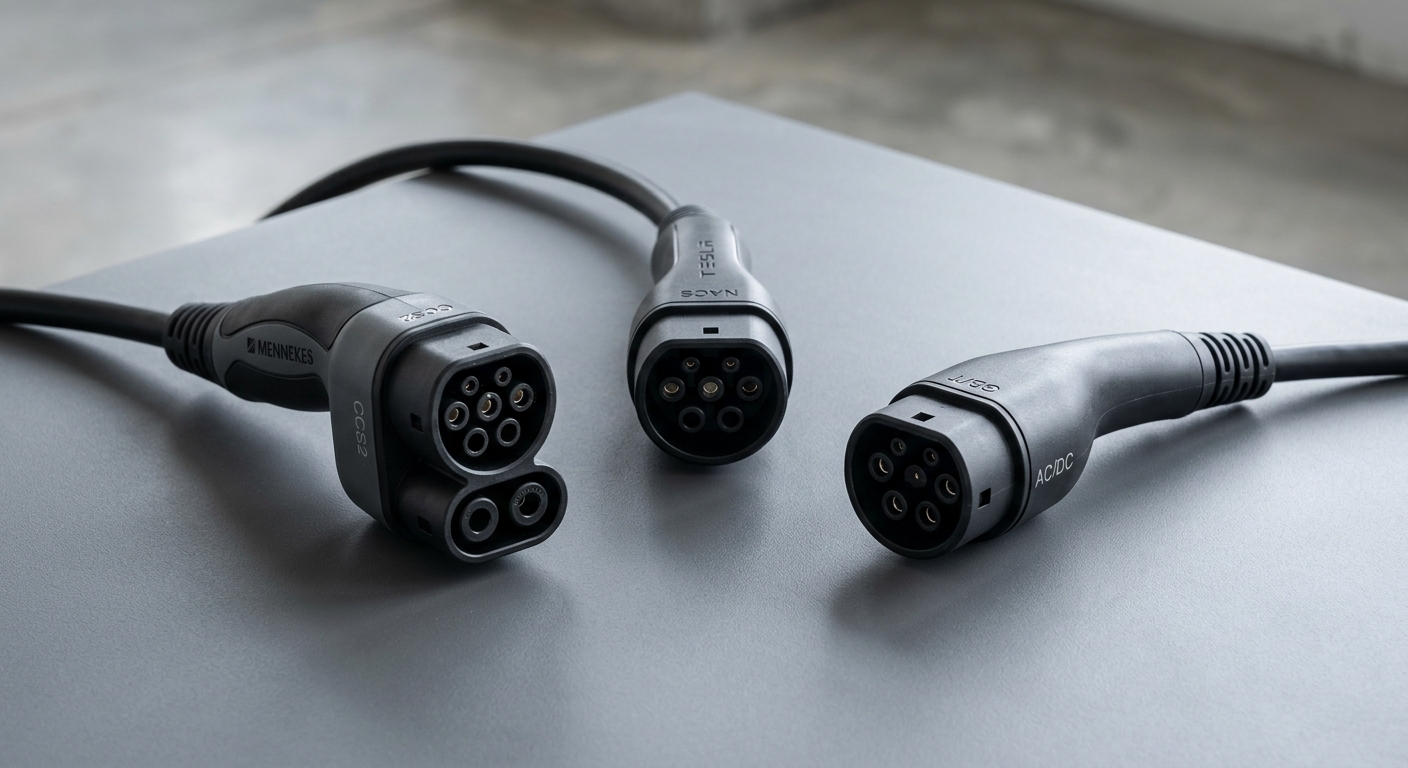
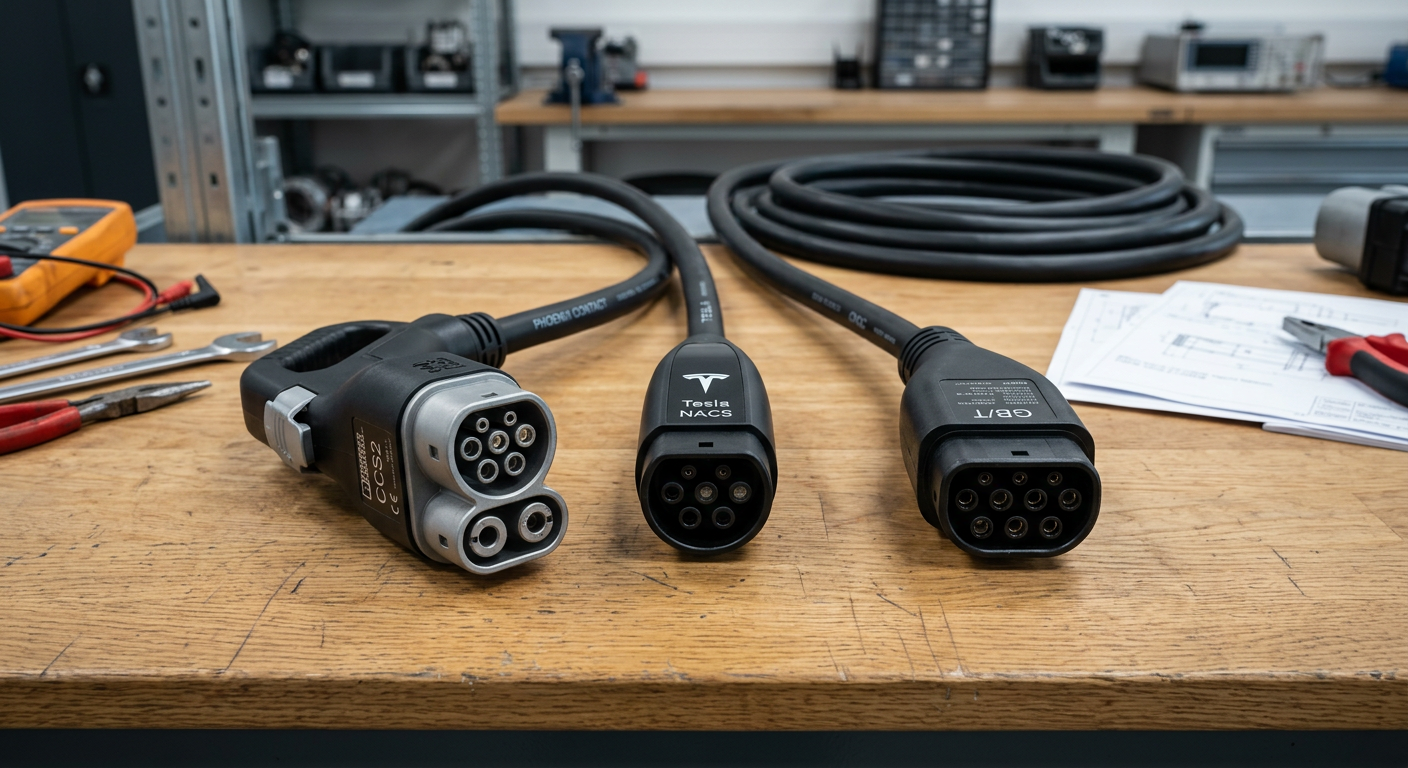
CCS2 NACS and GB/T connectors laid out for distributor comparison
CCS2: The European Workhorse
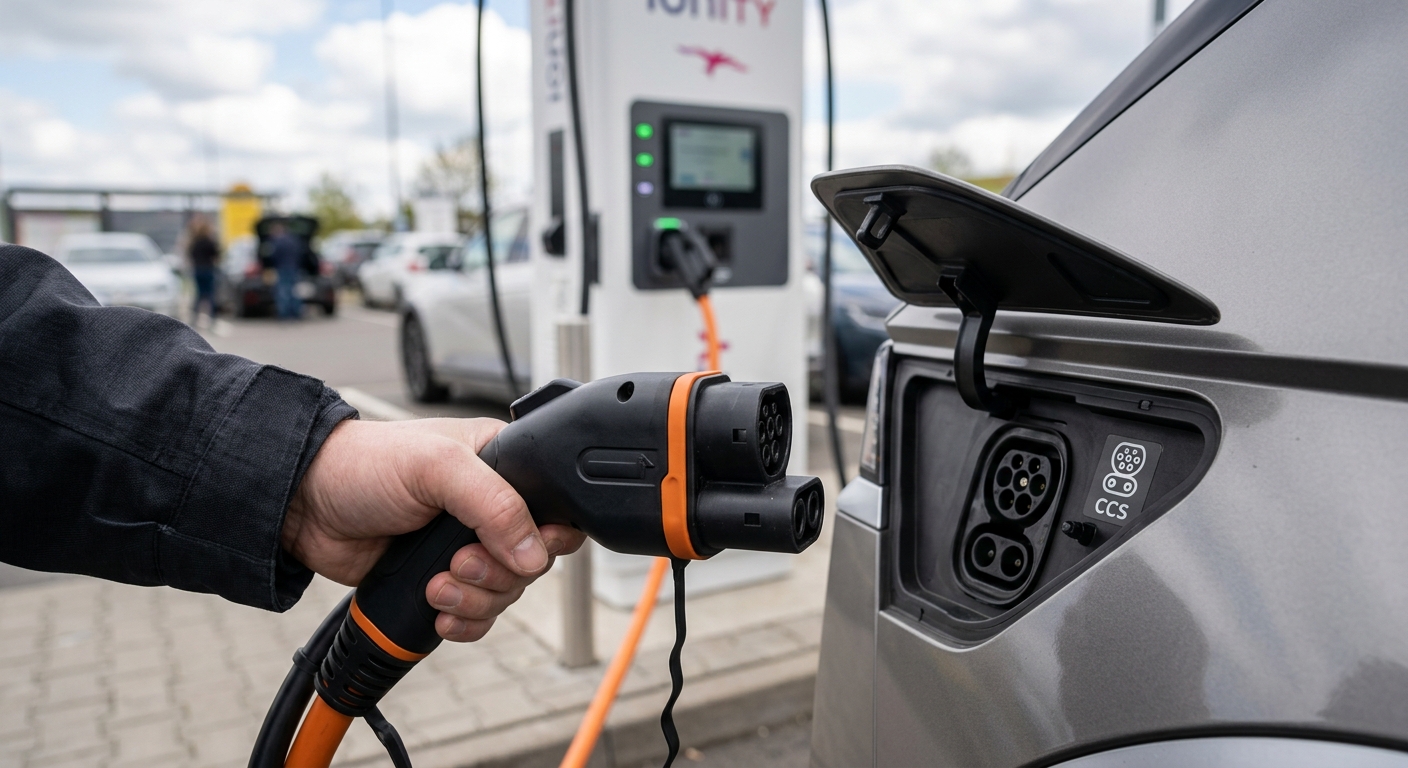
CCS2 (Combined Charging System Type 2) is the de facto standard across the EU, UK, Australia, India, and most of the Middle East. It pairs a Type 2 AC connector with two additional DC pins, so a single inlet handles everything from a 7 kW home charger to a 400 kW highway HPC.
Real-world power ceiling
On paper, CCS2 supports up to 500 A and 1000 V. In the field, most production hardware tops out around 400 kW with liquid-cooled cables. The ISO 15118 communication layer enables Plug & Charge, ISO 15118-20 bidirectional support, and smart authentication — features your commercial customers are starting to demand by name.
Where CCS2 is still growing
India's PSU tenders, Gulf state highway corridors, and African urban deployments are all CCS2-first. If you're distributing into these regions, CCS2 DC fast chargers in the 60–180 kW band remain the highest-volume SKU. For context, a regional integrator we supply in Eastern Europe moved over 300 units of 120 kW CCS2 dispensers in 2025 — almost all of them destined for fleet yards and municipal sites where 22 kW AC simply couldn't keep up with daily turnover.
CCS2 connector at a European DC fast charging station
NACS (SAE J3400): The North American Reset
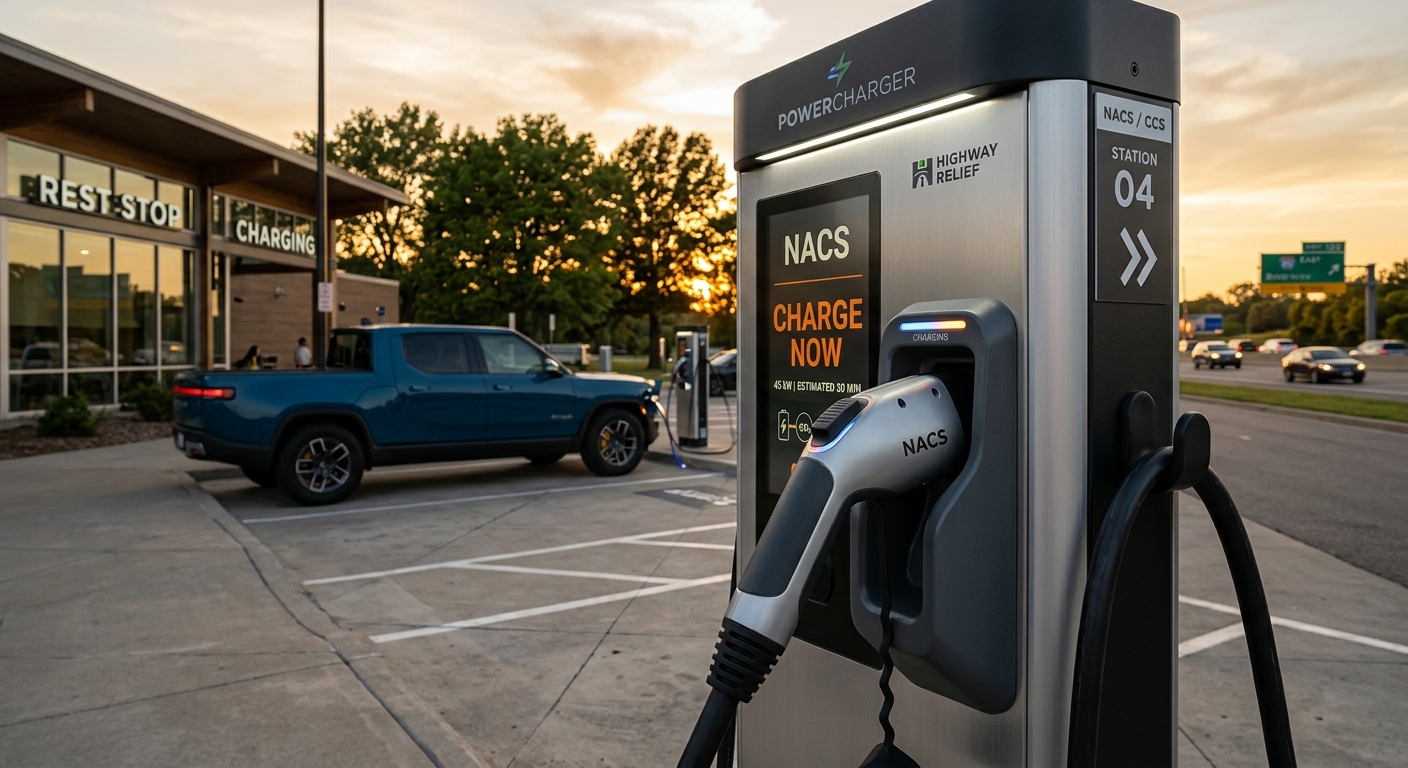
NACS is no longer a Tesla-only connector. As of 2026, every major OEM selling in North America has either shipped vehicles with native NACS ports or supplied adapters. SAE J3400 standardized the mechanical and electrical spec in 2024, and the certification ecosystem caught up through 2025.
Why NACS won the U.S. market
It's smaller, lighter, and combines AC and DC in a single port — which means lower cable weight, easier handling, and a better user experience at curbside. From a manufacturing standpoint, the connector body uses fewer parts than CCS1, which translates into lower BOM cost and fewer warranty incidents on cable assemblies.
What distributors should actually stock
For new deployments in 2026, the safe bet is a dual-port DC dispenser: one NACS cable and one CCS1 cable per dispenser. This keeps the site future-proof for the next 5–7 years while serving the installed base of CCS1 vehicles (which won't disappear overnight). For Level 2 AC stations, NACS-only is increasingly acceptable — most new EVs ship with a CCS1-to-NACS adapter in the trunk.
NACS J3400 connector at a North American charging station
GB/T: China's Standard — and Where ChaoJi Comes In
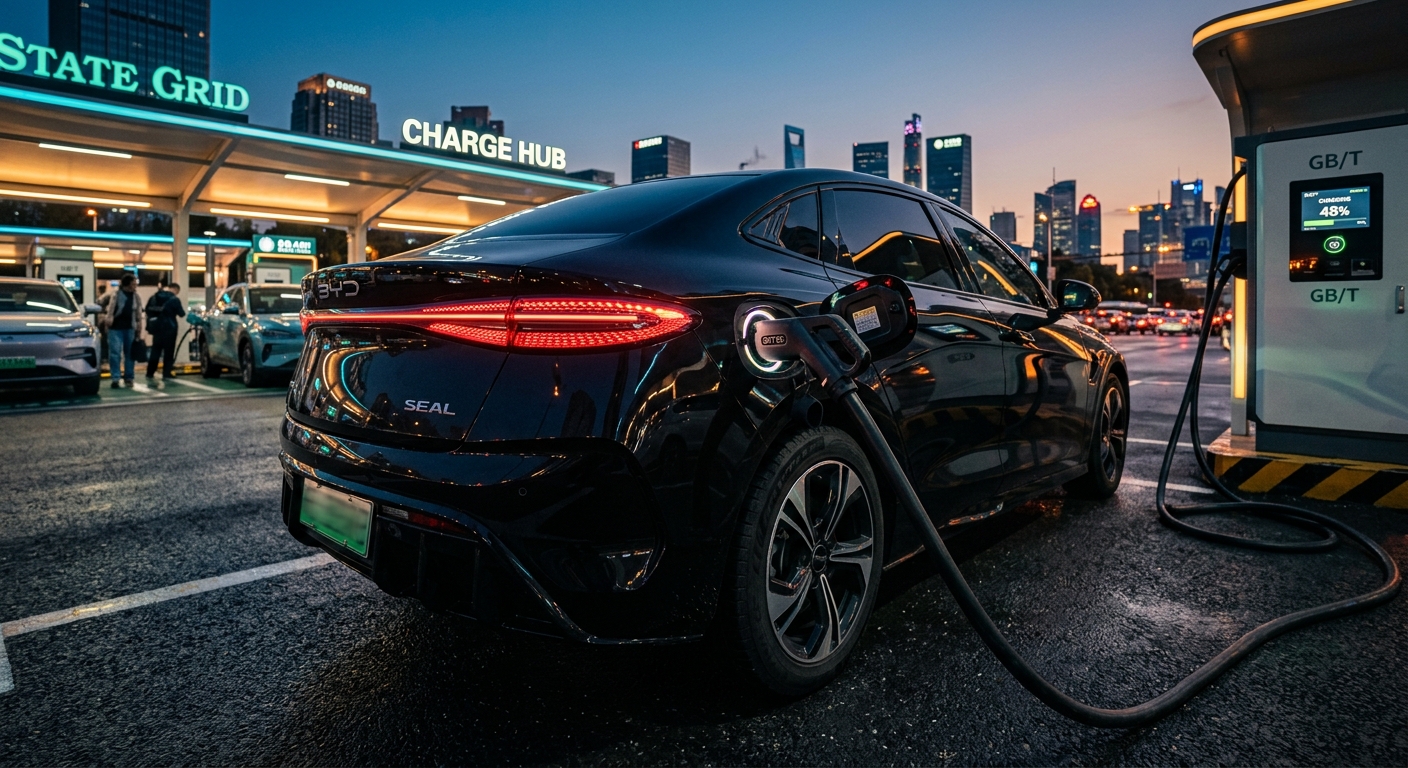
GB/T 20234 is mandatory for any charger sold or operated in mainland China. It uses two physically separate connectors — one for AC (GB/T 20234.2) and one for DC (GB/T 20234.3) — which is the opposite of the CCS/NACS combo philosophy.
The current power envelope
Standard GB/T DC tops out around 250 A and 750–950 V, putting practical maximum power in the 185–250 kW range. That's fine for passenger cars but inadequate for the heavy-duty truck segment, which is why ChaoJi (GB/T 2.0) matters.
ChaoJi in 2026
ChaoJi was co-developed with Japan's CHAdeMO group and supports up to 900 kW with liquid-cooled cables. It's mechanically backward-compatible with GB/T via adapters and is being rolled out across new highway HPC sites, heavy commercial vehicles, and battery-swap-adjacent ultra-fast hubs. If you're supplying into China's commercial truck or e-bus market, ChaoJi-capable hardware is no longer optional.
Export market reality
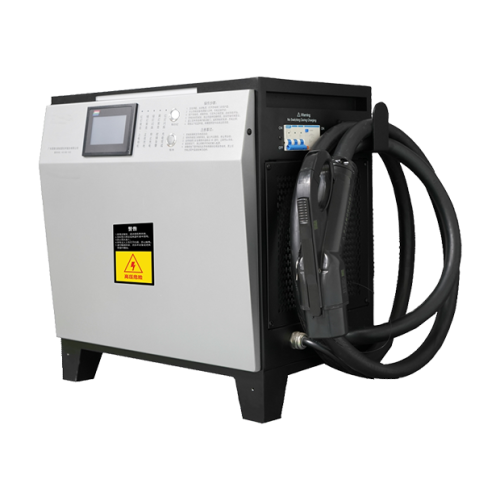
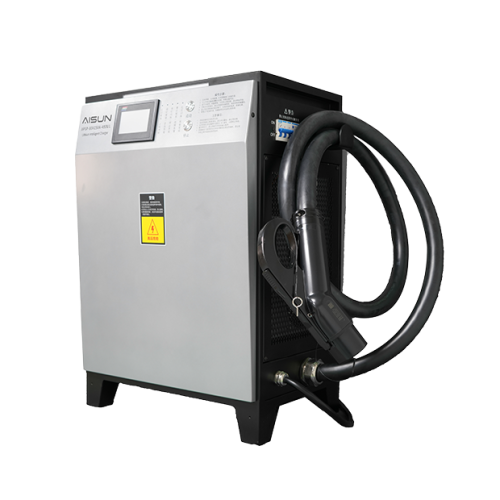
Outside China, GB/T appears mostly in two niches: industrial equipment (some Chinese-made forklifts, AGVs, and mining EVs) and Belt & Road infrastructure projects where the vehicle fleet is China-sourced. For those segments, GB/T DC chargers remain a viable export SKU — particularly in Central Asia, parts of Southeast Asia, and certain African corridors.
GB/T DC charging connector at a Chinese urban charging hub
Connector Comparison at a Glance
Use this table when scoping inventory or quoting projects across multiple regions:
Criteria
CCS2
NACS (SAE J3400)
GB/T
Primary region
Europe, MEA, parts of APAC
North America
China, select APAC
Max DC power (typical)
Up to 400 kW
Up to 500 kW (1 MW planned)
250 kW (ChaoJi up to 900 kW)
Max DC current
500 A liquid-cooled
500–1000 A liquid-cooled
250 A (600 A ChaoJi)
AC + DC in one plug
Yes
Yes
No — separate plugs
Comms protocol
DIN 70121 / ISO 15118
ISO 15118 / J3400
GB/T 27930
Connector size
Large, heavy
Compact, lightweight
Medium
Stocking risk (2026)
Low
Medium — adoption curve
Low
Notice that NACS carries the highest upside in raw spec — but also the most movement in certification and OEM rollout schedules. Hedge accordingly.
AC Side of the Story: Type 1, Type 2, and the Tesla Wall Connector
DC fast charging gets the headlines, but Level 2 AC is where 80% of charging actually happens — and the connector logic differs. In Europe, Type 2 (Mennekes) is universal. In North America, the legacy J1772 (Type 1) installed base is enormous, but new equipment ships with NACS more often than not. In China, GB/T AC handles single- and three-phase up to 7–22 kW.
For workplace, multifamily, and retail sites, we generally recommend distributors carry both single-phase and three-phase Type 2 SKUs for Europe, and a mix of NACS + J1772 for North America. See our breakdown of Type 1 vs Type 2 selection for the detailed decision framework, and our multifamily charging solutions page for typical site configurations.
Industrial Equipment: Why Connector Standards Often Don't Apply
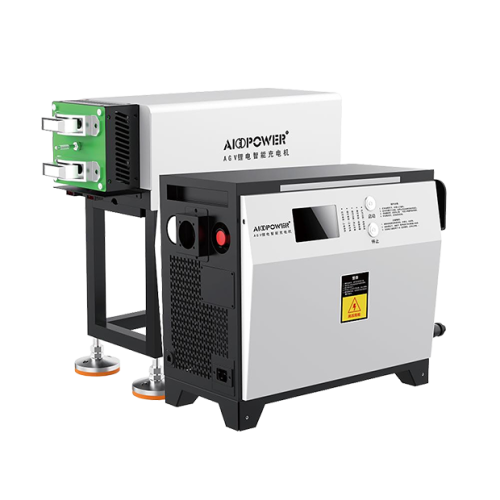
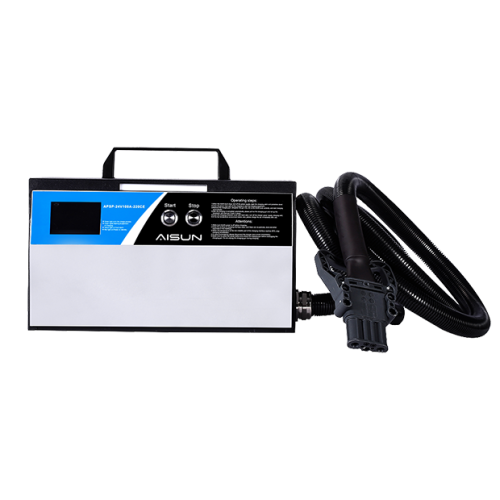
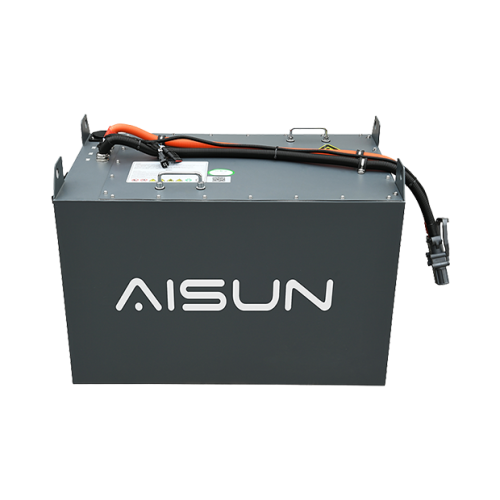
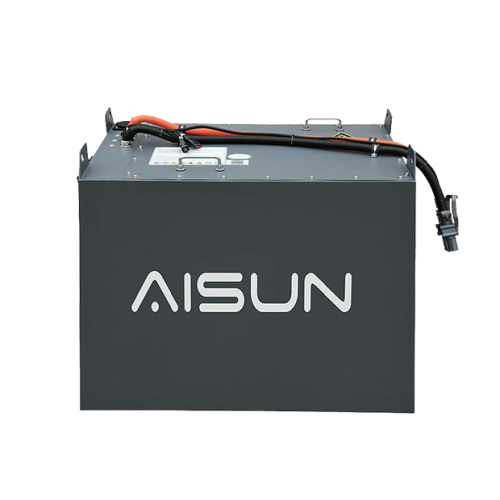
Here's where many distributors get tripped up. Forklifts, AGVs, and mobile robots almost never use CCS2, NACS, or GB/T. Industrial DC charging uses proprietary or semi-standard connectors (Anderson SB series, REMA, custom auto-docking contacts) sized for the specific battery chemistry and duty cycle.
For instance, a logistics customer running 30 Li-ion forklifts in a three-shift warehouse will typically deploy opportunity chargers with Anderson SBX connectors — not anything resembling a passenger EV plug. The voltage, current profile, and BMS communication are completely different.
If you're expanding from passenger EV charging into industrial accounts, brief yourself on forklift battery chargers and AGV charging solutions before quoting — the connector and protocol stack is a different world.
Adapters, Retrofits, and the Coming Cable Aftermarket
The connector transition isn't clean. Through at least 2030, North American sites will need NACS-to-CCS1 adapters, European fleets buying U.S.-built trucks will need NACS-to-CCS2 solutions, and Chinese OEMs exporting to Europe will ship GB/T-to-CCS2 conversion kits with their vehicles.
This creates a steady aftermarket: replacement cable assemblies, dual-port retrofit kits, and certified adapters. Margins on cable-and-connector consumables are typically healthier than on the base charger, and lead times are shorter, making them attractive line items for distributors. A practical move: when quoting a 60–180 kW DC charger, bundle a spare liquid-cooled cable assembly into the offer. It locks in the customer for service revenue and reduces downtime when (not if) the cable gets damaged.
What to Order for 2026: A Practical Stocking Mix
Here's the SKU mix we typically recommend to regional distributors based on what's actually shipping:
Europe / MEA: 70% CCS2 DC (60–180 kW band), 25% Type 2 AC (7–22 kW), 5% specialty (MCS-ready, multi-port HPC).
North America: 50% dual-port NACS+CCS1 DC, 30% NACS Level 2 AC, 20% legacy CCS1-only for tender-driven projects.
China domestic: 60% GB/T DC, 25% GB/T AC, 15% ChaoJi-capable for highway and commercial vehicle sites.
Export to Belt & Road / industrial: GB/T DC + industrial Anderson-style chargers as separate product lines.
Pair this with load management capability across all DC SKUs — site operators are increasingly unwilling to buy hardware that can't dynamically share power with the rest of the depot.
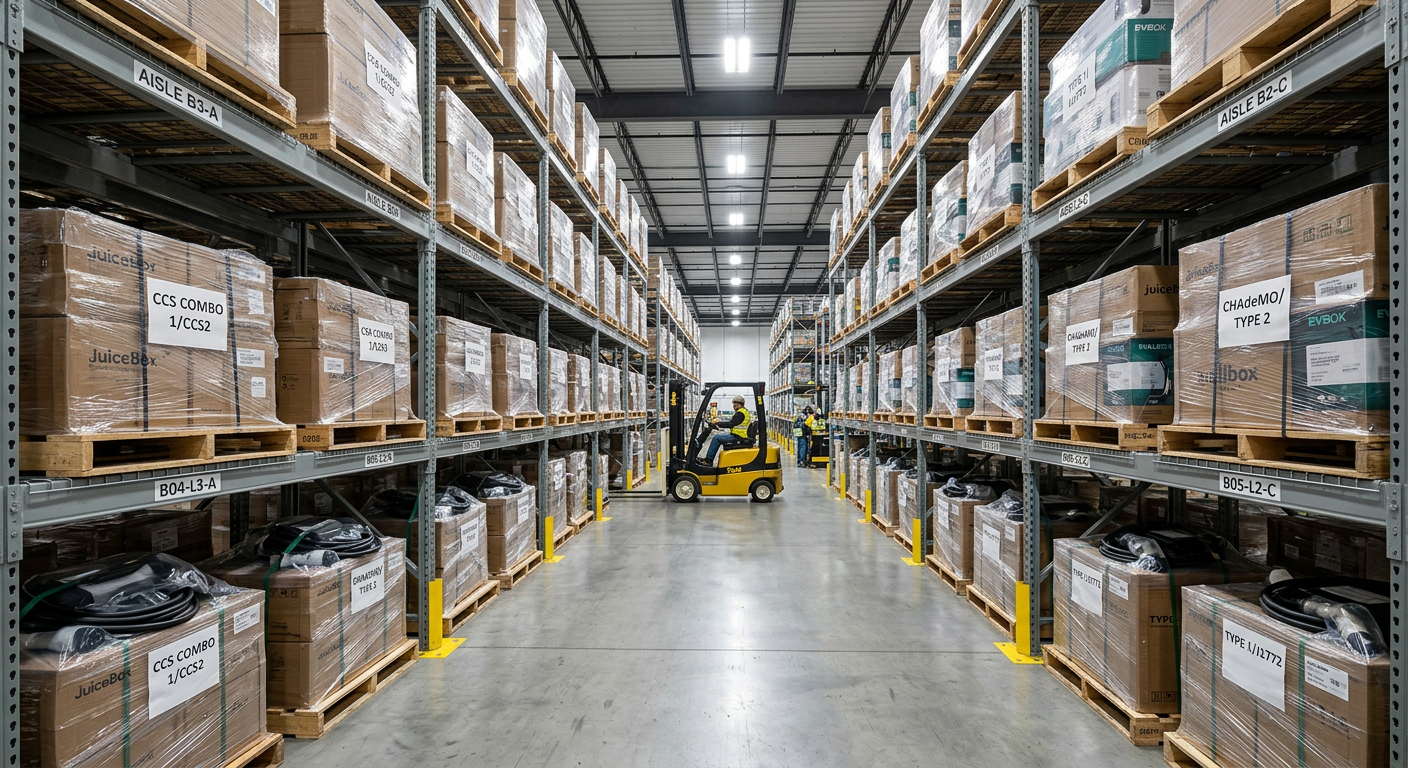
Warehouse stocked with EV chargers of various connector types
Bringing It Together
The connector wars are essentially over for 2026. CCS2 owns Europe, NACS owns North America, GB/T (with ChaoJi creeping in at the top end) owns China — and industrial equipment plays by its own rules. Your job as a distributor isn't to pick a winner; it's to stock the right regional mix, plan for retrofit cables as a recurring revenue stream, and pick a manufacturing partner that can ship any of the three standards on the same hardware platform.
That last point matters more than it sounds. Buying CCS2, NACS, and GB/T variants from three different factories means three sets of firmware, three certification cycles, and three warranty processes. At evaisun, we build OEM/ODM chargers on a unified platform with connector variants for every major market — so you can scale across regions without fragmenting your supply chain. Browse our product range or reach out to discuss your 2026 stocking plan.
Subscribe the newsletter to get updated to news and promotions
Cookies give you a personalized experience,Сookie files help us to enhance your experience using our website, simplify navigation, keep our website safe and assist in our marketing efforts. By clicking "Accept", you agree to the storing of cookies on your device for these purposes. Click "Adjust" to adjust your cookie preferences.For more information, review our Cookie Policy