Forklift Charging Infrastructure: Matching DC Chargers to Warehouse Duty Cycles
Home / Blog / Guidelines / Forklift Charging Infrastructure: Matching DC Chargers to Warehouse Duty Cycles
12 Jun, 2026
industrial DC charger sizing
lithium forklift fast charger
opportunity charging forklift
warehouse forklift charging infrastructure
The right DC forklift charger is the one matched to your duty cycle — not the highest kW unit on the spec sheet. A single-shift warehouse running 4–6 hours a day needs a very different charging strategy than a cold-storage facility pushing trucks 22 hours straight, and oversizing in the first case wastes capital while undersizing in the second kills batteries within 18 months. Below, we break down exactly how to match charger output, quantity, and placement to real-world warehouse duty cycles.
Start With Duty Cycle, Not Charger Specs
Most procurement mistakes start the same way: someone picks a charger based on truck voltage and forgets to ask how hard the truck actually works. Duty cycle — the ratio of active runtime to rest time across a 24-hour window — is what determines whether you need 20 kW or 100 kW at each bay.
A useful rule of thumb: your daily charging window multiplied by charger output must exceed the energy consumed by the truck in a day, with a 15–20% buffer for efficiency losses and thermal derating. A Class 1 counterbalance truck with an 80V/600Ah lithium pack consumes roughly 35–45 kWh per shift under moderate load. If you only have 6 hours to replenish that energy, a 15 kW charger is already tight. Drop to 10 kW and you'll be chasing state-of-charge every morning.
Before you talk to any vendor, log two weeks of actual runtime, lift counts, and SOC drops per truck. Those numbers drive every decision that follows.
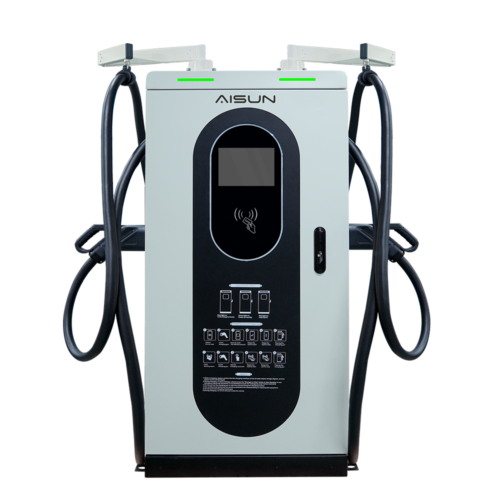
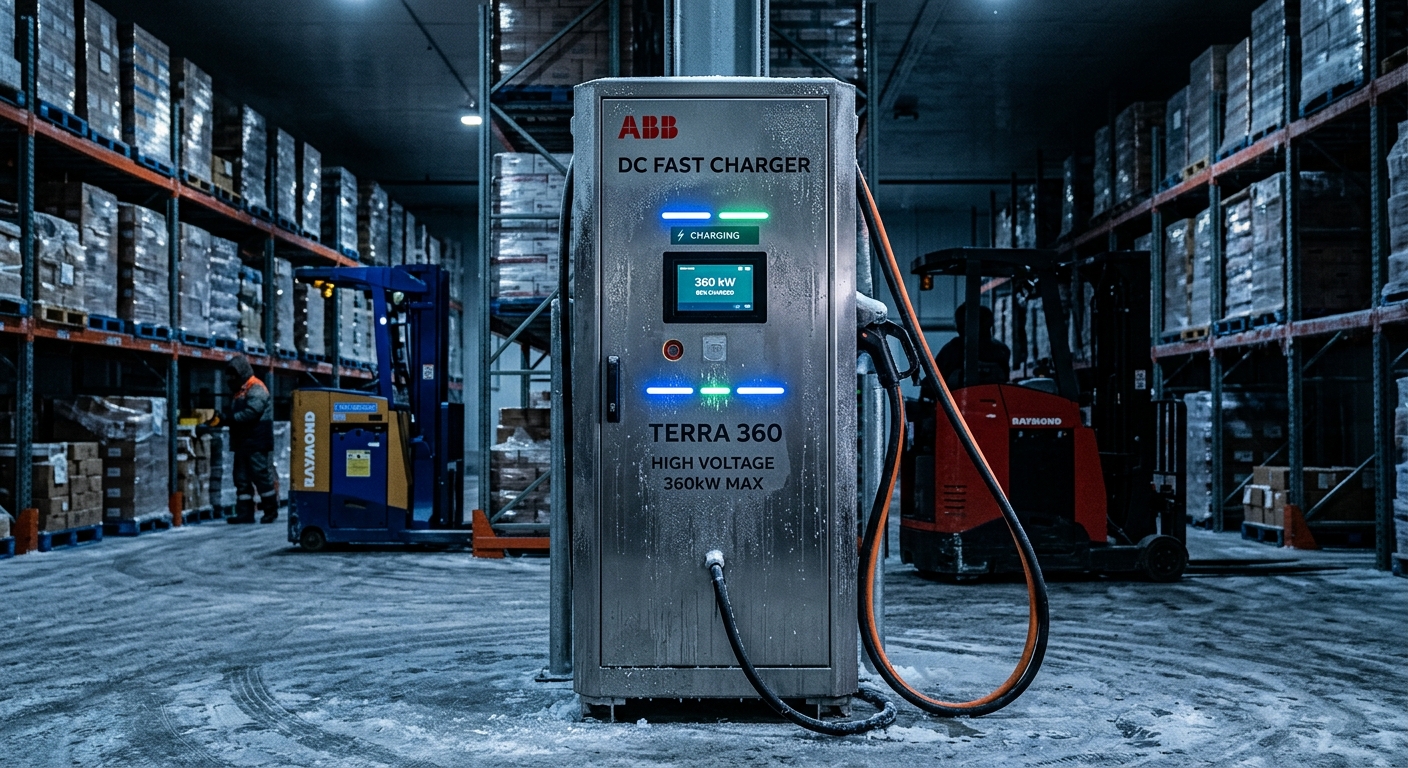
Electric forklifts operating in a busy warehouse aisleHigh-power DC forklift charger cabinet in a cold-storage warehouse
Single-Shift Operations: Don't Overbuy
If your trucks clock 4–6 hours of active work and sit idle from 6pm to 6am, you don't need fast charging. You need reliable, low-stress overnight charging — and spending on 60 kW units here is pure waste.
A 20–30 kW DC charger on an 80V lithium pack will comfortably deliver a full charge in 3–4 hours, leaving hours of cushion for battery balancing and thermal cool-down. Lead-acid fleets can stretch this further with 15 kW units running 8-hour cycles. The real cost savings come from off-peak electricity tariffs: schedule charging between 11pm and 5am and you'll often cut energy costs by 30–50% compared to daytime rates.
For example, a regional dry-goods distributor we worked with runs 12 counterbalance trucks on a single day shift. They originally quoted 60 kW chargers across the board. After reviewing the actual duty cycle — average 4.8 hours of runtime per truck — we specified 25 kW units with smart scheduling. Capex dropped by roughly 40% and peak demand charges disappeared entirely.
For practical install guidance at this scale, our forklift battery charger installation guide covers cable sizing, ventilation, and circuit protection for typical overnight setups.
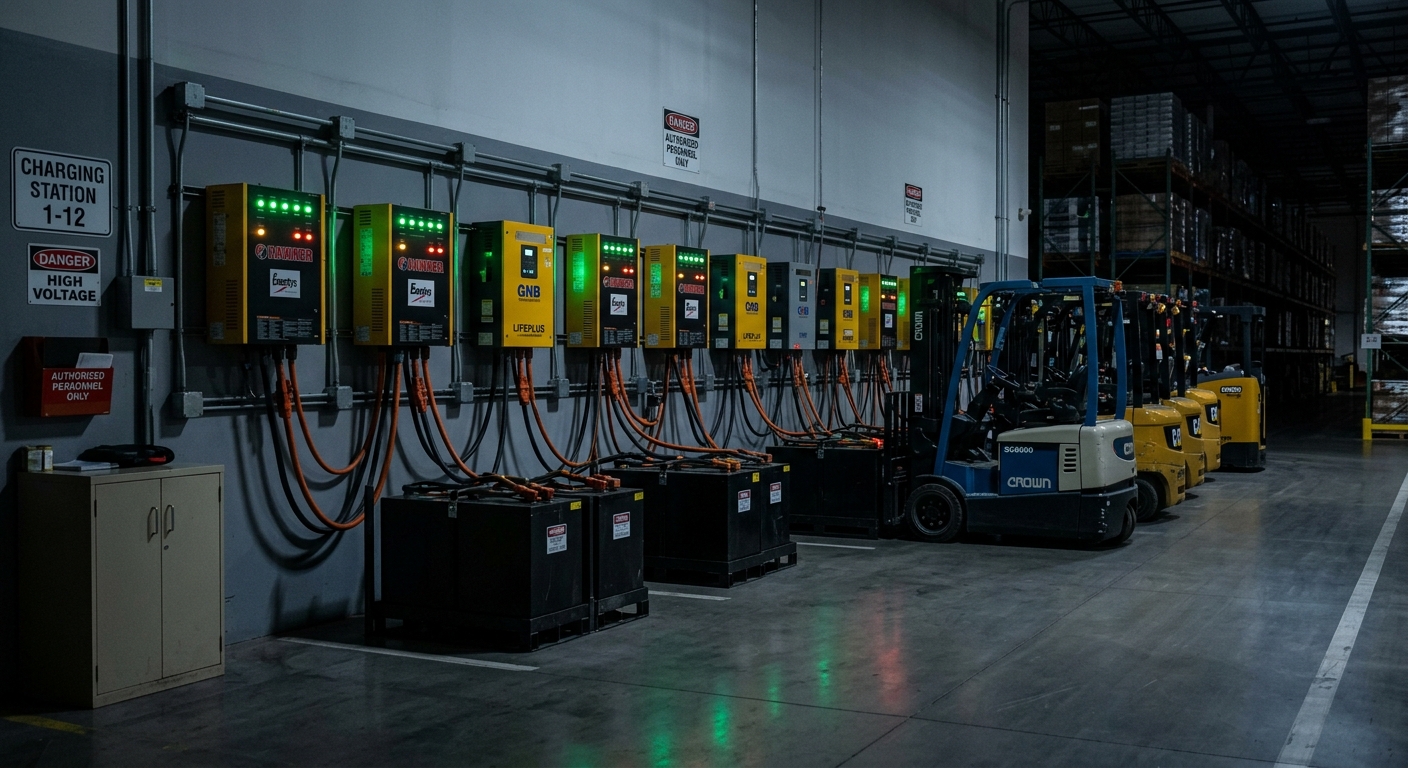
Row of wall-mounted DC forklift chargers in a warehouse charging room
Multi-Shift Warehouses: The Opportunity Charging Sweet Spot
Two-shift operations are where opportunity charging earns its keep. When trucks run 12–16 hours a day, there's no time for a full overnight charge — but there are natural breaks. Meal breaks, shift changes, and operator handoffs create 15–30 minute windows that a properly sized DC charger can turn into 15–20% SOC gains.
The math: a 40 kW charger delivering to a 48 kWh pack adds roughly 10 kWh in 15 minutes — that's a 20% top-up during a coffee break. String three or four of those top-ups across a day and the truck never drops below 40% SOC, which is exactly where lithium chemistry lives happiest.
Key design points for multi-shift:
Place chargers where drivers already stop — near break rooms, dispatch desks, or pick-zone exits
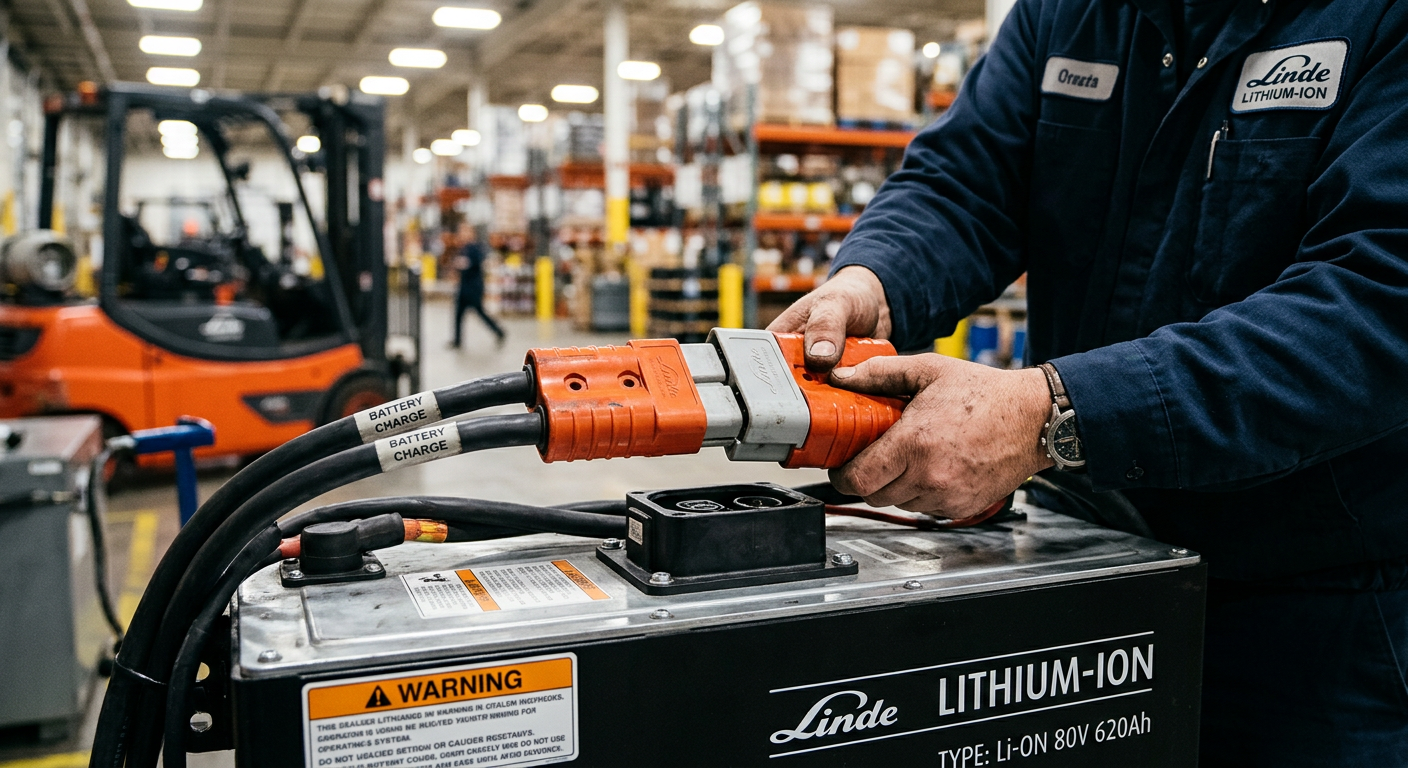
Use connectors rated for 50+ insertion cycles per day (industrial DIN or Anderson SBX/SBE styles)
Size for 30–60 kW per bay, not higher — the battery can't absorb more during short windows anyway
Deploy one charger per 1.5–2 trucks, not one-to-one
Operator connecting an industrial charging plug to a forklift battery
24/7 Cold Storage and High-Throughput DCs: Go Big or Go Home
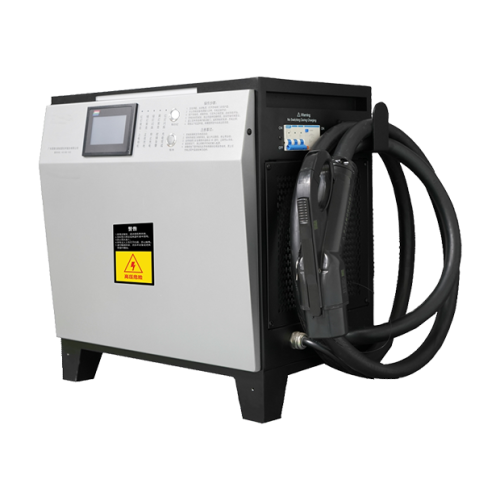
Cold-storage distribution centers, e-commerce mega-fulfillment hubs, and port logistics operations run trucks 20+ hours a day. Here, 60–120 kW DC chargers aren't a luxury — they're the only way to keep rolling without adding spare trucks to the fleet.
At this tier, three things change. First, battery chemistry must be LiFePO4 — lead-acid simply cannot handle continuous opportunity charging without sulfation damage. Second, thermal management becomes central: lithium packs charged above 1C in a -25°C freezer need active heating circuits, and chargers must communicate with the BMS to throttle output based on cell temperature. Third, grid infrastructure usually needs attention. A bank of ten 80 kW chargers pulling simultaneously is an 800 kW load — often enough to trigger utility upgrades.
A refrigerated 3PL in the Netherlands running 38 reach trucks across three shifts switched from lead-acid battery-change rooms to a centralized bank of 60 kW lithium chargers. They eliminated the battery room entirely (roughly 400 m² reclaimed), cut labor tied to battery swaps, and increased net truck availability by about 18%. The payback on the charger upgrade came in under three years.
Here's a counterintuitive truth: adding more medium-power chargers almost always beats adding fewer high-power ones. Why? Queue time.
If you have 20 trucks and four 100 kW chargers, a truck that arrives at a busy moment waits. If you have 20 trucks and ten 40 kW chargers, no one waits — and the total installed kW is the same (400 kW). Same capex on the charger side, dramatically better utilization on the fleet side.
The corollary: cable length matters. A charger 40 meters from the nearest operator path might as well not exist. Run the drivers' actual walking routes during a shift and place chargers within 10–15 seconds of where they already stop. This is the single highest-ROI change most warehouses can make to existing infrastructure.
Battery Chemistry Dictates Charger Choice
You can't specify the charger without pinning down the battery. The differences aren't subtle:
Lead-Acid (Flooded)
Requires a controlled three-stage charge profile — bulk, absorption, float — typically over 8 hours with a 4-hour cooldown. Fast charging is possible but cuts cycle life roughly in half. Budget 15–25 kW per bay and accept the downtime.
LiFePO4 Lithium
Accepts up to 1C continuous charge rate (a 600Ah pack takes 600A). This is why lithium dominates any duty cycle above single-shift. Expect 80% SOC in 45–60 minutes at 0.8C, with far less thermal stress than lead-acid fast charging.
NMC Lithium
Higher energy density, but more thermally sensitive. Rarely used in forklifts due to fire risk in enclosed warehouses. If a vendor quotes NMC for indoor equipment, ask hard questions.
For the technical background on why chemistry behaves this way, our explainer on what goes on inside a lithium battery walks through the cell-level behavior.
Grid, Demand Charges, and Load Management
A 10-bay charging array at 60 kW per bay is 600 kW of connected load. In many regions, that single installation will double the facility's peak demand — and peak demand charges can account for 40–60% of a commercial electricity bill.
Three practical countermeasures:
Dynamic load balancing: Chargers talk to each other (usually via OCPP or a local controller) and share a capped total output. If only three trucks are plugged in, each gets full power; if ten plug in, the system redistributes.
Scheduled charging: For single-shift ops, simply delaying the start of charging until 10pm can cut demand charges dramatically.
Battery energy storage: Pair the charger bank with a stationary battery that buffers peak draw. Expensive upfront, but the payback in demand-charge-heavy tariffs can be 4–6 years.
Any serious DC forklift charger should support OCPP 1.6J at minimum, with a path to 2.0.1. Without networked load management, you're either oversizing the service entrance or tripping breakers.
AGVs, AMRs, and Mixed Fleets
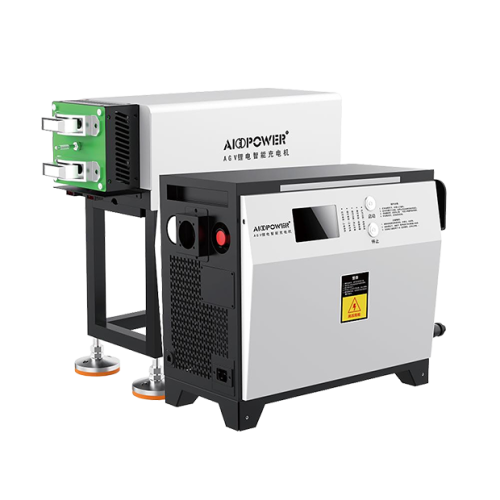
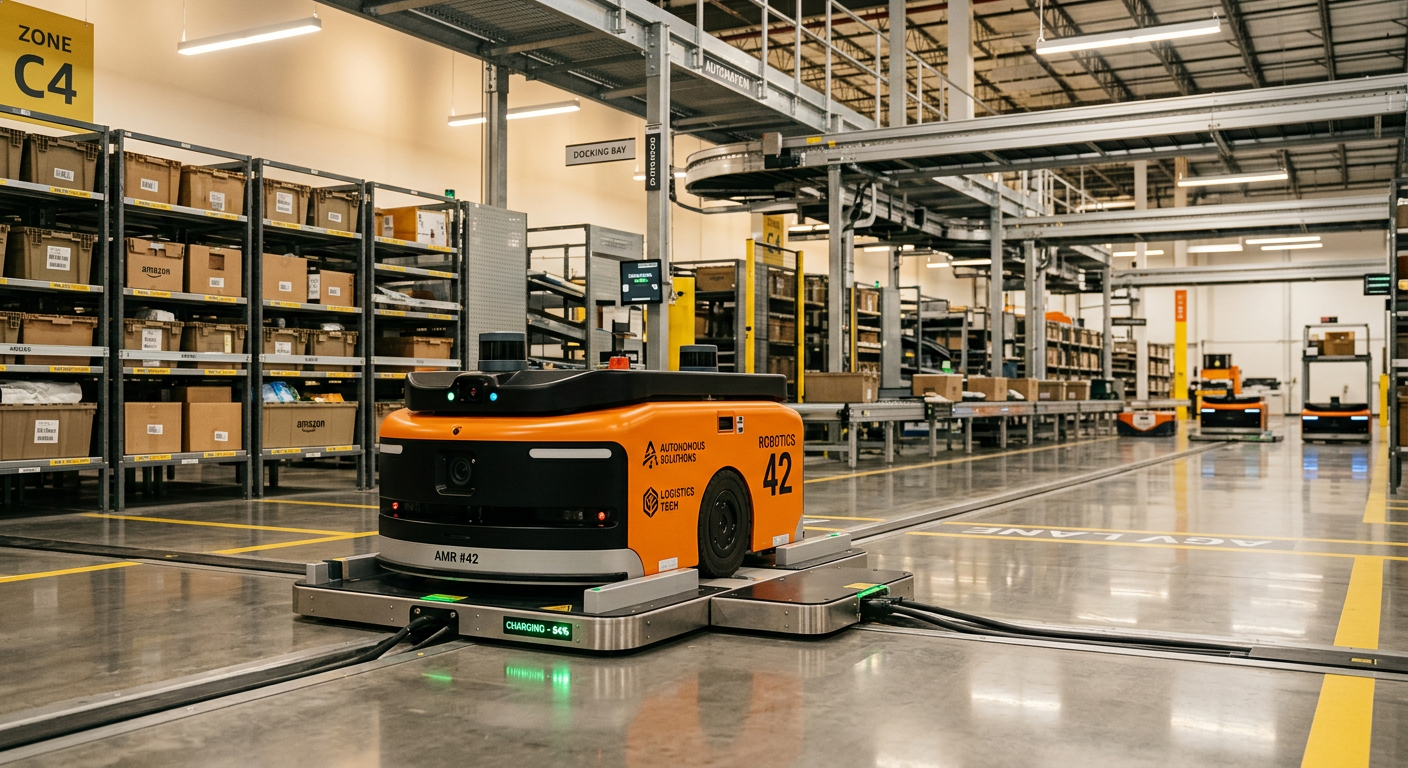
If your facility mixes manned forklifts with AGVs or AMRs, the charging infrastructure gets more interesting. AGVs typically use automated contact charging — the robot drives itself onto a floor-mounted contact plate — and charges in short, frequent bursts rather than long sessions. That means smaller chargers (often 5–15 kW) but more of them, distributed throughout the operational area rather than clustered in a charging room.
A common design error is trying to put AGVs and forklifts on the same charger bank. The duty cycles, connector types, and communication protocols rarely overlap cleanly. Plan them as separate subsystems that share only the upstream distribution panel. Our guide to smart AGV charging stations covers the automation-specific requirements in more depth.
Autonomous mobile robot on an automatic floor charging pad
A Practical Sizing Checklist
Before issuing an RFQ, work through this list. It takes an afternoon and saves months of rework:
Measure actual truck runtime over 10–14 days (telematics or manual log)
Calculate daily kWh consumption per truck at 85% efficiency
Identify your longest continuous charging window (shift gap)
Divide daily kWh by window hours — that's your minimum charger kW per truck
Add 20% for thermal derating and future fleet growth
Map driver walking paths to place chargers within natural stops
Confirm service entrance capacity and utility demand tariff structure
Specify OCPP 1.6J or 2.0.1, networked load management, and IP54+ enclosures
Verify connector standards match your battery vendor (SBX, SBE, REMA, or DIN)
Nail those nine items and the vendor conversation becomes straightforward — you're specifying a solution, not shopping for a spec sheet.
Getting the Infrastructure Right the First Time
Forklift charging is one of those systems where small upfront errors compound expensively. Undersized chargers damage batteries. Oversized chargers waste capex and inflate demand charges. Poor placement kills productivity invisibly — a 90-second detour, ten times a shift, across 20 trucks, is 300 hours of lost labor a year.
The right approach is duty-cycle-first design: measure real operational data, match charger output to the available window, distribute chargers where work actually happens, and insist on networked load management from day one. Battery chemistry, connector standards, and grid capacity all flow from that foundation.
If you're scoping a new warehouse charging deployment — or retrofitting an aging lead-acid operation to lithium — evaisun's OEM and ODM team can help you specify the right DC charger mix for your duty cycle, connector ecosystem, and grid constraints. Send us your fleet runtime data and we'll come back with a sizing proposal, not just a price list.
Subscribe the newsletter to get updated to news and promotions
Cookies give you a personalized experience,Сookie files help us to enhance your experience using our website, simplify navigation, keep our website safe and assist in our marketing efforts. By clicking "Accept", you agree to the storing of cookies on your device for these purposes. Click "Adjust" to adjust your cookie preferences.For more information, review our Cookie Policy