Global EV Charging Incentive Programs in 2026: What Distributors Should Track Region by Region
Home / Blog / Industry News / Global EV Charging Incentive Programs in 2026: What Distributors Should Track Region by Region
21 Jul, 2026
EU charging infrastructure grants
EV charger rebates by region
EV charging subsidies for distributors
government EV infrastructure funding
NEVI funding 2026
The distributors winning the most contracts in 2026 aren’t the ones with the lowest price — they’re the ones who know which government program pays for what, in which region, before their competitors do. North America is funneling money through NEVI and state-level rebates tied to Buy America compliance, the EU is enforcing AFIR mandates that force infrastructure buildout regardless of subsidy, and Asia-Pacific markets are mixing manufacturer incentives with municipal tenders that move fast and reward local relationships. If you’re selling chargers globally, treat incentive tracking as a core sales function, not a side research task.
North America: NEVI Money Is Still Flowing, But the Rules Keep Tightening
The National Electric Vehicle Infrastructure (NEVI) program allocated $5 billion toward highway corridor charging, and by mid-2026 most states have moved past initial rollout friction into active deployment. But here’s the catch most distributors miss: NEVI-funded projects require Buy America compliance for iron and steel components starting with recent funding rounds, and final assembly requirements are tightening further. If your DC fast chargers aren’t sourced or assembled to meet these thresholds, your fleet or contractor customer can’t touch the subsidy — full stop.
State-Level Rebates Add a Second Layer
On top of NEVI, states like California, New York, and Texas run their own rebate programs that stack with federal money in some cases. California’s CALeVIP program, for instance, has funded DC fast charger installs at rates covering 50-80% of equipment and installation costs in disadvantaged communities. A logistics contractor building a fleet depot charging setup for 50+ vehicles in California could realistically offset more than half the infrastructure cost by layering NEVI and CALeVIP funding correctly — but only if the equipment specs and paperwork line up from day one.
For distributors, this means keeping a live spreadsheet of state-by-state rebate windows, funding caps, and compliance documentation requirements. Miss a Buy America certification and the whole deal can unwind after the customer has already ordered equipment.
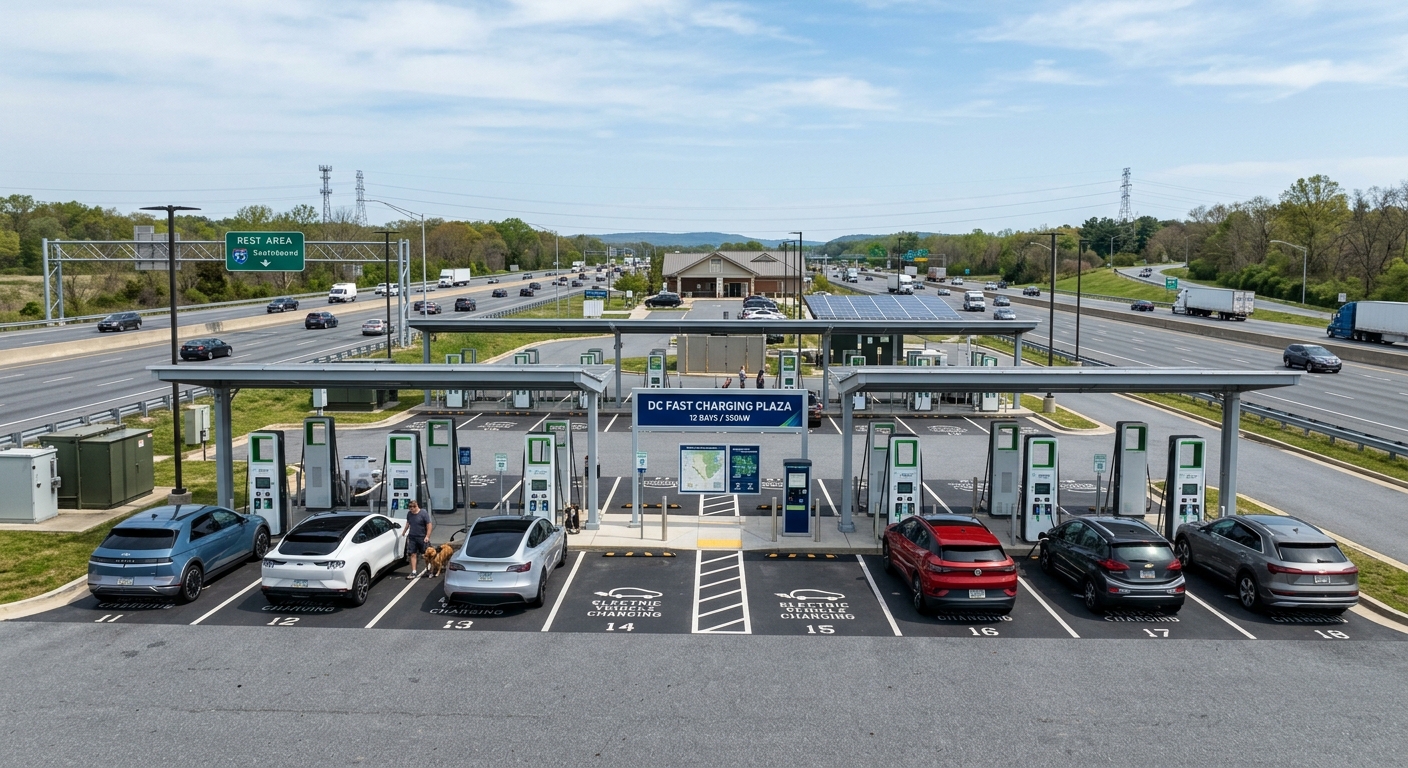
US highway corridor DC fast charging station funded by infrastructure programs
European Union: AFIR Turns Incentives Into Mandates
Europe’s Alternative Fuels Infrastructure Regulation (AFIR) took a different approach than North America — instead of just offering carrots, it’s setting binding minimum coverage requirements along the TEN-T core network. By 2026, member states must ensure DC fast charging pools of at least 400 kW every 60 km on major highways, with higher thresholds coming by 2027. This isn’t optional funding you apply for; it’s a legal deployment obligation that’s creating guaranteed demand regardless of grant availability.
National Grants Still Matter for Speed
Germany’s Deutschlandnetz program and France’s ADVENIR scheme continue to offer direct grants covering 30-40% of installation costs for qualifying public charging sites. Poland and other Eastern European markets are seeing newer EU cohesion fund allocations specifically targeting charging infrastructure gaps. The practical takeaway: AFIR guarantees the market exists, national grants determine who moves first and cheapest.
Distributors selling into the EU should also track interoperability requirements tied to these funds — chargers must support ad-hoc payment (contactless card readers, not just app-based access) to qualify for most national grants. If you’re evaluating payment terminal integration for public contracts, this is where it becomes non-negotiable rather than a nice-to-have.
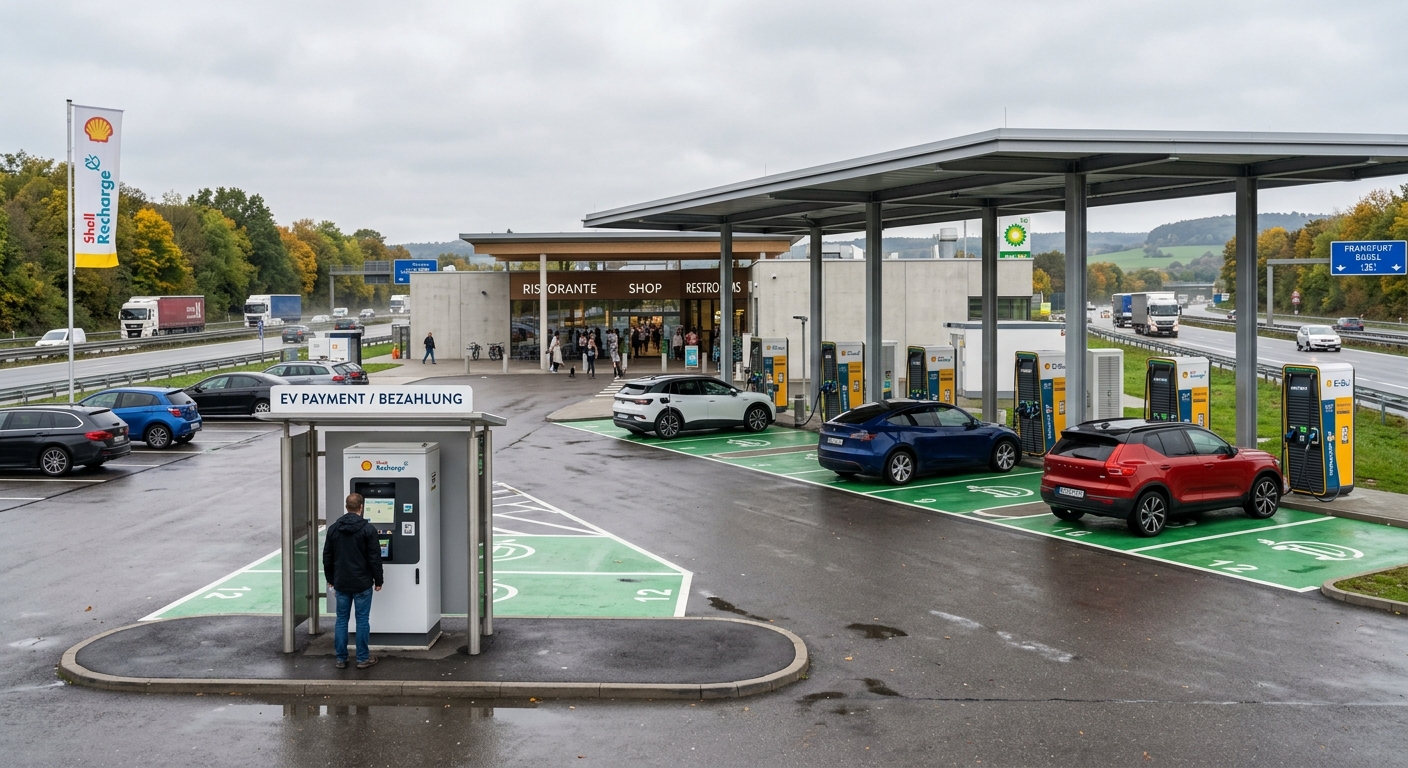
European highway service station with EV charging bays and payment terminals
Asia-Pacific: Faster Tenders, Less Bureaucracy, More Fragmentation
APAC incentive structures look nothing like North America or Europe — there’s rarely a single federal program to track. Instead, you’re watching a patchwork of national EV purchase subsidies, municipal charging infrastructure tenders, and manufacturer-bundled incentives that move on much shorter timelines.
China’s Municipal Tenders Move Fast
Chinese cities regularly issue public charging infrastructure tenders with 30-60 day bid windows, often bundled with new energy vehicle promotion targets. Distributors who maintain standing relationships with municipal procurement offices win repeat business; those relying on cold outreach after a tender is announced are usually too late.
Southeast Asia and India: Different Playbook Entirely
India’s PM E-DRIVE scheme allocates subsidies toward both EVs and supporting charging infrastructure, with a strong tilt toward electric two- and three-wheelers rather than passenger cars. Thailand and Indonesia are leaning on manufacturer partnerships and free trade zone incentives to attract charger production and deployment rather than pure consumer-facing rebates. Evaisun’s own presence at events like the one covered in Mobility Tech Asia 2025 in Bangkok reflects just how much regional relationship-building matters here compared to filling out federal grant paperwork.
Urban Southeast Asian street scene with electric scooter charging kiosk
Latin America and the Middle East: The Overlooked Growth Markets
While North America, Europe, and China dominate incentive headlines, Latin America and Gulf states are quietly building charging infrastructure through a mix of sovereign investment funds and utility-led pilot programs rather than traditional rebate schemes.
Brazil’s charging market, for example, is growing through private investment and state-level tax incentives on EV-related equipment imports rather than a single national program — something evaisun has tracked closely through direct market presence, including at PNE Expo Brazil 2025. UAE and Saudi Arabia are funding charging buildout through state utility mandates tied to broader EV adoption targets rather than distributor-facing subsidies, meaning your customer conversations shift from “here’s the rebate” to “here’s the utility contract structure.”
For distributors, this region rewards patience and direct relationship-building over incentive-chasing. The deals are bigger, slower, and less transparent — but the competition is thinner too.
How to Actually Track This Without Drowning in Government Websites
Here’s a mistake we see constantly: distributors try to monitor every incentive program manually across a dozen government portals, then give up after two months because it’s unsustainable. That’s the wrong approach.
Build a Region-Priority Watchlist
Instead, pick your top three active markets and assign a specific person or partner to monitor just those funding windows monthly. Trying to track everything everywhere means you track nothing well.
Tie Incentive Tracking to Product Compliance
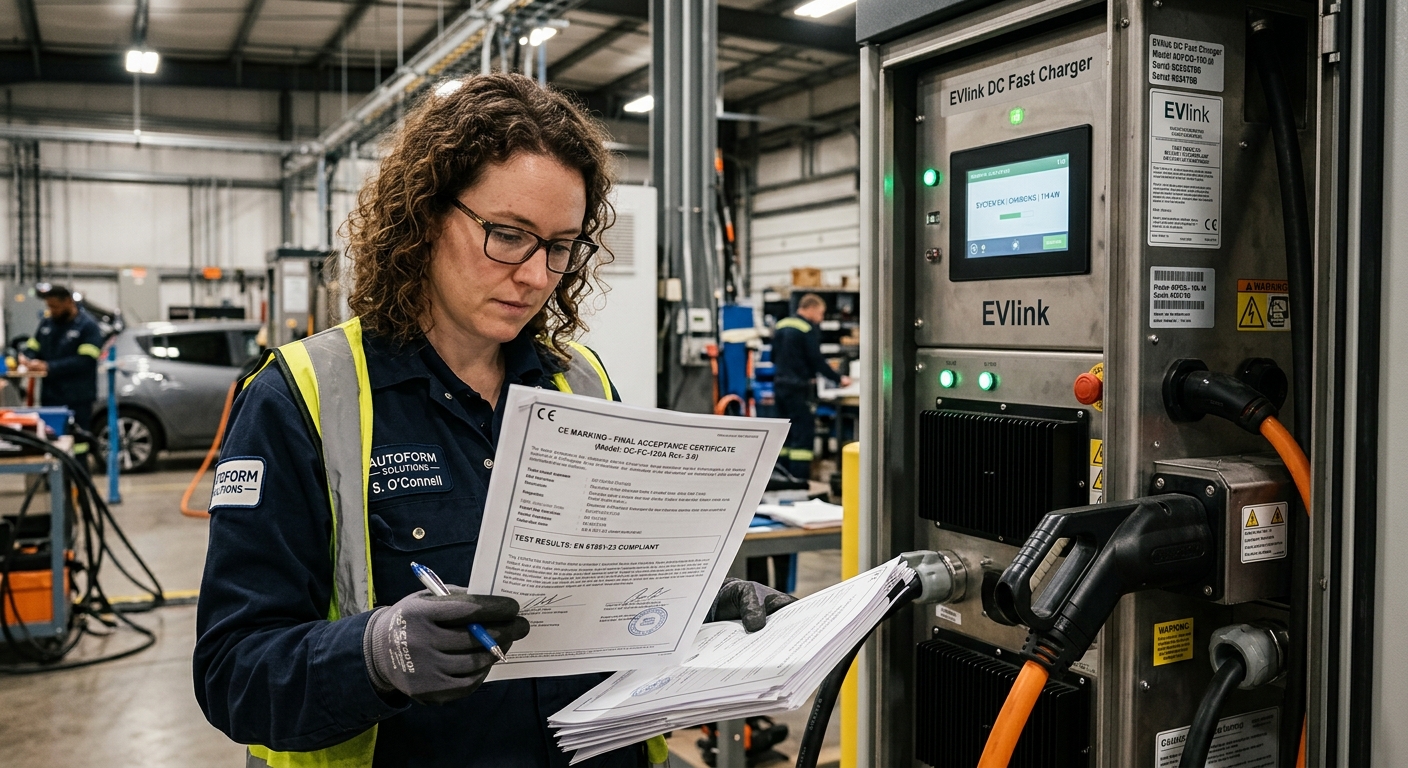
Every incentive program has hardware requirements attached — Buy America rules, AFIR interoperability standards, CE certification, local safety marks. Before you even discuss subsidy eligibility with a customer, confirm your product line actually qualifies. This is exactly why understanding OEM vs. ODM sourcing decisions matters — a locally-assembled ODM unit might clear Buy America thresholds that an imported OEM product can’t.
For instance, a European contractor bidding on an AFIR-compliant highway corridor project needs chargers with ad-hoc payment support and specific power output certifications documented before the bid deadline — not scrambling for compliance paperwork after winning the tender.
Engineer reviewing charger certification documents for incentive compliance
What This Means for Your Product Sourcing Strategy
Incentive programs aren’t just sales talking points — they should shape what you stock and where you source it. If NEVI compliance is central to your North American pipeline, you need suppliers who can document Buy America-qualifying components, not just claim it verbally. If AFIR-driven EU demand is your focus, prioritize chargers with built-in payment terminal support and OCPP 2.0.1 compatibility, since many national grant programs are moving away from OCPP 1.6 requirements. Our breakdown of OCPP 1.6 vs. OCPP 2.0.1 requirements for 2026 covers exactly which networks are pushing this transition fastest.
For APAC markets, flexibility matters more than deep compliance documentation — you’re more likely to need fast customization for local voltage standards and connector types than extensive Buy America-style paperwork. Reviewing connector standard differences across regions before committing inventory saves you from stocking the wrong SKUs for a fast-moving tender.
Subscribe the newsletter to get updated to news and promotions
Cookies give you a personalized experience,Сookie files help us to enhance your experience using our website, simplify navigation, keep our website safe and assist in our marketing efforts. By clicking "Accept", you agree to the storing of cookies on your device for these purposes. Click "Adjust" to adjust your cookie preferences.For more information, review our Cookie Policy