OEM vs. ODM EV Chargers: What Global Distributors Should Know Before Placing an Order
Home / Blog / Guidelines / OEM vs. ODM EV Chargers: What Global Distributors Should Know Before Placing an Order
15 Jun, 2026
EV charger manufacturer
EV charger sourcing
ODM charging solutions
private label EV charger
OEM means you bring the design and the manufacturer builds it exactly to your spec. ODM means the manufacturer already has the design — you add your brand, pick a few configuration options, and ship. For most EV charger distributors, ODM is the faster, cheaper path to a first container; OEM makes sense once your volume, brand equity, or technical differentiation justifies the tooling cost and longer lead time.
The decision isn't really about terminology — it's about who owns the engineering risk, the certifications, and the roadmap. Get that wrong and you'll either overpay for a commodity or underbuild for your market. Below is what we tell distributors before they commit to either path.
OEM vs. ODM: The Definitions That Actually Matter
Plenty of suppliers use these terms loosely. Here's how serious manufacturers use them.
OEM (Original Equipment Manufacturer) — you supply the design, the bill of materials, sometimes even the PCB gerbers. The factory manufactures to your exact spec. You own the IP. You also own the certification cost, the firmware bugs, and the redesign headaches.
ODM (Original Design Manufacturer) — the factory brings a finished, certified product. You configure it: logo, enclosure color, connector type, software branding, maybe a display skin. You get to market in weeks, not quarters. The factory owns the IP but gives you exclusive territory or SKU rights.
There's also a hybrid most distributors end up using — call it guided OEM — where you start from the factory's reference platform and request specific modifications (dual-connector support, a 4G modem, OCPP 2.0.1 upgrade). Cheaper than full OEM, more differentiated than plain ODM.
The Real Cost Difference (With Numbers)
Distributors usually underestimate OEM costs by 2–3x. It's not just the unit price.
ODM economics
MOQ typically 50–200 units for a 7kW–22kW AC wallbox, 20–50 for DC fast chargers
Lead time: 4–8 weeks after the first sample approval
Unit cost: baseline factory price + small branding margin
OEM economics
Tooling for a custom enclosure: $15,000–$50,000
Custom PCB design and prototyping: $20,000–$80,000
CE, UKCA, FCC, or UL certifications: $8,000–$60,000 per standard
Lead time: 10–16 weeks for first production batch, plus 3–6 months of pre-production engineering
Unit cost: potentially 10–25% lower than ODM at 2,000+ units/year
The breakeven point is usually somewhere around 1,500–3,000 units per year per SKU. Below that, ODM wins almost every time.
Factor
OEM
ODM
Design ownership
Buyer provides spec
Manufacturer owns design
Typical MOQ
200–500 units
50–200 units
Lead time (first batch)
10–16 weeks
4–8 weeks
Upfront tooling/NRE
$15k–$80k+
$0–$3k
Certification responsibility
Buyer
Manufacturer
Differentiation potential
High
Low to moderate
Time to market
Slower
Fast
Best for
Established brands, large volumes
New entrants, fast SKU expansion
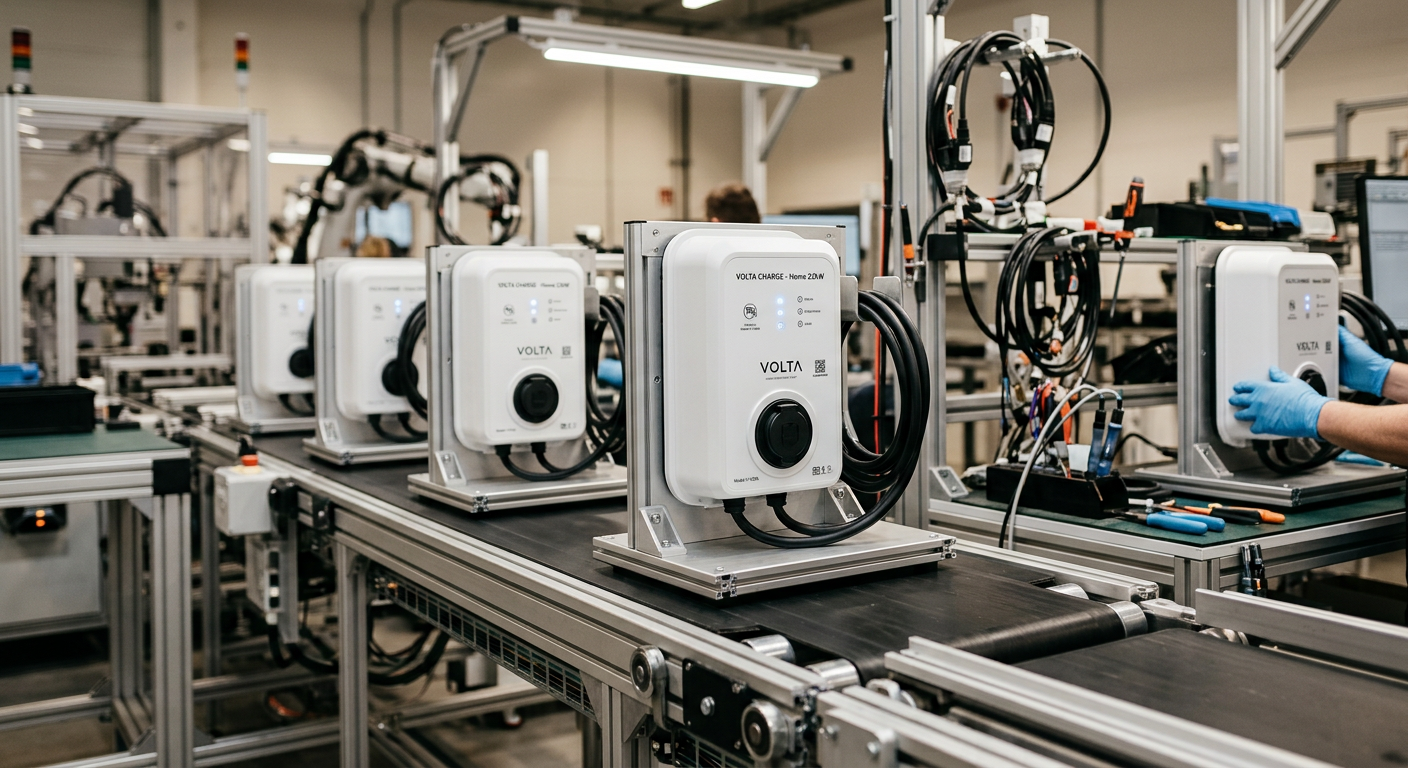
EV charger production line with wallbox units moving along conveyor
Certifications: The Hidden Cost Most Distributors Miss
This is where OEM projects blow their budget. A DC fast charger sold into the EU needs CE, EMC Directive compliance, RED (if it has wireless), and often the CHAdeMO or CCS protocol certifications. Each retest after a design change can run $5,000–$15,000.
With ODM, the manufacturer's product is already certified. Add your logo to a silkscreened area that's outside the regulatory label zone and you're fine — no retest needed. Change the enclosure or swap a power module, and you've just triggered a full recertification.
For example, a European distributor we worked with wanted to add a larger 10-inch touchscreen to a 60kW DC charger for premium retail sites. Sounds minor. It triggered EMC retesting and a firmware security audit — $22,000 and 14 extra weeks. If they'd stayed with the standard 7-inch ODM spec, their first container would have shipped on time. For a deeper look at what certifications cover, see our primer on EVSE terminology and standards.
When ODM Is Clearly the Right Call
Go ODM if any of these describe you:
You're entering the EV charging market for the first time and need to validate demand
Your annual volume per SKU is under 1,500 units
You need to fill multiple product categories fast — AC wallboxes, portable chargers, DC fast chargers — without funding three engineering projects
Your customers care more about price, reliability, and local support than brand-unique hardware
A concrete example: a Southeast Asian distributor wanted to launch a branded line covering home wallboxes, portable chargers, and 30kW commercial units within one quarter. ODM let them ship all three lines from a single factory with matching branding — total engineering cost under $8,000, first shipment in 9 weeks. Going OEM on even one of those SKUs would have pushed the launch into the next year.
When OEM Actually Pays Off
OEM earns its keep when one of three things is true: you're moving real volume, you have a hardware feature no ODM platform offers, or your market has regulatory quirks nobody else has solved.
Volume is the obvious one. If you're pushing 5,000+ units per SKU annually, a 15% unit-cost reduction easily pays back $80,000 in tooling within the first year. Fleet operators and utility-scale projects often hit these numbers — see our guide on fleet charging infrastructure for the scale math.
Feature differentiation matters too. Maybe your market wants a 22kW AC charger with integrated dynamic load balancing tied into a specific home battery brand. No ODM platform supports that out of the box. Custom firmware and a tweaked power board get you a product nobody else sells.
And then there's regulatory: Brazil's INMETRO, Korea's KC Mark, Gulf regional plug standards. Sometimes building to a specific market's quirks from day one beats trying to retrofit an ODM product.
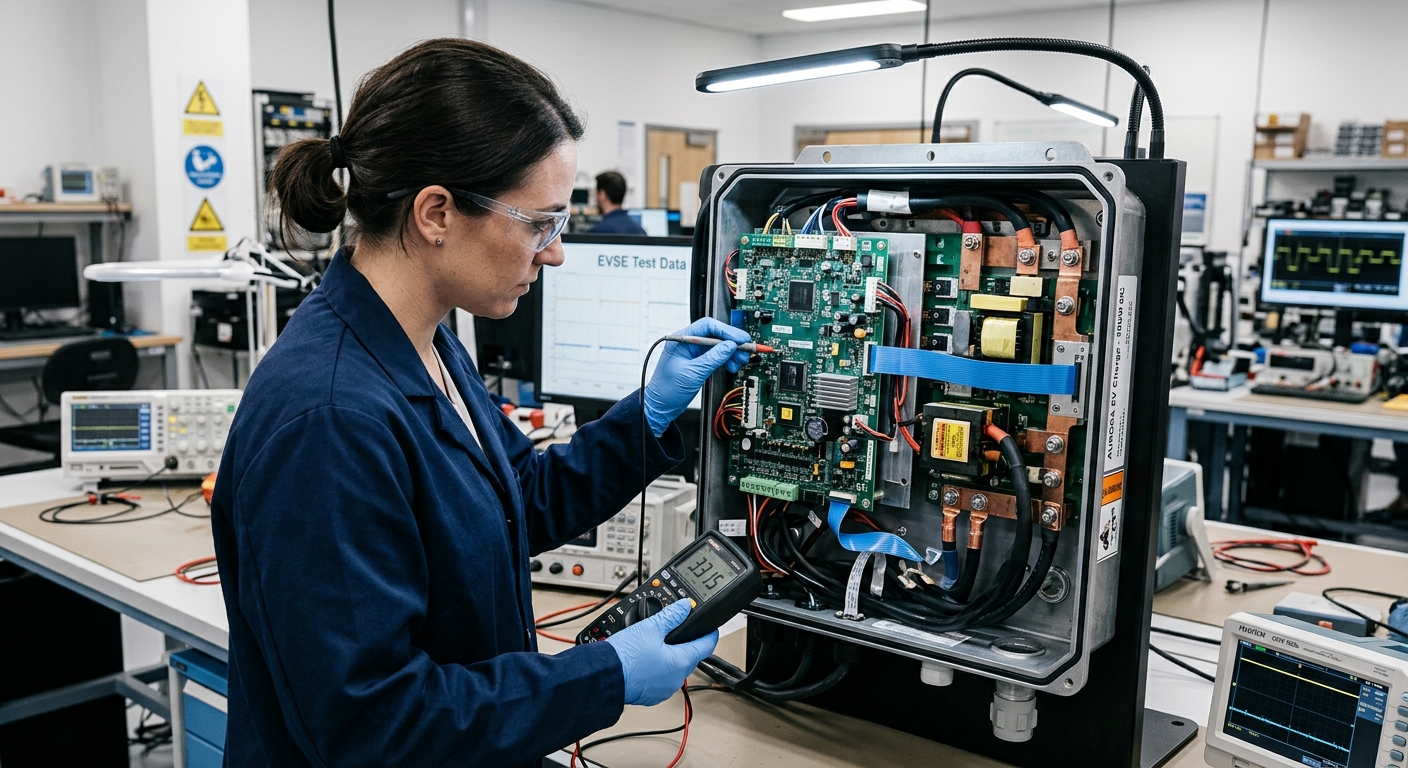
Engineer inspecting the internal components of an EV charger
What to Ask the Factory Before Signing Anything
Whether OEM or ODM, the same questions separate real manufacturers from rebadgers.
On the product
Who designed and manufactures the power module? (If they source it from a third party, ask who — that's your real supplier.)
What's the MTBF of the main control board?
Which OCPP version is supported, and is the firmware yours to modify?
What's the IP rating under actual test conditions — IP54, IP65, IP66?
On the commercial terms
What's included in the MOQ — just hardware, or cables, packaging, documentation?
Who pays for certification renewals (typically every 3–5 years)?
What's the warranty RMA process? Does the factory stock spare parts in your region?
Is territorial exclusivity available, and at what volume commitment?
If a factory can't answer the firmware question clearly, walk away. We've seen distributors locked out of pushing critical smart-charging feature updates because the firmware was licensed from a third party the factory didn't control.
The Common Mistakes That Kill First Orders
We've seen these wreck more launches than bad pricing ever did.
Mistake 1: Picking OEM for ego, not economics. “I want my own unique product” is not a strategy at 300 units a year. You'll pay ODM-plus prices for slower time-to-market.
Mistake 2: Skipping the sample-approval stage. Always get 2–3 pre-production samples tested in your actual target environment — not just on a factory bench. A wallbox that passes EMC in a Shenzhen lab can still throw communication errors on a noisy Brazilian rural grid.
Mistake 3: Underestimating logistics on DC units. A 120kW charger is often 400+ kg and ships freight-only. Your landed cost isn't just FOB — it's FOB plus $300–$900 per unit in freight and destination handling. Budget accordingly.
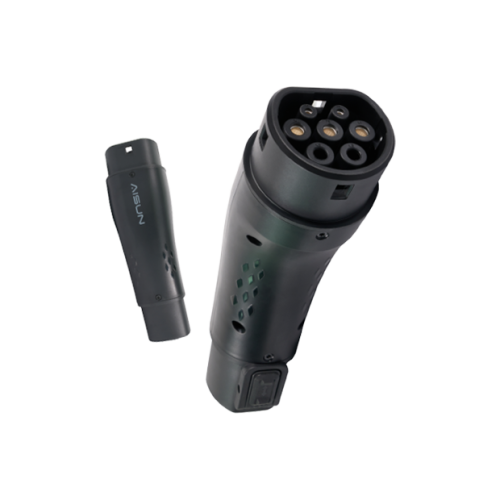
Mistake 4: Not specifying the connector mix. CCS2 dominates Europe. CCS1 and NACS matter in North America. GB/T is mandatory in China. Specifying the wrong connector mix for a mixed-market order has delayed more than a few containers.
What's my realistic 12-month volume per SKU? Under 1,500: ODM. Over 3,000: consider OEM. In between: guided OEM on your hero product, ODM on the rest.
Do I have a feature requirement no ODM platform covers? If yes, OEM (or guided OEM) on that product only.
How fast do I need to ship? Under 3 months: ODM. Over 6 months available: OEM is feasible.
Do I have the engineering bandwidth to manage firmware, certifications, and RMAs in-house? If no, stay ODM until you do.
Most distributors we onboard at evaisun start 100% ODM, then migrate their top-selling SKU to guided OEM in year two — typically the 7kW or 11kW AC wallbox, because that's where the volume concentrates. DC fast chargers almost always stay ODM longer because the engineering stakes and certification costs are so much higher.
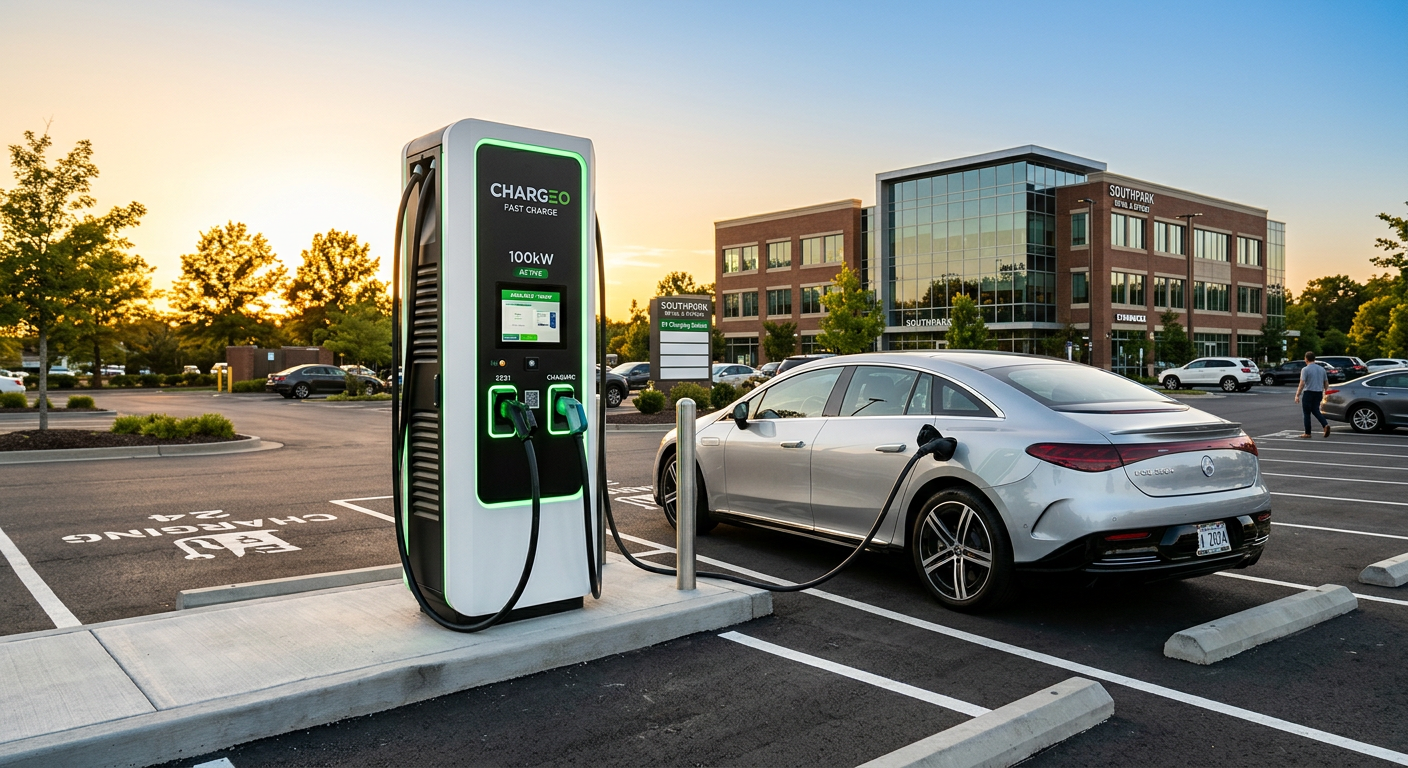
Commercial DC fast charger installed at an outdoor charging station
Matching the Model to Your Product Mix
Different product categories lean differently. A quick reality check:
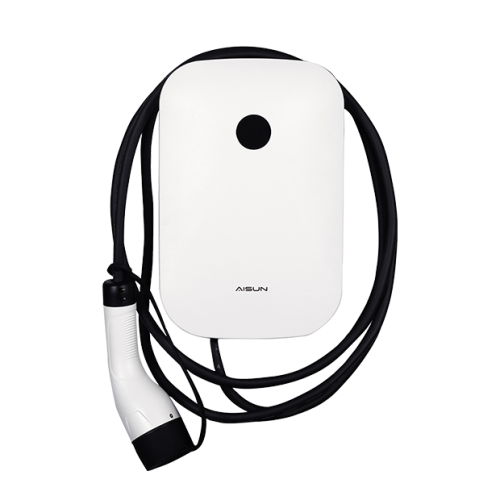
AC home wallboxes (7kW–22kW): ODM is fine for most distributors. Margins are tight, differentiation is cosmetic, volumes need to be high to justify custom tooling. See our Level 2 amperage guide for the product range.
Commercial AC (22kW dual-port, pedestal): Guided OEM pays off. B2B buyers care about load management software, branding, and installation flexibility.
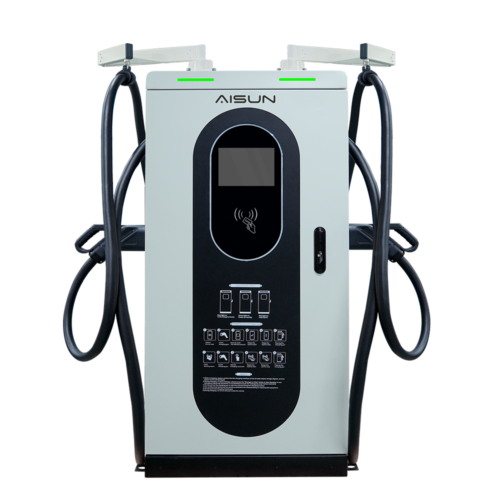
DC fast chargers (30kW–240kW): ODM for 95% of distributors. Certifications are brutal and the engineering risk is real.
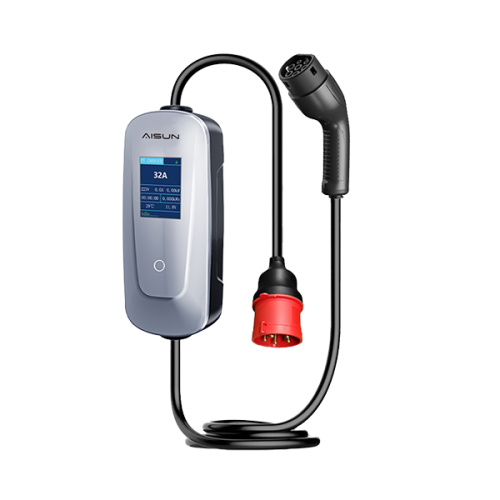
Portable chargers: ODM always. It's a near-commodity category.
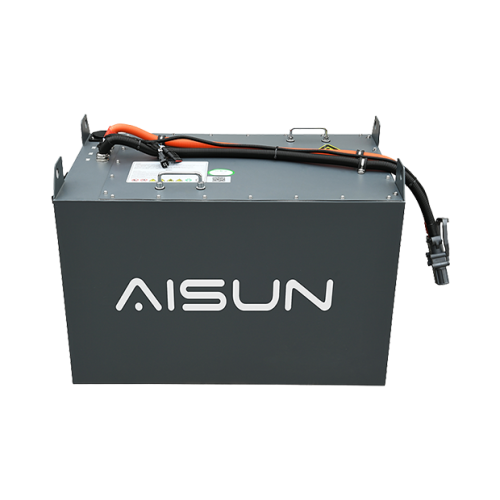
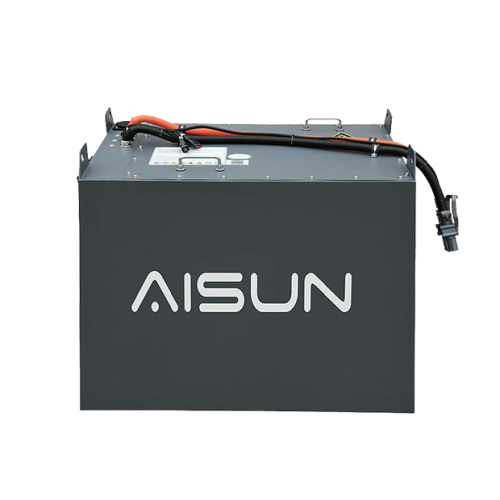
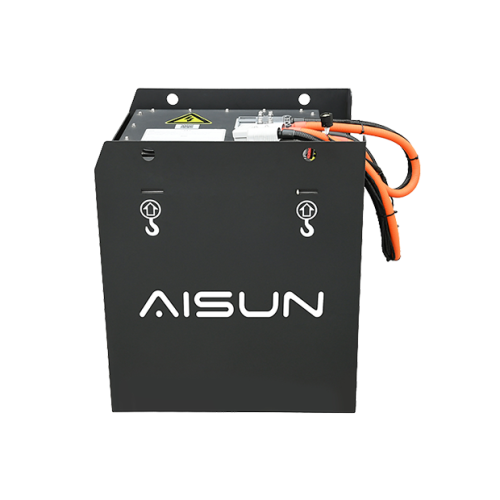
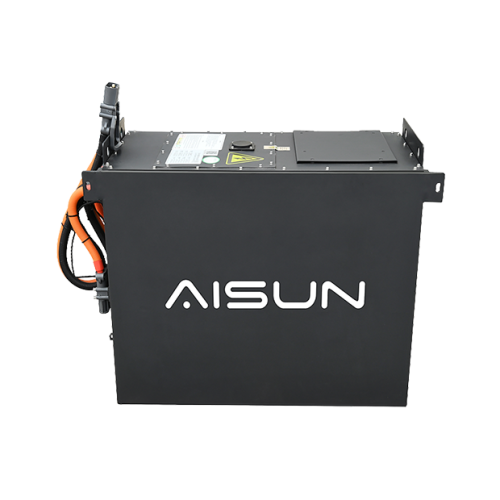
Industrial chargers (forklifts, AGVs): Often guided OEM — duty cycles and battery chemistries vary enough that off-the-shelf rarely fits perfectly. Our forklift charger lineup shows typical configuration points.
Where to Go from Here
The short version: start ODM, prove your market, then graduate your best-selling SKU to guided OEM when annual volume passes 2,000 units. Insist on factories that own their own firmware and power modules. Budget properly for certifications and freight on DC units. And always test samples in your real target environment before committing to a container.
At evaisun, we support both paths — ODM wallboxes and DC chargers ready to ship with your branding in 4–8 weeks, and full OEM programs with in-house firmware, power electronics, and certification support when you're ready to differentiate. If you're sizing up your next order, reach out with your target markets and volumes and we'll tell you straight whether OEM or ODM fits your numbers.
Subscribe the newsletter to get updated to news and promotions
Cookies give you a personalized experience,Сookie files help us to enhance your experience using our website, simplify navigation, keep our website safe and assist in our marketing efforts. By clicking "Accept", you agree to the storing of cookies on your device for these purposes. Click "Adjust" to adjust your cookie preferences.For more information, review our Cookie Policy