800V EVs Are Arriving: Why Charger Output Voltage Range Belongs in Your Product Plan
Home / Blog / Guidelines / 800V EVs Are Arriving: Why Charger Output Voltage Range Belongs in Your Product Plan
17 Nov, 2026
800V charging infrastructure
constant power voltage window
DC charger voltage range
wide voltage range EV charger
An 800V EV needs a DC charger whose output can reach roughly 900V to charge at the rate its pack was designed to take. Some 800V vehicles will still accept a charge from a unit capped at 750V, but they do it by reconfiguring the pack internally to a lower voltage, and the session runs at reduced power. So a product plan still centered on 500-750V output modules is a line card for the fleet that is being replaced. The fix is a specification written as a voltage band with a power commitment attached to each point along it.
Key takeaways
The ceiling is set by hardware: module topology, DC bus capacitor class, contactors, fuses, insulation monitoring and output clearances. Certification to IEC 61851-23 follows the rated voltage class, so raising it is a new test programme.
Read output capability as a curve. A 240 kW unit with a 500 A limit delivers only about 150 kW at 300V and reaches full rated power at roughly 480V.
For a new public or fleet-facing DC SKU, specify a ceiling of at least 1000V, full rated power from the middle of the range upward, and the cable assembly voltage class in writing.
A 750V-max unit still earns its place in depot and destination work, but it stops earning it in public corridor and truck-stop tenders where it should be priced as limited scope.
What 800V Actually Means at the Charger’s Output Terminals
Eight hundred volts describes the pack’s nominal figure. The charger never sees nominal. It sees terminal voltage, which climbs toward the pack’s maximum at full charge and sags toward its minimum when the pack is nearly empty.
Do the cell arithmetic once and the numbers stop being abstract. A pack built from roughly 200 series lithium-ion cells sits near 700V nominal and reaches about 840V at full charge, because series cells add their voltages and each cell tops out near 4.2V. Packs built slightly larger run past 900V.
What the top of the range does to a session
A charger cannot push current into a pack whose terminal voltage is above its own output ceiling. If it tries, the session either never starts or stops partway through, at the moment the rising pack voltage meets the charger’s limit. Both outcomes land as an aborted session, which is easy to misread as a vehicle fault.
What the bottom of the range does
A 1000V-capable charger still has to behave at 300V, which is roughly where a deeply discharged pack sits. That corner of the envelope is where a high-voltage design is most likely to run out of current, and where a single headline maximum voltage tells you nothing at all.
Why AC sites escape the problem
On AC, the vehicle’s onboard charger sits between the supply and the pack and absorbs the voltage difference. That is why a 400V three-phase AC point still charges an 800V car without drama. The constraint only appears where the charger connects straight to the pack.
This is not a forecast any more. The first mass-market 800V passenger car reached the road in 2019, and the architecture has since spread from premium models into mid-market crossovers and commercial vehicles. A tender that mentions 800V vehicles is describing the current fleet.
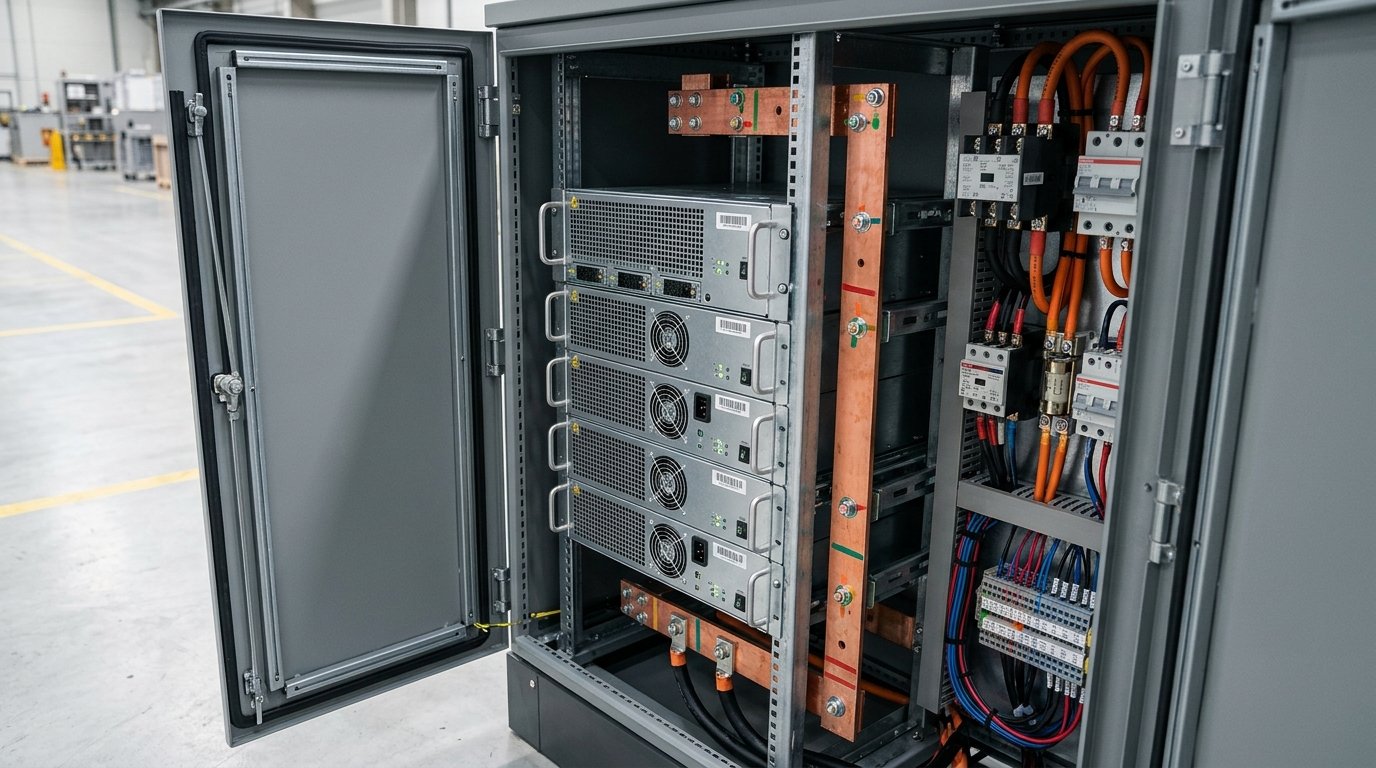
Open DC fast charging cabinet showing power modules, busbars and output contactors
A Voltage Ceiling Is a Hardware Wall, Not a Firmware Setting
Suppliers sometimes describe a voltage ceiling as a setting, a profile or a licence option. It is none of those. The ceiling is the lowest-rated part in the output path, and this set is what sets the wall:
Power module output topology and the voltage class of the switching devices inside it
DC bus capacitor voltage class
DC contactors and output fuses
The insulation monitoring device
Creepage and clearance distances on the output side
Any one of these rated below the target caps the whole cabinet. A 1000V design cannot be assembled from 750V modules with a different control board bolted on.
Derating and refusal are different products
A derating charger delivers reduced power and still charges the car. A voltage-limited charger cannot charge the car at all. When a supplier calls a platform compatible with 800V vehicles, ask which of the two they mean and get a voltage figure attached to the answer in writing.
The retrofit trap
Output voltage is not a user setting, and the parts that set it are rarely field-swappable subassemblies. An installed 750V-max unit stays 750V-max for its service life. If you are building a depreciation case for a fleet customer, that is the curve to depreciate against, and it is the assumption to correct before the finance paper is signed rather than after.
Why certification makes the upgrade expensive
Type testing to IEC 61851-23 is carried out at the rated voltage class. Raising the ceiling means a new test programme, not a parameter change. That explains why near-identical enclosures appear in two versions at two prices, and why the cheaper one is a poor bargain for a mixed fleet.
The Datasheet Number That Matters More Than Maximum Voltage
A maximum output voltage tells you where the charger stops. It says nothing about what the unit delivers on the way there. The number to demand is the constant-power voltage window: the band in which the charger holds full rated power.
You can derive that window from two published specs, rated power and maximum output current. Take an illustrative 240 kW unit with a 500 A current limit:
Output voltage
What limits the session
Delivered power
300 V
500 A current ceiling
About 150 kW
400 V
500 A current ceiling
About 200 kW
480 V
Full rated power begins
240 kW
850 V
Rated power, current falls away
240 kW at about 282 A
Full power starts at about 480V, because 240 kW divided by 500 A gives 480V. Below that line the current ceiling governs and the cabinet behaves like a much smaller charger. Above it the unit is power-limited and current falls as voltage rises. That is the arithmetic that quietly turns a high-voltage charger into a 200 kW unit when a legacy 400V truck plugs in, and into roughly 150 kW at the 300V corner.
Ask for the curve, and ask for it twice
Request the power-versus-voltage curve at two ambient temperatures. The top of the voltage range is usually where thermal margin is thinnest, so that is where a hot afternoon bites hardest. The mechanism behind that is covered in why DC fast chargers derate in summer; the voltage axis is the other half of the same reading skill.
Per connector, or shared across the cabinet
Check whether quoted power is per connector or shared. A charger that holds 1000V at half power because two vehicles are plugged in is a different product from the one on the brochure page.
One Charger, Two Fleets: Serving 400V and 800V Vehicles From the Same SKU
Two vehicles, one bay, opposite demands. A 400V vehicle at 400V and 500A is asking for current. An 800V vehicle at 850V and 300A is asking for voltage. A specification built around either number alone fails the other half of the site, and mixed depots are becoming the normal case. The scheduling side of that is set out in electric vehicle fleet management and advanced charging technologies.
Write the spec as a band
The shape to ask for is a wide output window quoted as a range: a stated minimum and maximum output voltage, a full-power band inside it, and a maximum current per connector. A single maximum voltage leaves the current side undefined, which is where the surprises live.
The cable is part of the voltage path
A 1000V module feeding a cable assembly rated to a lower class defeats the whole design. Connector standards define voltage classes rather than individual part numbers: IEC 62196-3 for CCS2, SAE J3400 for NACS, GB/T 20234.3 for the Chinese DC standard. A connector family having a higher class available does not mean the specific assembly in your quote carries it. Ask for the assembly’s class in writing.
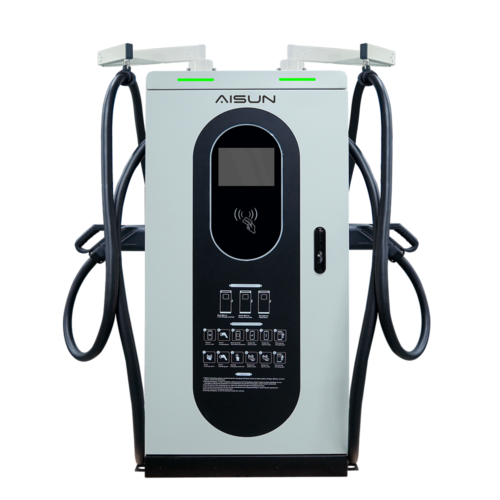
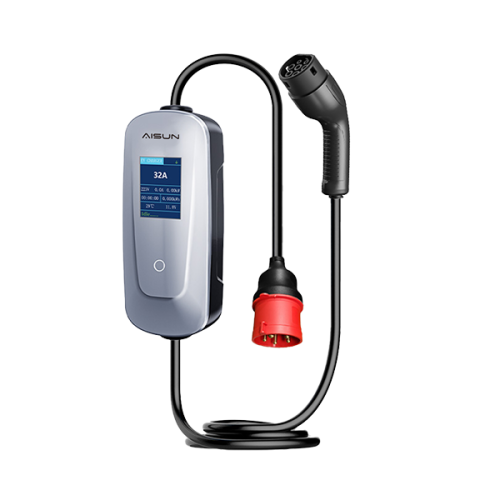
That question applies at both ends of a line card. A business-facing DC EV Charger European Standard is described as a fast charger with high voltage and power output, while the Portable NACS Standard EV Charger is stated to be compatible with Tesla EV models and charging stations. Different products, one requirement: nameplate class at the terminals, not only at the module.
The opinionated part
For a new public or fleet-facing DC SKU sold into mixed markets, a ceiling below 1000V is hard to defend. A distributor who orders one anyway carries that decision on their own balance sheet when the first 800V tender lands, and the end customer will hear the limitation from the vehicle side, not from the datasheet.
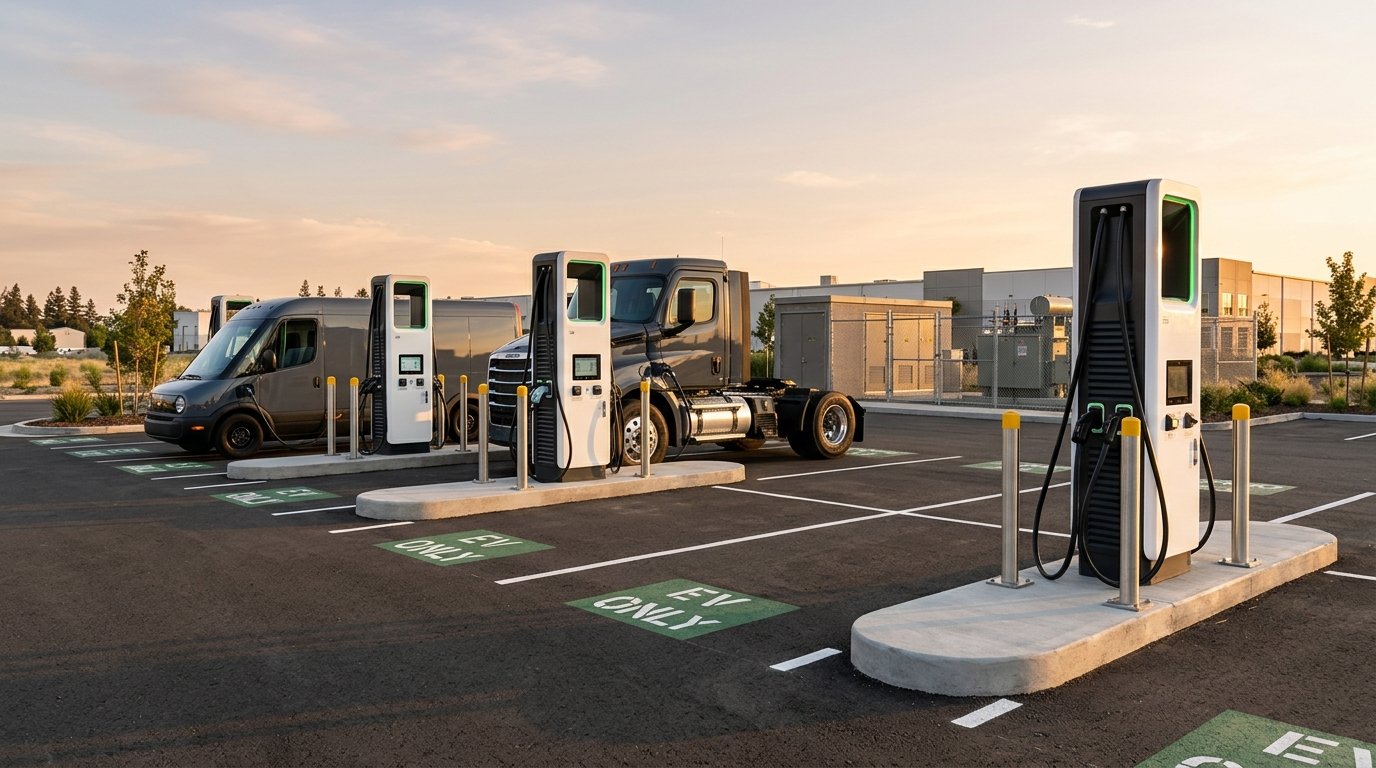
Charging hub with several DC fast chargers serving a delivery van and a heavy truck
What Changes Inside an 800V-Capable Charger, and Where the Cost Goes
When the price delta between a 750V unit and a 1000V unit looks larger than the parts list explains, the difference is usually voltage class spread across several components, plus the testing that follows. Here is where the money goes.
Components move up a class. Output-side creepage and clearance distances grow with the voltage class, and every part that touches the DC bus has to be rated for it. That cost is spread across the whole bill of materials rather than sitting in one line item, which is why it is easy to miss and easy to underquote. None of it is padding, and a quote that omits it is quoting a different product.
Semiconductor choice is a trade-off, not a checkbox. Silicon-carbide devices switch faster and lose less at high voltage, but a well-built IGBT platform can hold a 1000V ceiling at slightly lower efficiency. Ask which was used, then read the partial-load efficiency curve and decide whether the difference pays back at your duty cycle. Long dwell at part load rewards efficiency; short high-power sessions reward purchase cost.
Module count and arrangement set the ceiling. A cabinet built from 30kW modules can be arranged for higher output voltage or higher output current, and those two goals pull against each other. A DC EV Charger European Standard variant offered with a 30kW Power Module is a useful reference for how that modular arithmetic works in practice.
Thermal design shifts rather than disappears. High-voltage, lower-current operation is kinder to output cables and connectors, but loss density in the modules stays much the same. Ambient rating still sets the practical envelope, so a 1000V unit does not automatically run cooler.
For a technical review, the relevant context is the module family as much as the finished cabinet. The SDM Series AC-DC Power Module and the AVR Series Power Module sit alongside electric vehicle chargers, industrial battery chargers and lithium batteries in AiPower’s product lines, and the company states its solutions carry UL and CE certification. Those are the artefacts to interrogate, together with partial-load efficiency, module replacement strategy and the ambient derating curve. Treat a voltage claim without that backing as a marketing statement until it is proven.
How 800V Cars Behave on 400V Chargers, and Why You Cannot Plan Around It
Some 800V vehicles can present a lower voltage to a lower-voltage charger. They either split the pack internally into parallel halves, or route power through the drive inverter windings so the effective input voltage drops. The session starts, the car charges, and everything looks normal until you look at the power curve.
What the car receives in that mode is a fraction of what it can accept. Dwell time stretches accordingly.
You cannot specify it, audit it or guarantee it
Pack reconfiguration is a vehicle design decision. It varies by model, by trim and by firmware version. Across an arriving fleet of mixed models, some vehicles will do it, some will not, and the ones that do may change behaviour after an over-the-air update. No site operator can write that into a specification, and no charger vendor can promise it on the vehicle’s behalf.
Why the cost lands on the queue, not on the ticket
On a public or fleet site, session length is set by whatever current the vehicle will accept in reconfigured mode, and that current is lower than what the same car draws at its native pack voltage. The bay stays occupied longer than the site model assumed. That shows up as queueing and as a flat revenue curve per bay. It rarely shows up as a fault report, because nothing failed, which is exactly why it goes unmanaged for months.
The reverse case is the friendly one
A 1000V-capable charger serving a 400V vehicle is limited only by current, a known and specifiable quantity with a curve attached to it. Widening the ceiling does not strand the installed base. It moves the constraint onto the current side, which is the quantity section 3 tells you to measure before you sign.
Which Segments Will Demand 800V Next, and What That Does to Your Line Card
The transition is uneven, and it pays to time it by segment instead of reacting to whatever a customer asked about last week.
Passenger cars
The architecture has moved from premium sedans into mid-market crossovers, and it is standard on many export-focused Chinese models. In a market that imports those cars, the installed base of 800V vehicles can grow faster than local new-car registrations suggest.
Commercial vehicles
Heavy trucks, coaches and transit buses run at 800V and above, and their duty cycles make charge time expensive. They are the least tolerant of a voltage-limited charger, because a slow session lands directly on the operating schedule rather than on a driver’s convenience.
Very high power
Megawatt charging work aimed at long-haul trucking pushes voltage classes higher again. That is a separate specification exercise with its own connector, cooling and site-power problems, but it sets the direction of travel for anything you stock for the next decade.
Ports, mining and heavy industry
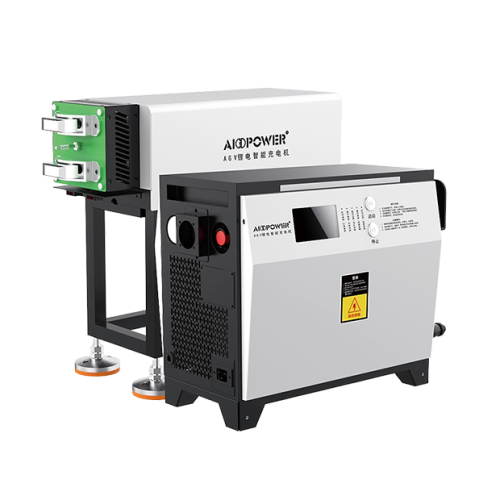
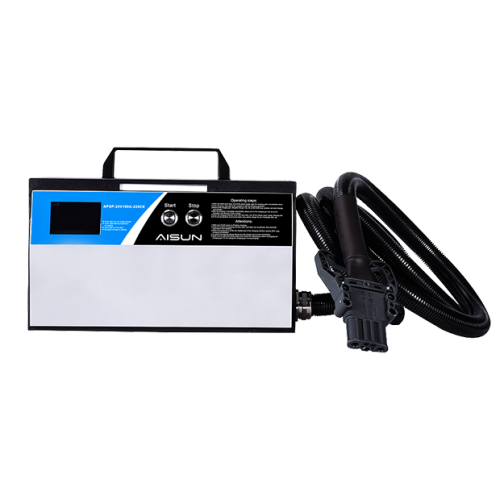
These sites are moving to higher-voltage packs for the same reasons road transport is. Low-voltage industrial battery charging is a separate world with its own voltage classes: forklifts, AGVs and AMRs sit at 24V, 36V, 48V, 72V and 80V, and AiPower’s product list reflects that split, with industrial battery chargers listed at those voltages and a dedicated lithium battery charger for AGV and AMR applications. If you are specifying on that side of the catalogue, choosing the perfect industrial battery charger for your equipment covers the selection logic. Do not let one voltage story cover both.
What it does to the line card
A 750V-max DC SKU remains a defensible product for depot, destination and known 400V-fleet accounts. Position and price it as a limited-scope product. Selling it as future-proof is the mistake, because the first mixed tender will expose the ceiling in front of your customer.
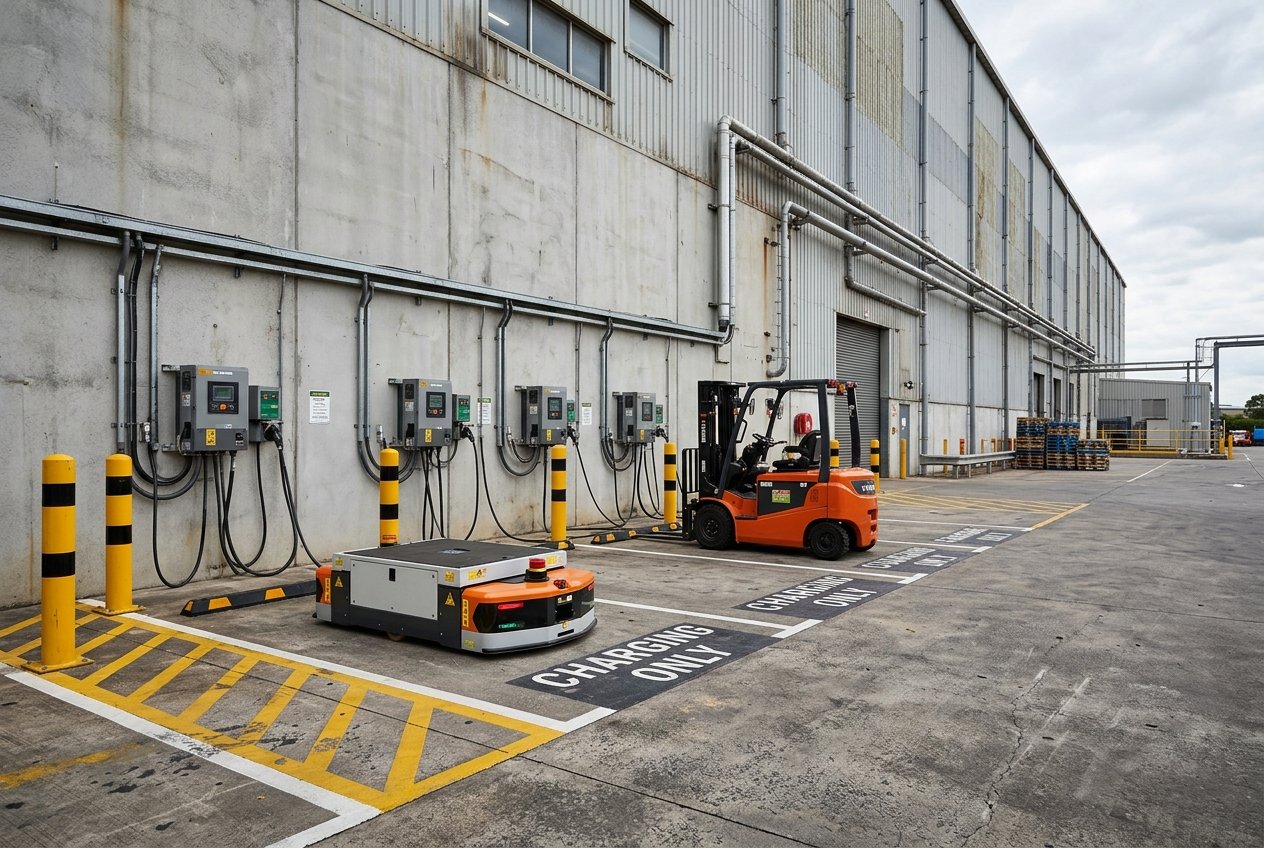
Electric forklift and automated guided vehicle beside wall-mounted industrial battery chargers
Putting Voltage Into the RFQ: A Verification Checklist
Everything above converts into six clauses you can put in front of a supplier this week.
State the requirement as a band plus a power commitment. Ask for a stated output voltage range with full rated power held from the middle of the range up to the ceiling, rather than a single maximum voltage figure.
Require the curve at two ambient temperatures, the maximum output current per connector, and the module datasheet alongside the system datasheet, so the ceiling can be traced back to a component.
Demand evidence of the assembly voltage class. Connector and cable assembly class, plus the type-test report at the rated voltage class, not a certificate issued for a different model in the same family.
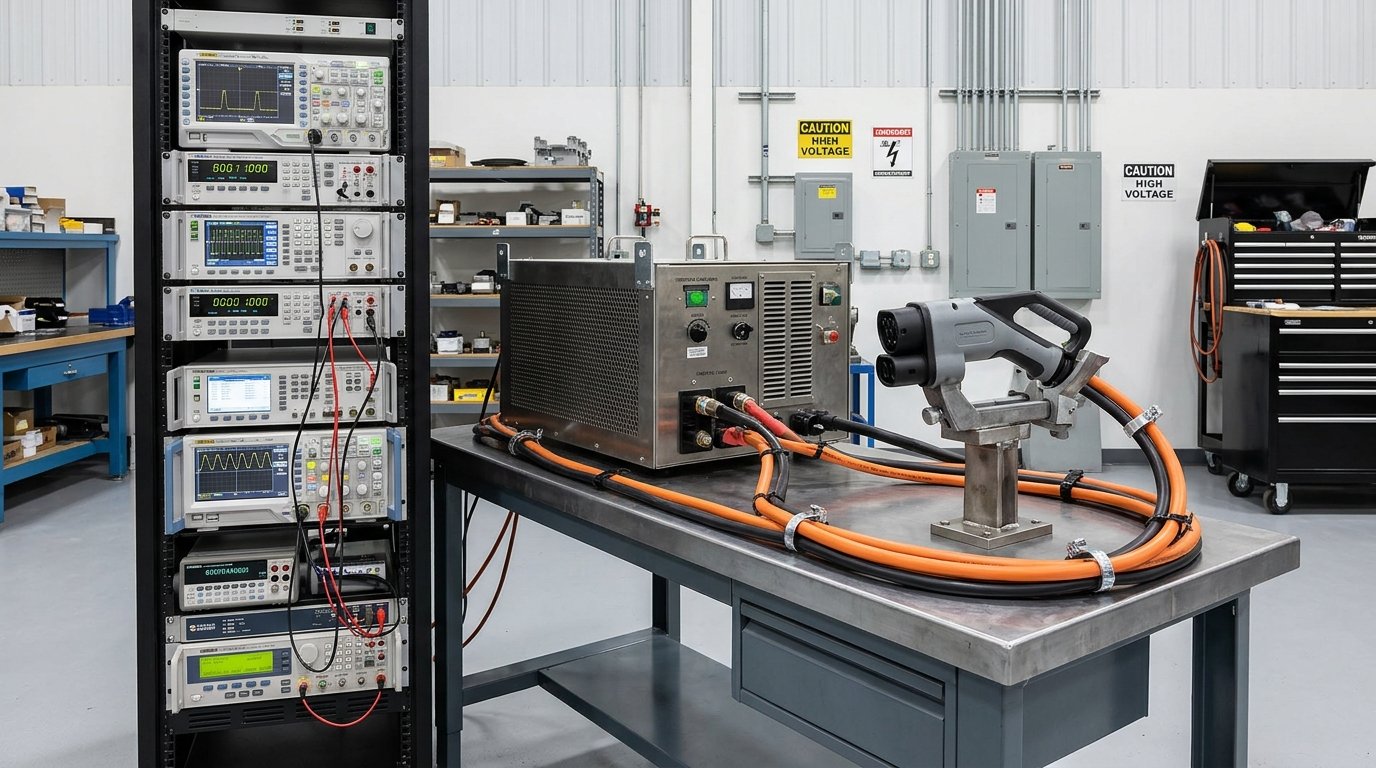
Write the acceptance test. Load-bank runs at three points: low voltage at high current, high voltage at moderate current, and the highest ambient the site will see. Add a conformance run with an 800V vehicle or a simulator before sign-off.
Tie the warranty to the operating envelope. If coverage is limited to operation inside a stated voltage and current window, verify that your own site designs and customer promises stay inside it. A warranty that quietly excludes the low-voltage corner is worth little on a depot full of deeply discharged packs.
Ask about service continuity. If a module of a different voltage class is fitted in year four, the cabinet no longer matches its nameplate. Ask how replacement modules are held, and how the class is preserved for however long you plan to keep the unit in service, stated in years and written into the agreement.
Load bank test setup with DC cables and a charging connector on a workshop test stand
Your Three Decisions for the Next Product Cycle
Three decisions, all of them cheap to make now and expensive to defer.
Set a floor for the voltage ceiling. Pick a minimum acceptable output voltage ceiling for every new DC SKU and write it into the product brief, so it is not renegotiated order by order by whoever is under price pressure that month.
Assign a role to the existing inventory. Depot, destination and known 400V-fleet accounts are legitimate homes for lower-ceiling units. Public corridor and truck-stop tenders are not. Draw that boundary before a tender tests it for you.
Name the trigger for a platform upgrade. Decide in advance what share of your pipeline, or which segment, has to involve 800V vehicles before you ask suppliers for a voltage-class upgrade on your private-label platform. When the trigger hits, use the RFQ clauses from the previous section to compare answers on equal terms.
Guangdong AiPower New Energy Technology Co., Ltd. was founded in 2015 and offers DC EV charging hardware including a European Standard model built around a 30kW power module. If you are drafting a voltage specification for a new SKU, bring your site data and duty cycle to that conversation.
Frequently asked questions
Do I need a 1000V charger to charge an 800V EV?
You need a ceiling above the pack’s maximum charge voltage, which for many 800V packs sits near 840V and for larger ones exceeds 900V. A 1000V output class covers that with margin. Some vehicles can reconfigure internally to accept a lower voltage, but the power delivered is reduced and you cannot rely on it across a mixed fleet.
Can an 800V car charge at a 400V DC fast charger?
Often yes, but usually at a fraction of the vehicle’s capability. Some 800V cars split the pack or route power through the inverter to present a lower voltage to the charger, so the session runs but dwell time stretches considerably. That behaviour is a vehicle design decision, varies by model and firmware, and cannot be specified or guaranteed by a site operator.
What is a constant-power voltage window on a DC charger?
It is the band of output voltages in which the charger holds its full rated power. Outside that band either the current limit or the power limit governs, so delivered power falls. Ask for the window at two ambient temperatures rather than accepting a single maximum voltage figure, because the ceiling is where thermal margin is thinnest.
Subscribe the newsletter to get updated to news and promotions
Cookies give you a personalized experience,Сookie files help us to enhance your experience using our website, simplify navigation, keep our website safe and assist in our marketing efforts. By clicking "Accept", you agree to the storing of cookies on your device for these purposes. Click "Adjust" to adjust your cookie preferences.For more information, review our Cookie Policy