Taxi and Ride-Hailing Fleet Charging: Balancing Speed, Cost, and Vehicle Uptime
Home / Blog / Guidelines / Taxi and Ride-Hailing Fleet Charging: Balancing Speed, Cost, and Vehicle Uptime
24 Sep, 2026
DC fast charging for taxis
fleet charger uptime
ride-hailing charging infrastructure
rideshare EV charging strategy
The right answer for taxi and ride-hailing fleet charging isn’t cheap AC or fast DC — it’s both, deployed strategically based on how each vehicle actually gets used. Overnight AC charging at the depot keeps electricity costs down for cars parked between shifts, while strategically placed DC fast chargers protect earning hours for vehicles running 12+ hours a day. Get the ratio wrong and you’re either burning cash on demand charges or losing drivers to idle downtime — both of which hit your bottom line hard.
Why Taxi Fleets Break the Normal EV Charging Rulebook
Most EV charging guidance assumes a vehicle parks for 8+ hours a day. Taxi and ride-hailing vehicles laugh at that assumption. A busy driver in Manila, Jakarta, or Mexico City might log 250-400 km per shift across split morning and evening peaks, with barely 90 minutes of true downtime in between.
That changes the math entirely. Every minute a driver spends plugged in instead of picking up fares is lost revenue — often $15-30/hour in gross fares depending on market. So the charging strategy has to be built around driver income protection, not just kWh cost minimization. This is fundamentally different from the depot-style thinking covered in fleet depot overnight charging design, where every vehicle sits idle for a predictable window.
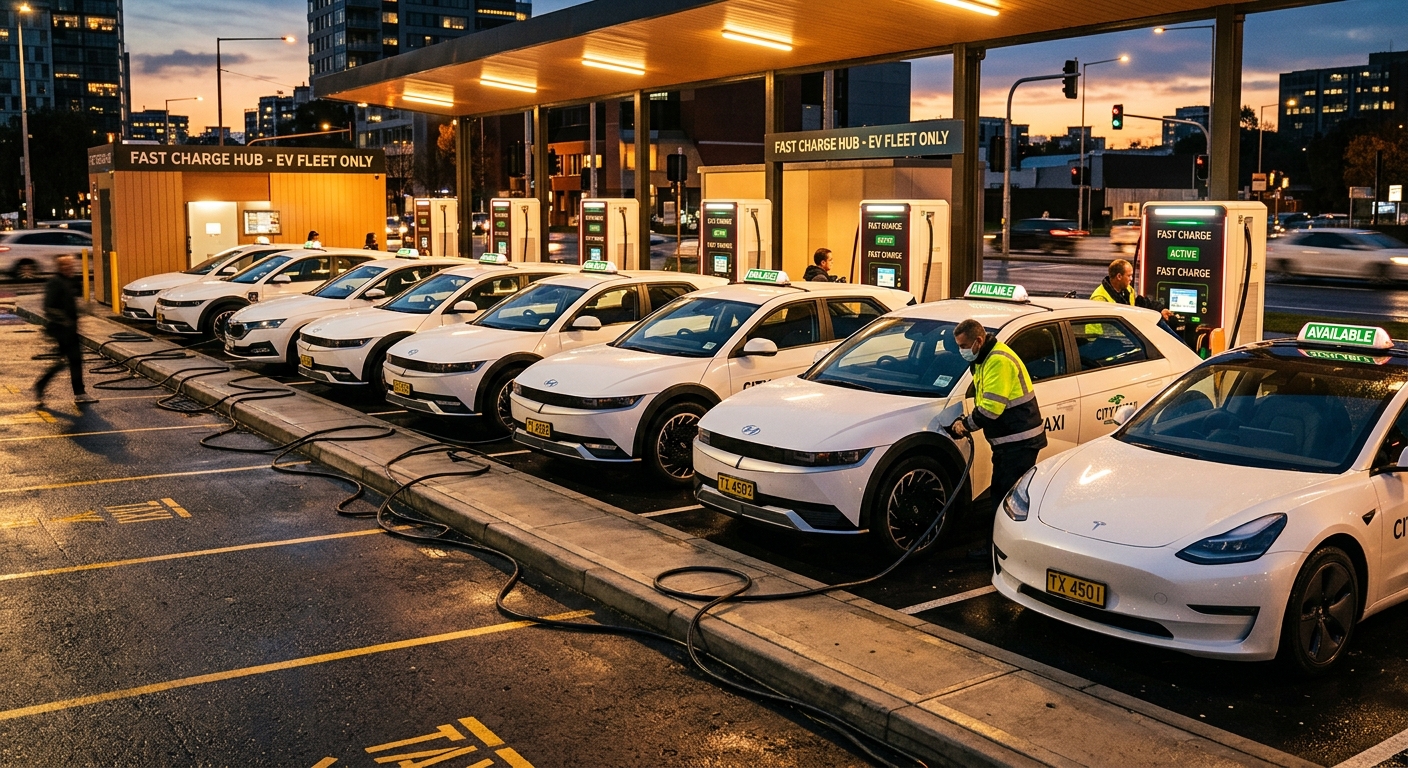
Row of electric taxis connected to fast chargers at dusk
The Overnight AC Backbone: Cheap, but Only Half the Answer
If a portion of your fleet returns to a central depot at night — common for company-owned taxi fleets rather than gig-based ride-hailing — overnight AC charging is the cheapest kWh you’ll ever buy. A 7-11kW Level 2 AC charger can fully replenish a 40-60kWh sedan battery in 6-8 hours, using off-peak electricity rates that are often 40-60% cheaper than daytime commercial rates.
Where This Falls Apart
Ride-hailing drivers who own their own vehicles rarely have access to a shared depot. They charge at home, at public stations, or wherever’s convenient between fares — which means your infrastructure planning as an operator or charger distributor needs to account for a much more fragmented charging behavior pattern than a traditional logistics fleet.
DC Fast Charging: The Real Uptime Insurance
For any vehicle running double shifts or logging over 300km a day, DC fast charging isn’t a luxury — it’s the only way to keep the car earning. A 60-120kW DC charger can add 150-200km of range in 20-30 minutes, which lines up almost perfectly with a driver’s natural meal break or shift handoff window.
For instance, a mid-sized ride-hailing operator running 200 vehicles across a metro area might place six 120kW DC stations near high-density pickup zones — airports, business districts, transit hubs — rather than concentrating all charging at one depot. Drivers top up during natural lulls instead of making a dedicated charging trip, which keeps utilization high without adding non-revenue driving time.
This is where fast charging’s battery degradation tradeoffs become a real conversation. Frequent DC fast charging does add thermal stress, but for a vehicle generating daily revenue, a few percentage points of extra battery wear over three years is a fair trade against lost fare income.
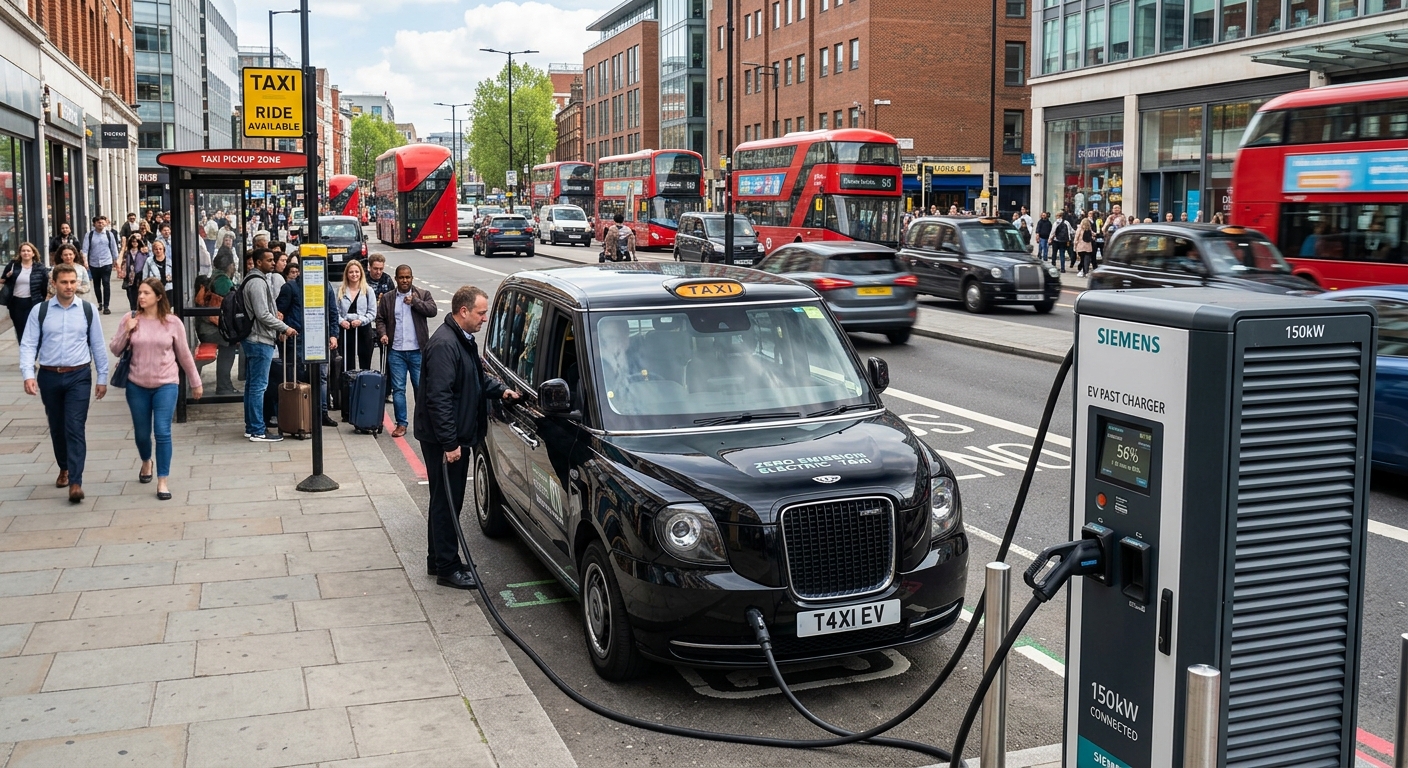
Electric taxi charging quickly at urban DC fast charger
Sizing the Site: Don’t Oversize on Day One
A common mistake distributors and site developers make is sizing a taxi charging hub for peak simultaneous demand from the start. If you install eight 120kW DC chargers assuming they’ll all run at once, you’re paying for a transformer upgrade you might not need for two years.
Dynamic power sharing lets you deploy fewer physical connections while serving more vehicles, throttling output as more cars plug in simultaneously. For a taxi hub with staggered arrival patterns — which is the norm, not the exception — this can cut initial grid connection costs by 30-40% without meaningfully increasing wait times.
The Connector and Power Module Question for High-Cycle Use
Taxi chargers get plugged and unplugged far more often than residential or workplace units — sometimes 20-30 cycles per charger per day versus 1-2 for a home charger. That kind of mechanical stress exposes weak cable and connector design fast.
A charger that fails on a Tuesday afternoon at a busy pickup hub doesn’t just cost you a repair bill — it costs every driver who was counting on that stall.
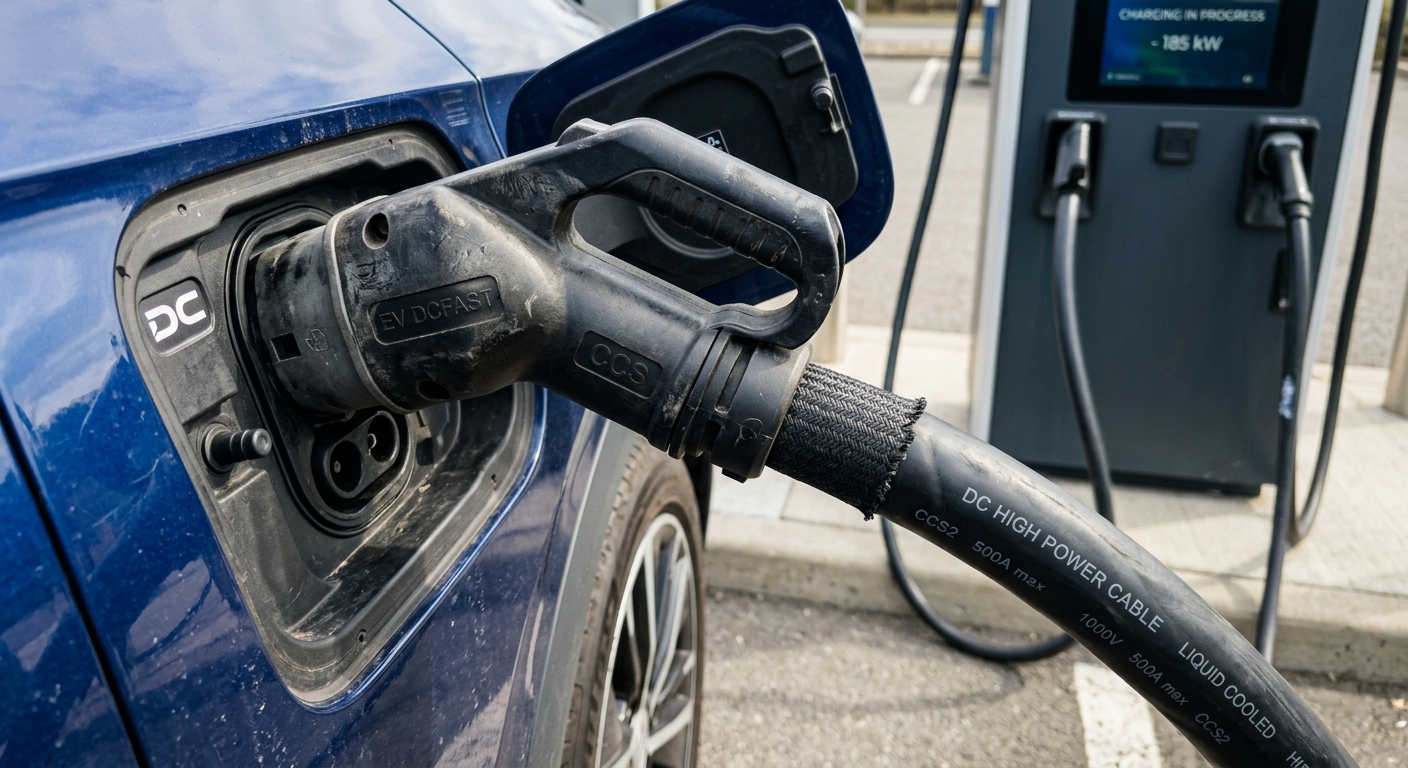
Close-up of DC fast charging cable and connector in use
Cost Modeling: What Actually Moves the Needle
Electricity cost gets all the attention, but it’s rarely the biggest lever. Demand charges — the fees utilities impose based on your peak kW draw, not total kWh consumed — can dwarf your energy bill if you’re running multiple 120kW+ chargers during afternoon peak hours.
A fleet operator we’ve seen in similar deployments cut their monthly utility bill by nearly 25% simply by staggering charger activation windows and adding a modest battery buffer to shave peak demand rather than upgrading their grid connection. If your hub sits in a region with steep demand charges, this is often a faster payback than chasing marginally cheaper per-kWh electricity rates.
OCPP Connectivity and Fleet Management Integration
Taxi and ride-hailing operators need visibility into charger status in near real-time — a driver stuck at a faulted charger is a driver not earning. Chargers running OCPP 1.6 or 2.0.1 can push live availability data into dispatch apps, letting drivers route to open stalls instead of guessing.
If you’re a distributor bidding on a fleet contract, this connectivity requirement is increasingly non-negotiable. Operators want the same stall-availability transparency that gas station apps have offered for years, and they’ll walk away from hardware that can’t deliver it.
Subscribe the newsletter to get updated to news and promotions
Cookies give you a personalized experience,Сookie files help us to enhance your experience using our website, simplify navigation, keep our website safe and assist in our marketing efforts. By clicking "Accept", you agree to the storing of cookies on your device for these purposes. Click "Adjust" to adjust your cookie preferences.For more information, review our Cookie Policy