Rental Car and Car-Sharing Fleets: Designing Charging Hubs for Rapid Turnaround
Home / Blog / Guidelines / Rental Car and Car-Sharing Fleets: Designing Charging Hubs for Rapid Turnaround
15 Sep, 2026
car-sharing EV charging
EV charging hub design
fast turnaround EV charger
rental fleet DC charging
A rental or car-sharing charging hub isn’t a scaled-down depot — it’s a completely different design problem, because the goal is turning a vehicle around in 20-40 minutes, not overnight. That means DC fast charging is mandatory, not optional, and your layout has to solve for queuing and traffic flow the way a gas station does, not the way a warehouse depot does. Get the charger count, power allocation, and site flow wrong, and you’ll have customers waiting in line for a bay while half your fleet sits idle plugged into underpowered AC posts.
Why Overnight Depot Logic Doesn’t Apply Here
Most fleet charging content assumes vehicles sleep at the depot for 8+ hours. Rental and car-sharing fleets don’t get that luxury — cars come back at random hours, all day long, and need to be ready for the next renter fast. A vehicle sitting on a 7 kW AC charger for four hours between rentals is a vehicle that’s not generating revenue.
This is why overnight depot charging design principles — built around low-power, high-quantity AC dispensers — don’t transfer well to rental operations. You need fewer, more powerful stalls that can push 60-150 kW into a battery in under half an hour.
The Turnaround Math
Say a mid-size EV needs a 20% to 80% top-up. On a 60 kW DC charger, that’s roughly 25-35 minutes depending on the battery chemistry and thermal state. On a 150 kW unit with a compatible vehicle, you can cut that to 15-20 minutes. That difference determines whether your hub needs 4 stalls or 8 to handle the same daily throughput.
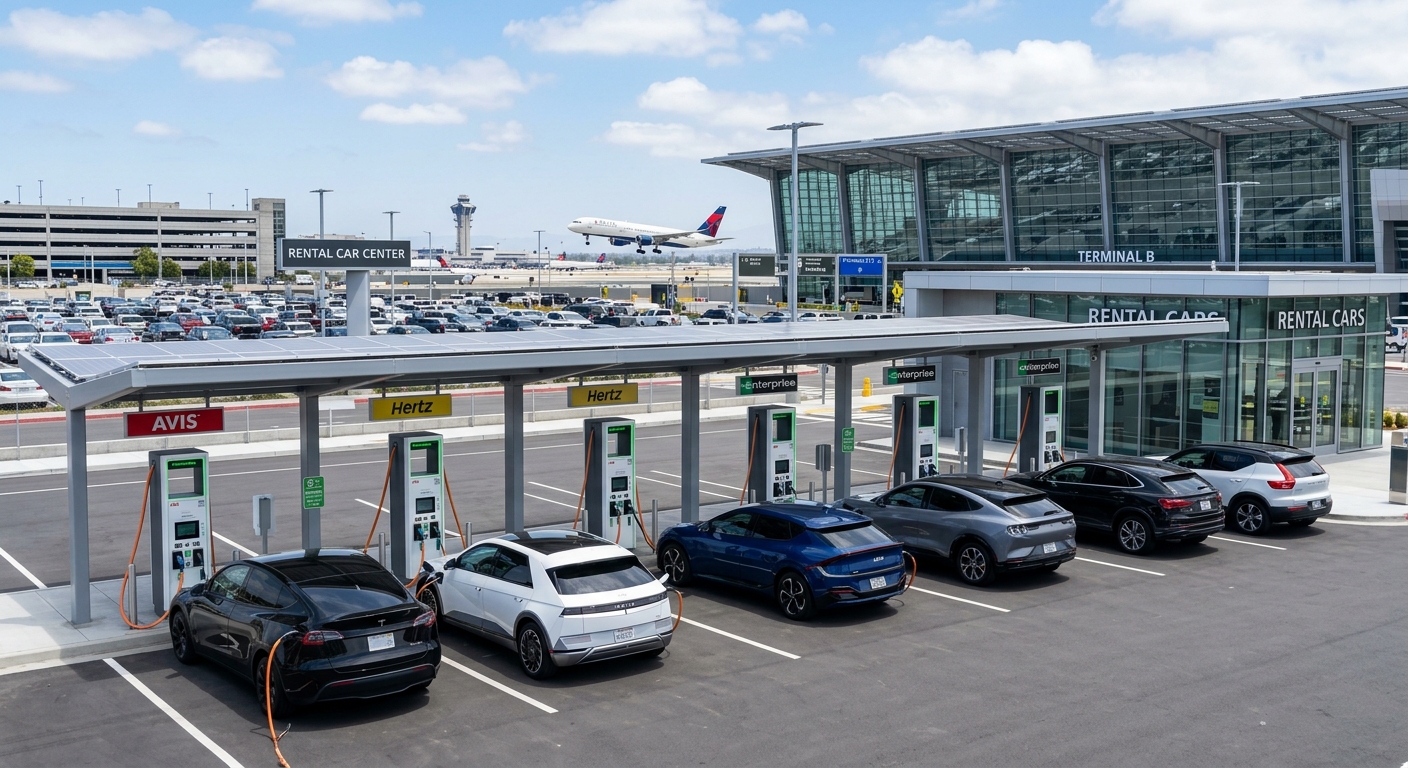
Row of DC fast chargers at a rental car lot with vehicles actively charging
Sizing Power: DC Fast Charging Is Non-Negotiable
For any rental or car-sharing hub processing more than 15-20 vehicles a day, AC charging simply can’t keep pace — you need DC. Reference our breakdown of AC vs. DC chargers and their ROI tradeoffs before committing capital, because the upfront cost difference is real but so is the throughput gap.
A practical rule: plan for 60-120 kW per stall as your baseline, with a few 180 kW+ units reserved for high-turnover peak hours (think airport counters on Friday afternoons). Don’t oversize every stall to 350 kW — most rental fleet vehicles can’t accept that rate anyway, and you’ll pay for headroom you never use.
Matching Connector Standards to Your Fleet Mix
If your fleet spans multiple regions or brands, connector compatibility matters more than raw power. Check our guide to CCS2, NACS, and GB/T standards before finalizing hardware — a hub with the wrong connector mix creates bottlenecks just as bad as underpowered chargers.
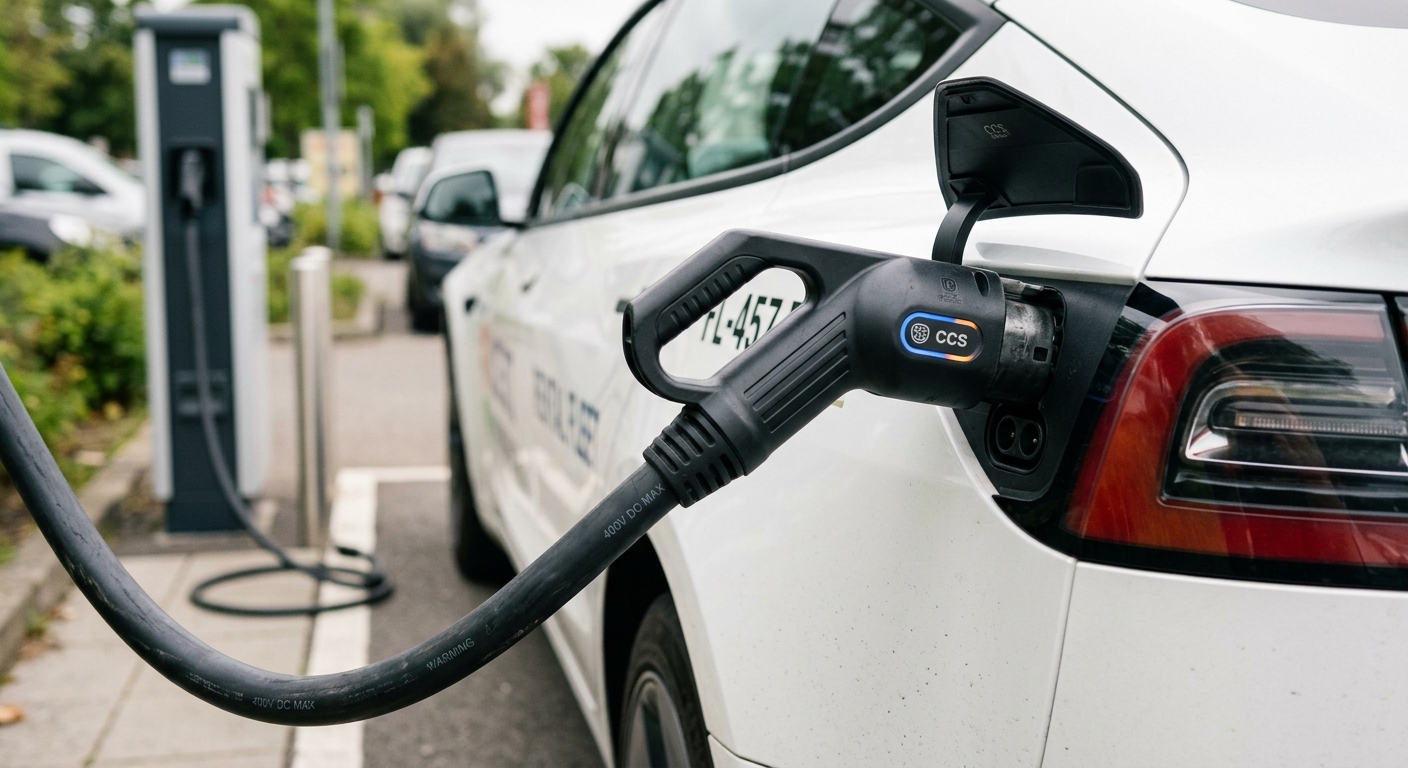
Close-up of DC fast charging connector plugged into a rental sedan
Load Balancing: The Hidden Constraint Behind Every Hub
Here’s a mistake we see constantly: operators size chargers for peak individual output but forget what happens when six of them run simultaneously during a busy return window. Without dynamic power sharing, you either trip your transformer limit or the utility forces a costly upgrade.
Our post on load balancing and dynamic power sharing covers this in depth, but the short version for rental hubs: build in software-managed power allocation so that when demand spikes, chargers automatically throttle to stay within the site’s transformer capacity rather than failing outright. A hub with eight 120 kW chargers rarely needs a 960 kW connection — dynamic sharing lets you size the transformer around realistic simultaneous demand, often 40-60% of nameplate total.
Layout: Designing for Traffic Flow, Not Just Charger Count
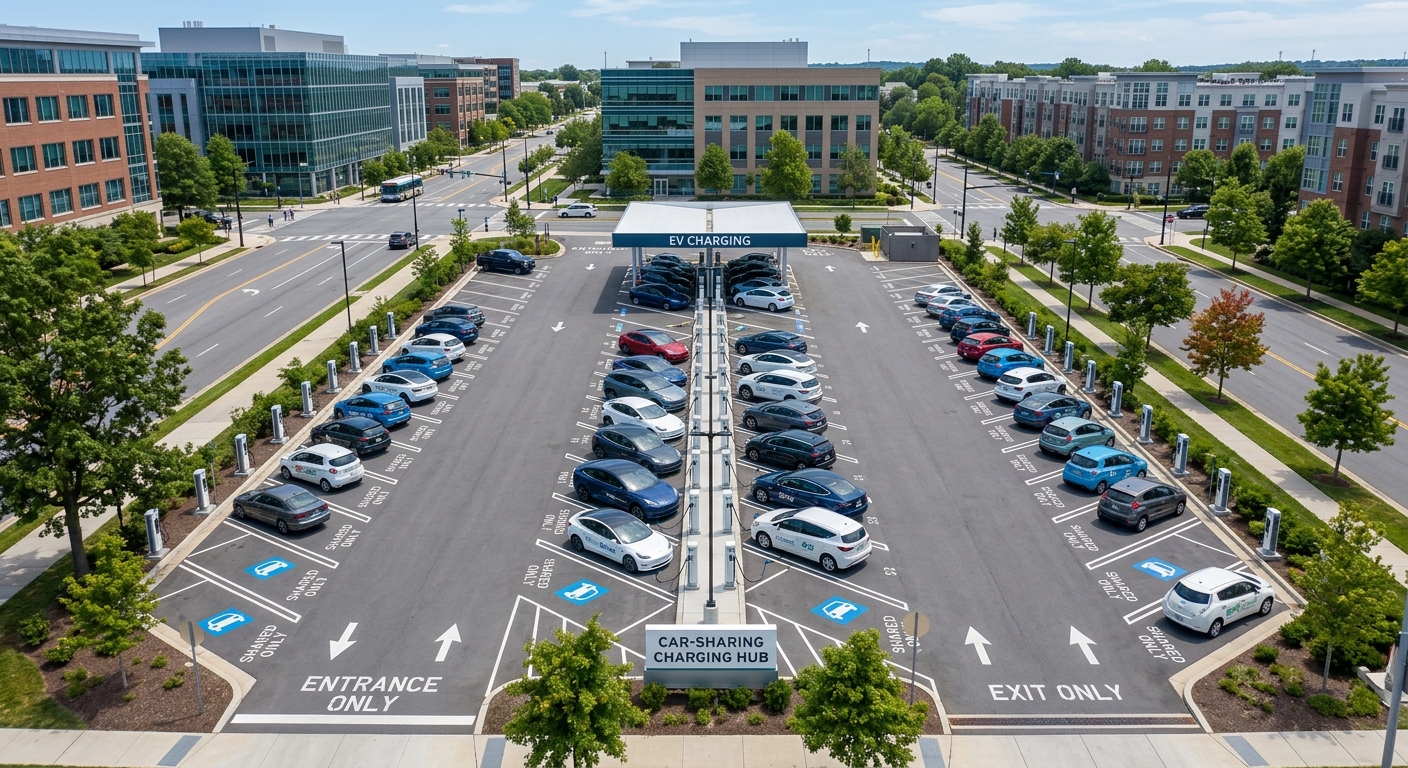
A charging hub laid out like a parking lot creates queues. A charging hub laid out like a fuel station moves cars. The key difference is pull-through access — vehicles should be able to enter, charge, and exit without backing up or crossing another car’s path.
Real-World Example: Airport Rental Return Hub
A mid-size rental operator at a regional airport redesigned their return lane after noticing 20-minute queues during evening peaks. They switched from a linear row of 8 chargers to a angled pull-through layout with dedicated entry and exit lanes, paired with four 150 kW DC units instead of ten 50 kW units. Average turnaround dropped from 52 minutes (including wait time) to 24 minutes, and the smaller charger count actually reduced total installed capacity needed — because fewer, faster stalls meant less idle dwell time per vehicle.
Aerial view of car-sharing charging hub with pull-through parking bays
Battery Health Tradeoffs of Frequent Fast Charging
Rapid turnaround means your fleet batteries are hitting DC fast charge cycles far more often than a typical private EV — sometimes 2-3 times daily versus once every few days. That accelerates degradation if the charging profile isn’t managed well.
Smart charge curtailment helps: most modern DC chargers taper output above 80% state of charge automatically, but for rental use, consider capping routine charges at 80-85% unless a longer rental trip demands full range. This single policy change can meaningfully extend pack life across a fleet doing dozens of fast-charge cycles per vehicle per month.
Handling Peak Demand Windows Without Oversized Infrastructure
Rental returns cluster — Friday evenings, Sunday nights, post-holiday surges. Sizing your entire hub for the absolute peak wastes capital on infrastructure that sits idle most of the week.
A better approach: pair grid capacity with buffer storage so peak demand draws from batteries rather than forcing a full grid upgrade. Our piece on battery-buffered DC fast chargers versus grid upgrades lays out the economics — for many rental hubs in tight urban locations where grid capacity is expensive or slow to secure, buffering is the more practical fix than trenching in a bigger utility feed.
Reliability and Uptime: Why It Matters More Here Than Anywhere Else
A broken charger at a depot means one vehicle waits until morning. A broken charger at a rental hub during a Friday rush means a customer stands at the counter with no available car. Uptime isn’t a nice-to-have in this application — it’s operational risk.
This raises the stakes on hardware quality. Review our breakdown of the hidden costs of cheap chargers after the first warranty claim — for a high-utilization rental hub, every charger going down for repair directly costs rental revenue, not just charging revenue. It’s worth paying more upfront for chargers with proven field reliability and fast local support response.
Monitoring and Remote Diagnostics
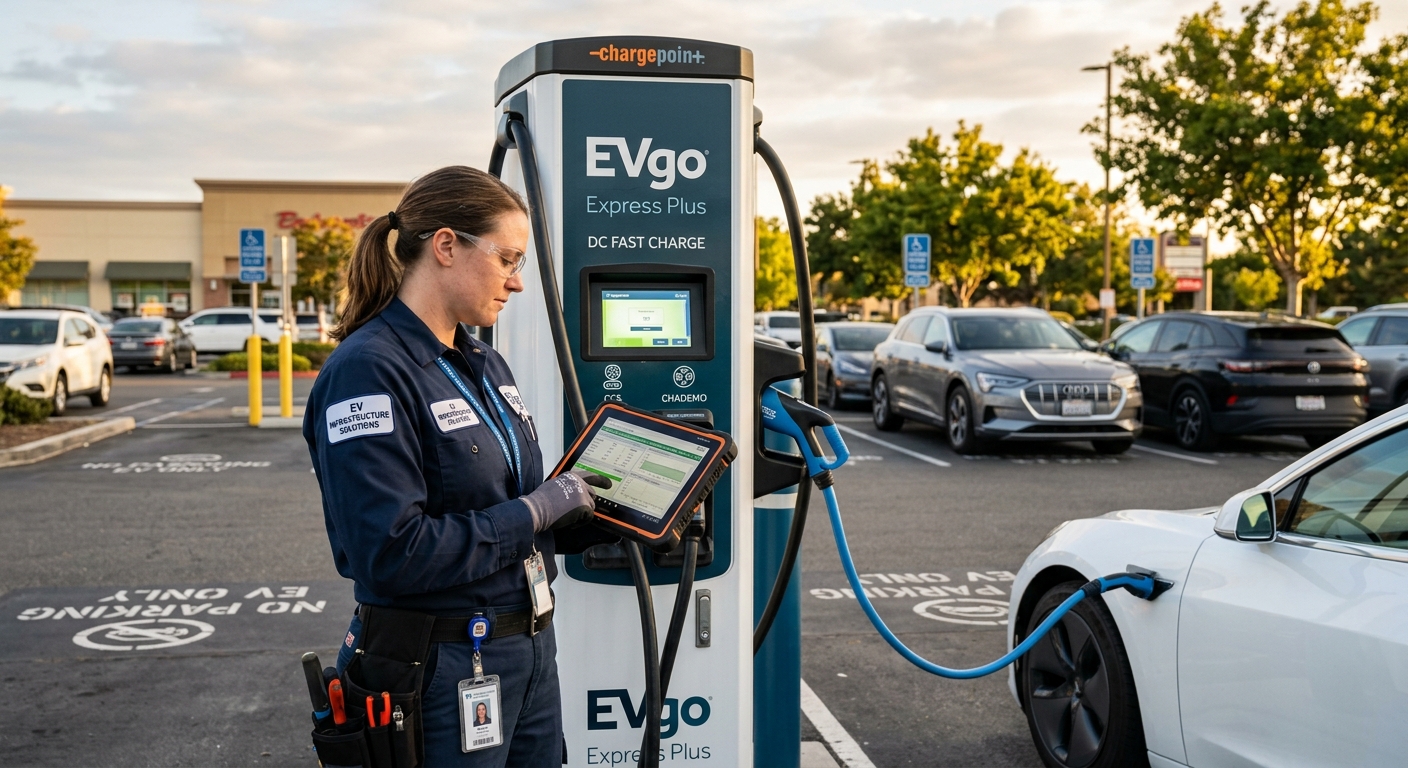
Given the volume of daily sessions, manual troubleshooting doesn’t scale. Networked chargers with remote diagnostics and OTA firmware support let operations teams catch failing units before a customer discovers a dead charger mid-queue.
Technician performing diagnostics on an outdoor DC fast charger
Procurement Considerations for Multi-Site Rental Networks
If you’re rolling out charging hubs across multiple rental locations or franchise sites, standardizing on a single charger platform and firmware stack saves enormous operational overhead. Mixed hardware across sites means mixed maintenance procedures, mixed spare parts inventories, and mixed driver-facing interfaces.
Before issuing a multi-site RFP, use a structured checklist — our EV charger RFP procurement checklist covers the technical and commercial criteria that matter most for fleet and site operators, including warranty terms, OCPP compliance, and support SLAs that rental operators specifically should push for.
Subscribe the newsletter to get updated to news and promotions
Cookies give you a personalized experience,Сookie files help us to enhance your experience using our website, simplify navigation, keep our website safe and assist in our marketing efforts. By clicking "Accept", you agree to the storing of cookies on your device for these purposes. Click "Adjust" to adjust your cookie preferences.For more information, review our Cookie Policy