Vandalism and Cable Theft at Public Chargers: Practical Hardening Measures
Home / Blog / Guidelines / Vandalism and Cable Theft at Public Chargers: Practical Hardening Measures
05 Nov, 2026
cut-resistant EV charging cable
EV charger cable lock
socketed vs tethered EV charger
tamper detection EV charger
vandalism at public EV chargers
Layered defense works and single products do not. Cable theft and vandalism are different problems, so treat them separately. For theft, make the cable slow to cut and the connector hard to walk away with. For vandalism, protect the parts people smash or pry at: use impact-rated screens and enclosures, keep connectors holstered and covered when idle, and lay out the site with good lighting and clear sightlines so nobody can work on a charger unseen. Then detect damage within seconds, route the alarm to somebody who will actually act, and restore the port the same day so a broken charger does not stay broken for a month. If you can only fund one layer first, fund delay on DC sites and detection on any site where a dead port costs more per day than the cable does.
Key takeaways
Fund delay first on DC sites, where cables are heavy and expensive, and detection first on any site where a dead port costs more per day than the cable does; deterrence is cheap enough to buy everywhere.
Build the per-incident loss from your own numbers: part, freight, technician visits, port-hours lost, staff time and deductible, then compare incidents per year against the annual cost of the measure.
Cameras and signage record and discourage, but only delay changes the outcome of a determined attempt, so a camera upgrade is not a substitute for cable-level hardening.
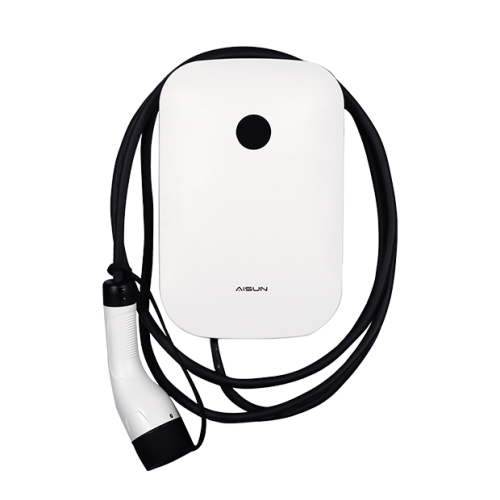
Tethered versus socketed is the biggest single design lever: a socketed charger stores no cable on site, so there is nothing to cut while it sits idle overnight.
Anything requiring the enclosure opened or the firmware changed has to be written into the purchase order, because a retrofit cable sleeve cannot add tamper sensing to an installed unit.
Why Public Chargers Get Hit, and Why Thieves Return to the Same Site
Two markets keep the trade alive
A stolen cable has two buyers, and they pay for different things. One wants the copper inside. The other wants a complete assembly with a molded connector on at least one end, which can be resold to a recycler or a second-hand buyer as a part. The copper in a five-metre AC cable is a small fraction of what the finished assembly sells for, which is why the trade does not slow down when scrap prices go flat. It also explains where the cut lands: taken at the pedestal, the cable keeps a usable connector.
AC and DC are different targets
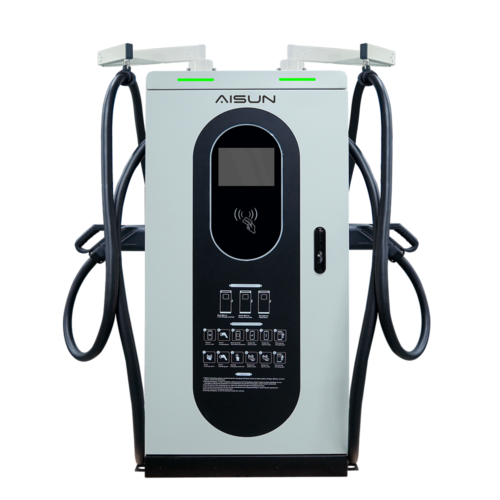
DC fast charging cables carry far heavier conductors, so each cut is worth more. They are also thicker, stiffer, slower to get through, and on liquid-cooled designs there is a coolant hose inside as well. AC cables are the opposite: thinner walls, fast to cut, easy to coil and carry. DC is a value target, AC is a speed target. Protection priorities follow from that, not from a product catalogue.
Targets are chosen, not stumbled upon
Rear-of-lot rows where a vehicle can pull up without being seen.
Dark corners and gaps between luminaires.
Single pedestals with no passing traffic and no staffed window overlooking the bays.
A fast exit: a service road, an alley, a slip road onto a highway.
When a site is hit twice, the second incident usually uses the same access route and the same weak point. Replacing the cable in exactly the same way, on the same pedestal, under the same lighting, is an invitation.
Three crimes get reported as one
Cable harvested while the charger is idle, a session interrupted or a connector taken while a driver is charging, and plain vandalism such as a smashed screen or a bent connector each need a different countermeasure. A connector lock solves the second. A sleeve solves the first. Neither touches the third, which is a layout and materials problem.
Visible upkeep is a control
A site that looks maintained, lit and alarmed is a worse target than an identical site that does not. Litter, a dark screen, a taped holster and standing water at the base all say the same thing to someone sizing up a target: nobody is watching. Repair the small things fast, because they are read as a signal about how the whole site is run.
Severed EV charging cable with exposed copper strands on wet pavement beside a charger base
What One Cut Cable Actually Costs, and How to Run the Payback Math
Price the incident before you price the measure. Most operators undercount it, because the invoice only covers the part.
Replacement part. A cable assembly with molded connectors, or a connector plus cable where the design separates the two. Confirm which one your unit takes before you need it at 06:00 on a Sunday.
Freight and import charges. A heavy DC assembly ships as a heavy part, and an air freight bill for one cable can rival the cable itself.
Technician travel and labor. Two visits, not one: the repair, then the second trip to prove the fail-safe and the alarm path work.
Staff time. The police report, the insurer, the site host and the internal ticket all consume hours nobody invoices.
The deductible, plus any premium effect at renewal.
Two costs never reach an invoice: drivers who write the site off after finding it dead, and a site host or municipality that starts asking whether the operator can keep equipment working at all.
Annualize rather than reasoning per incident. Incidents per year times loss per incident, set against the annual cost of the measure plus the downtime it prevents. A cheap measure at a site hit four times a year beats an expensive one at a site hit once, and that comparison is invisible if you only look at one event.
Take a four-port public site and insert your own numbers: your revenue per port-hour, your measured utilization, a downtime assumption from half a day to three days. Run it three times with different downtime values. The arithmetic is what matters, and it transfers to any site you operate.
Fleets should cost a dead port as a schedule problem instead. Remaining ports absorb the displaced sessions, dwell stretches, and vehicles that miss their window end up charging at a worse time of day or at retail rates elsewhere. Repeat-attack sites break linear thinking entirely: the site hit repeatedly is the site most likely to lose its host contract, and that loss dwarfs the cable.
EV Charger Cable Theft Prevention: Four Layers, and What Each One Really Buys You
Give each layer a job and the spending decisions get easier.
Deter. Lower the number of attempts by making the site look watched and maintained.
Delay. Raise the time cost of an attempt past what a thief will spend.
Detect. Shorten how long the charger stays broken by knowing within seconds rather than at the next shift.
Respond. Decide whether the site gets hit again, through repair speed, patrolling and prosecution.
The ranking, stated plainly
Deterrence works on someone who has not done this before and does nothing against someone who has. Delay is the only layer that changes the result of a serious attempt. Detection does not stop the first incident, but it is what turns a month-long outage into a same-day swap.
Cameras record, they do not prevent
Camera value is prosecution and an insurance claim. That value collapses when nobody watches the feed at 03:00 and the footage is unusable in the dark. Point the lens at the holster and the aisle rather than the horizon, and check at night whether a face or a plate is actually readable.
Lighting and sight lines
Light removes the cover a thief needs, and it is usually cheaper per unit of risk reduction than another camera. Light the holster and the walking route, not the whole lot.
Signage that makes a specific, true claim
A sign stating that cables are removed overnight is verifiable, and verifiable is what makes it credible. A generic CCTV sticker says nothing a thief has not seen a hundred times.
Patrols and monitored alarms
These pay only where a response exists. Ask what the response time actually is before committing to a monthly fee. A monitored alarm routed to a queue with a two-hour response is a log entry, not a control.
Sequencing a fixed budget
Delay first where the cable is expensive and downtime is costly. Detection second where daily port revenue is high. Deterrence throughout, because it is the cheapest layer on the list.
Two vendor positions worth knowing. CatStrap argues that cameras, steel cabinets and patrols alone do not stop repeat thefts, which matches the ranking above. ChargePoint describes its Protect feature as real-time detection rather than a passive deterrent, and places the alarm at the pedestal as well as on the owner phone.
Hardening the Cable Itself: Cut-Resistant Construction, Armored Sleeves and Retrofit Kits
Cut resistant does not mean uncuttable. It means the cable outlasts the tools and the patience of whoever is attacking it, so define the threat before you shop: bolt cutters and a minute, or a powered saw and five.
Construction options. Embedded steel strand or braid layers inside the jacket, aramid reinforcement, and a separate hardened steel sleeve clamped over the existing cable at several points. The CatStrap design uses hardened steel strips plus an aircraft cable with multi-point clamping, and offers an optional dye spray with a warning placard.
Retrofit matters where the installed base cannot be replaced. ChargePoint offers cut-resistant cables with retrofit kits for existing stations and licenses the technology to third-party manufacturers, which tells you the aftermarket supply chain is real rather than a single-vendor experiment.
Trade-offs the brochure skips. Added weight and stiffness at the connector, a larger minimum bend radius, holster geometry that no longer fits, retractors that struggle on a cold morning, and drivers who handle a heavier connector less carefully as a result.
The serviceability question. When the cable is finally damaged, does the sleeve come off and move onto the replacement, or is it a one-shot purchase tied to one assembly?
Sleeves and locks solve different problems. A connector or holster lock stops the plug being removed during a session and does nothing about a cut 300 mm up the cable. Buy the measure that matches the incident you actually have.
Keep the cable off the ground. A badly placed holster wears the jacket, hides the first signs of damage and shortens cable life for reasons that have nothing to do with theft. The failure patterns are worth knowing, and connector cable wear and tear before a charger reaches end of life covers what to look for on inspection rounds.
AC and DC economics diverge here. AC assemblies are thinner, cheaper and often field replaceable, so a sleeve is a judgement call. DC cables are heavy, expensive and rarely swapped by the operator, and on liquid-cooled designs the assembly is a sealed part, which is why protection pays back much faster there. The comparison of liquid-cooled and air-cooled DC charging cables explains how much assembly sits behind the jacket on each type.
Hardened steel sleeve clamped over a heavy EV charging cable next to hand tools on a workbench
Specification Choices That Set Your Exposure Before Installation Day
Most of the loss is decided at the drawing stage, months before anyone buys a lock.
Tethered versus socketed is the biggest single lever. A socketed charger stores no cable on site, so there is nothing to cut while idle. The trade is that drivers carry their own cable and the socket needs caps, drainage and wear checks. At curbside and other unattended overnight locations, socketed is usually the better default. The overview of EV charging types, speeds and infrastructure is a useful reference when you are comparing form factors across a project.
Do not over-specify cable length for flexibility you will never use. Every extra metre is more cable to take, more cable on the ground, and more jacket wear at the same two contact points.
Ask whether the connector can be locked in the holster when idle, and whether that interlock is a solenoid, a mechanical latch or absent. Plenty of units ship with a holster and no lock at all, and the datasheet rarely says so.
Holster height, orientation and drainage decide how the cable hangs. A holster that lets the cable reach the ground turns every scrape into jacket damage. A holster that fills with water corrodes pins from the inside.
Cable management hardware such as retractors, counterweights or spring arms keeps cable off the ground and makes a missing cable obvious at a glance. Test any of them below freezing before standardizing.
Layout beats hardware. Put chargers where a window or a staffed counter can see them, light the holster rather than the whole lot, aim cameras at the holster and the aisle, and keep pedestals out of the reversing path with bollards.
Vehicle strikes get misread as vandalism. Confirm the failure mode before buying a security product to fix a layout problem. A bent connector and a cracked screen look alike until you check the bollard spacing.
Write the requirement, not the adjective. Anti-theft on a datasheet means nothing on its own. Cable construction, holster interlock, tamper sensing and the alarm path each need their own line in the specification.
When the Cable Is Cut: Fail-Safe Behavior, Tamper Detection and Getting the Alert
The first job is electrical
End the session, open the contactor and get the live conductor out of the puddle before anyone starts investigating. A unit that retries a session after a control pilot fault is a hazard, not an inconvenience. If a member of the public reaches a severed end that is still energized, the failure has moved from property damage to a serious safety incident.
How a cut is seen
The control pilot and proximity pilot circuits carry low voltage, so severing an AC cable looks like a lost pilot, a lost proximity, or both at once. DC connectors have their own low-voltage pins and the same logic applies. An independent cut-detect loop or an earth continuity check gives a cleaner signal with fewer false positives than inferring from the pilot alone.
Read the datasheet carefully
Protection layers described as over-current, under-voltage and similar are electrical protections, not tamper detection. That distinction matters when you are comparing platforms: evaisun’s DC EV Charger, for example, lists 8-layer protections covering over-current, under-voltage and related faults, which protects the charger and the vehicle, not the cable. Ask specifically which input the charger uses to conclude that a cable is severed, and what it does next.
False alarms decide whether the system survives its first month
A normal unplug opens the proximity pin in a known sequence. A cut takes the pilot and the earth with it. Debounce windows, startup self-tests and a clean distinction between a worn connector and a severed cable are what keep the alarm from being muted by week three, which is the usual way these projects die.
Local alarm and remote alert do different jobs
The audible and visual alarm at the pedestal acts at 02:00 and can push a would-be thief away mid-attack, which is the approach ChargePoint takes with Protect, pairing on-site alarms with instant SMS and email alerts to the station owner. The message gets a technician dispatched. Neither replaces the other.
What OCPP can carry
Status notifications entering a faulted state, vendor-specific error codes and diagnostics uploads. The mapping between charger fault codes and the alarm rules in your charge point management system is where alerting projects quietly fail, so test it with a real cut on a bench unit before the site depends on it.
Log, export, keep
The event log, the last session record and the camera clock are the evidence behind a police report and an insurance claim. Export them with timestamps and store them off the unit.
Where detection breaks
A cellular dead spot, a backhaul outage, or a charger whose alarm exists only in the cloud. A severed cable on an offline unit reports nothing at all, which is why the backup path deserves the same questions as the primary one.
Technician testing low-voltage connector pins with a multimeter inside an opened EV charging pedestal
Matching the Mix to the Site: Curbside, Retail, Workplace, Depot and Multifamily
Site type decides which layer carries the weight, because it decides who is present and when. The table above condenses the five common cases. Three points are worth spelling out, because they are the ones operators get wrong.
Curbside has no natural surveillance, ever
Single pedestal, no window overlooking it, no staff, all night. That combination makes socketed the better default and makes detection close to mandatory, because nobody will notice a dead port until a driver complains. If your charge point management system alarms go to an inbox nobody reads before 09:00, the detection layer is decorative.
Depots fail on routing, not on hardware
A fence is the strongest single measure available anywhere, but the overnight risk window and the charging window are the same hours, so the equipment is exposed precisely when the yard is empty. Route the alarm to the depot manager phone rather than a shared network inbox, and expect the fleet link to be the reason nobody acts. If you are still mapping the charging schedule, what an EV fleet is and how it is charged covers the duty-cycle basics that make an assembly swap window realistic.
Remote and highway sites need a different budget line
Where there is no realistic response within hours, spend on delay and on visible upkeep, and treat detection as a monitoring cost you may not be able to convert into action. Buying an expensive alerting stack for a site nobody can reach is the most common misallocation in this category.
Workplace and multifamily sites sit at the opposite end. Access control does more than any hardware bolted to the charger, and at multifamily sites the more frequent problem is petty unplugging between residents rather than outright theft, which puts connector locks ahead of sleeves.
Specifying It In: An RFQ Checklist and the Factory-versus-Field Decision
Split every requirement by where it can actually be implemented. Cable construction, tamper sensing, fail-safe logic, holster interlock, OCPP event mapping and field-replaceable cable assemblies are factory decisions. Sleeves, locks, cameras, lighting and backhaul are site decisions that can follow later.
Anything needing the enclosure opened or the firmware changed belongs in the purchase order, not in an upgrade plan. Retrofit is real for cable-side hardware and largely fictional for internal sensing.
Put these questions in writing
What does the unit do on loss of control pilot or proximity, and does it latch into a safe state?
Is there a separate cut-detect input or earth continuity check, and is it independent of the pilot circuit?
Which message reports a tamper event, and does it arrive as an alarm or only as a log line?
Is the cable assembly a catalogued part with a published lead time and a part number printed on it?
Can the connector be locked in the holster when idle, and what type of interlock is it?
What is the warranty position if a third-party sleeve or lock is fitted?
Retrofit compatibility carries a commercial cost as well as a technical one. An armored sleeve that does not fit the holster or the retractor turns a five-minute cable swap into a two-hour site visit, which is exactly the downtime the measure was supposed to reduce.
Distributors can turn this into a service line: stock spare assemblies, publish a swap procedure, and quote a restoration time in the bid. A competitor ordering a cable from overseas cannot match that number, and it is a stronger differentiator than another discount point.
Settle certification and warranty before you resell the accessory. A retrofit solenoid lock or sensor changes the unit configuration, and the certificate on the wall belongs to the configuration that was tested. ChargePoint’s licensing of its cut-resistant cable technology to third-party manufacturers shows the retrofit market is maturing, not that every accessory is automatically accepted by every platform.
The First 24 Hours, and the Three Decisions That Stop It Happening Again
Order matters after an incident. Get it wrong and the evidence is gone before the report is filed.
Isolate and lock out. Nobody touches the severed end until the unit is de-energized, then cordon it so a member of the public does not pick the cable up.
Photograph before cleaning. Both cut ends, the holster, the ground beneath, the connector and anything left behind. The cut pattern is the first thing the police report and the insurer will ask about.
Export the log first. Event log and last session record, with timestamps, before a technician resets anything.
Report and notify. Serial number and cable assembly part number, police report, insurer. Confirm whether the policy treats cable theft as theft or as vandalism, because the claim route and the deductible can differ.
Check the neighbouring units the same day. If one pedestal was reachable, the one beside it is too.
Restore by swapping the assembly rather than replacing a whole unit where the design allows it, then prove the fail-safe and the alarm path work before the site goes live again.
Fix one physical thing before the port reopens. A light, a bollard, a holster rehang. Reinstating the site exactly as it was is how the second incident gets scheduled.
Three decisions to make before the next equipment order
Socketed or tethered at the next site. Which layer you fund first at sites already installed. Which anti-theft requirements go into the next purchase order as written lines rather than wishes. Those three cover most of the exposure, and none of them require a new budget cycle if you make them at specification stage.
If tamper behavior, cable construction or OCPP alarm mapping will be part of that order, settle it with the engineering team before the configuration is frozen, not after delivery. evaisun’s AC and DC charging platforms hold UL and CE certification and are delivered to partners in more than 30 countries, so the conversation can start from a real configuration instead of a brochure claim. The charging solutions overview is where to check the platform ranges before you write the specification.
Frequently asked questions
Can you add tamper detection to chargers that are already installed?
Only partly. A cut-detect input, the fail-safe logic and the OCPP event mapping are set at the factory, so an installed unit without them will not gain them from a software update. What can be added later is cable-side: an armored sleeve, a connector or holster lock, better lighting, cameras, and a charge point management system rule that treats an unexpected fault as a possible theft.
Does insurance cover stolen or cut EV charging cables?
It depends on how the policy classifies the loss, so confirm that before the first incident rather than after it. Cable theft may fall under theft, burglary or vandalism wording, and each route can carry a different deductible and evidence requirement. Photographs of both cut ends, the exported event log and the cable part number are what insurers usually ask for, along with a police report number.
Subscribe the newsletter to get updated to news and promotions
Cookies give you a personalized experience,Сookie files help us to enhance your experience using our website, simplify navigation, keep our website safe and assist in our marketing efforts. By clicking "Accept", you agree to the storing of cookies on your device for these purposes. Click "Adjust" to adjust your cookie preferences.For more information, review our Cookie Policy