Why Distributors Are Losing Deals Over Charger Warranty Terms — What to Negotiate Instead
Home / Blog / Guidelines / Why Distributors Are Losing Deals Over Charger Warranty Terms — What to Negotiate Instead
30 Jul, 2026
charger warranty negotiation
distributor warranty terms
EV charger SLA
OEM charger warranty claims
Distributors aren’t losing charger deals because their warranty period is too short — they’re losing them because they’re arguing over the wrong number. A buyer comparing a 3-year warranty against a 2-year warranty is comparing marketing copy, not risk. What actually determines whether a warranty protects your margin is the response SLA, the parts logistics commitment, and who pays for labor when a unit fails in month 14. Negotiate those three things and the headline warranty length becomes almost irrelevant.
The Warranty Length Trap
Here’s a claim that surprises most first-time buyers: a 3-year warranty with a 10-day parts lead time is worse than a 1-year warranty with 48-hour depot dispatch. Warranty length tells you nothing about what happens the day a charger actually fails. Yet it’s almost always the first — and sometimes only — term distributors fight over during price negotiations.
Buyers fixate on the number because it’s easy to compare. Three years sounds safer than two. But a fleet operator running overnight depot charging for 50+ vehicles doesn’t care about year three if the charger sits dead for two weeks in month four waiting on a control board from overseas. Ask any procurement manager who’s lived through a real claim — they’ll tell you the length was never the problem. The wait was.
What Buyers Actually Remember
Post-purchase satisfaction surveys in the industrial equipment space consistently show the same pattern: buyers rate suppliers on time-to-resolution, not on the fine print of coverage duration. A charger manufacturer offering a shorter but faster-resolving warranty often retains more repeat business than one advertising extended coverage with vague fulfillment language.
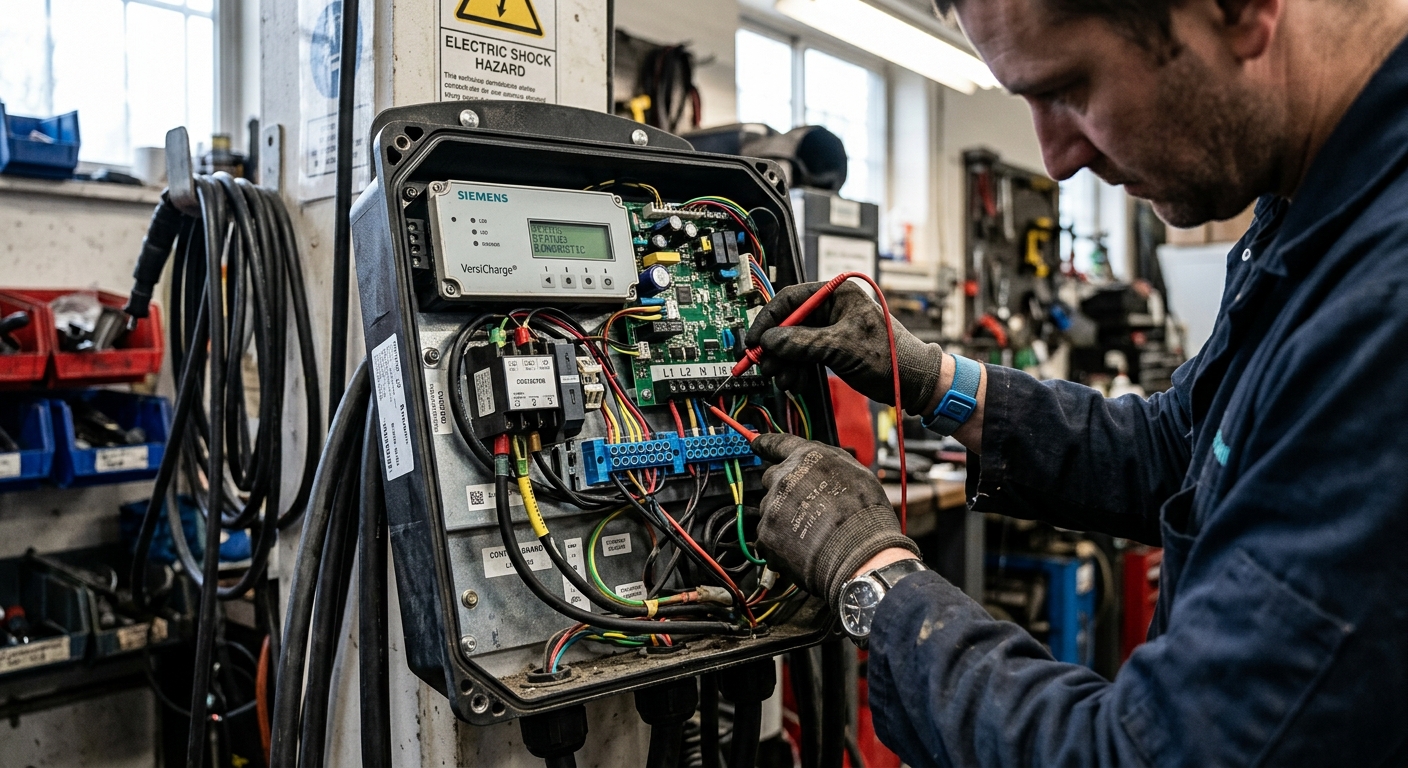
Technician inspecting internal control board of an EV charger during warranty service
The Real Cost Driver: Response SLA, Not Coverage Period
If you’re going to negotiate one thing, negotiate the response SLA — a contractual commitment on how fast the manufacturer acknowledges a claim, ships a replacement part, and dispatches (or authorizes) a technician. This is the term that determines whether your customer’s charging site is down for two days or two weeks.
A tight SLA looks like this: claim acknowledgment within 24 hours, diagnostic support within 48 hours, and replacement part shipped from a regional depot within 72 hours for common failure modes (contactors, communication boards, display units). Anything looser than that and you’re exposed to downtime penalties your customer will absolutely bring up at renewal.
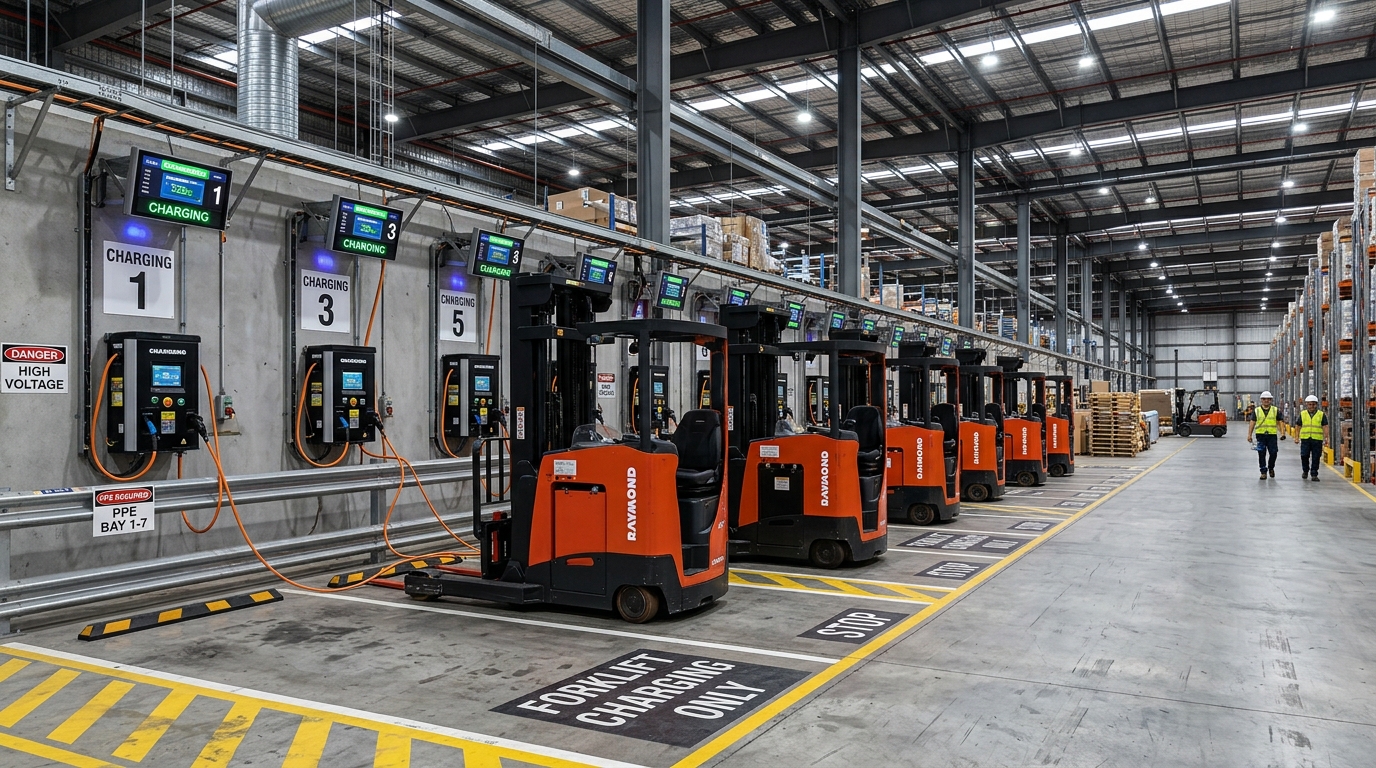
For instance, a logistics company running forklift charging across three warehouse shifts can’t tolerate a charger sitting offline for a week — that’s a direct hit to throughput. Distributors who bundle a strict SLA into their proposal, even with a shorter nominal warranty, consistently beat competitors quoting three years of vague “best effort” support. This ties directly into infrastructure planning covered in the forklift charging duty cycle guide — uptime commitments matter as much as the hardware spec sheet.
Row of forklift chargers in an industrial warehouse charging bay
Parts Logistics: The Clause Nobody Reads Until It’s Too Late
Most warranty disputes aren’t about whether a part is covered — they’re about how long it takes to get that part into the customer’s hands. A manufacturer shipping spares from a single overseas factory can quote a 3-year warranty and still leave a distributor stranded for three weeks on a failed power module.
Negotiate a regional parts depot commitment, not just a coverage percentage. Ask the manufacturer directly: where are spare contactors, PCBs, and connectors physically stocked, and what’s the guaranteed shipping window from that location to your service region? If the answer is vague, that’s your leverage point — push for a written commitment with a penalty clause if lead times are exceeded.
This is especially critical for AGV and battery charging deployments running 24/7 in automated facilities, where a single offline charger can bottleneck an entire production line. The manufacturers who win repeat distributor business are the ones who’ve invested in regional inventory — not just the ones with the longest warranty PDF.
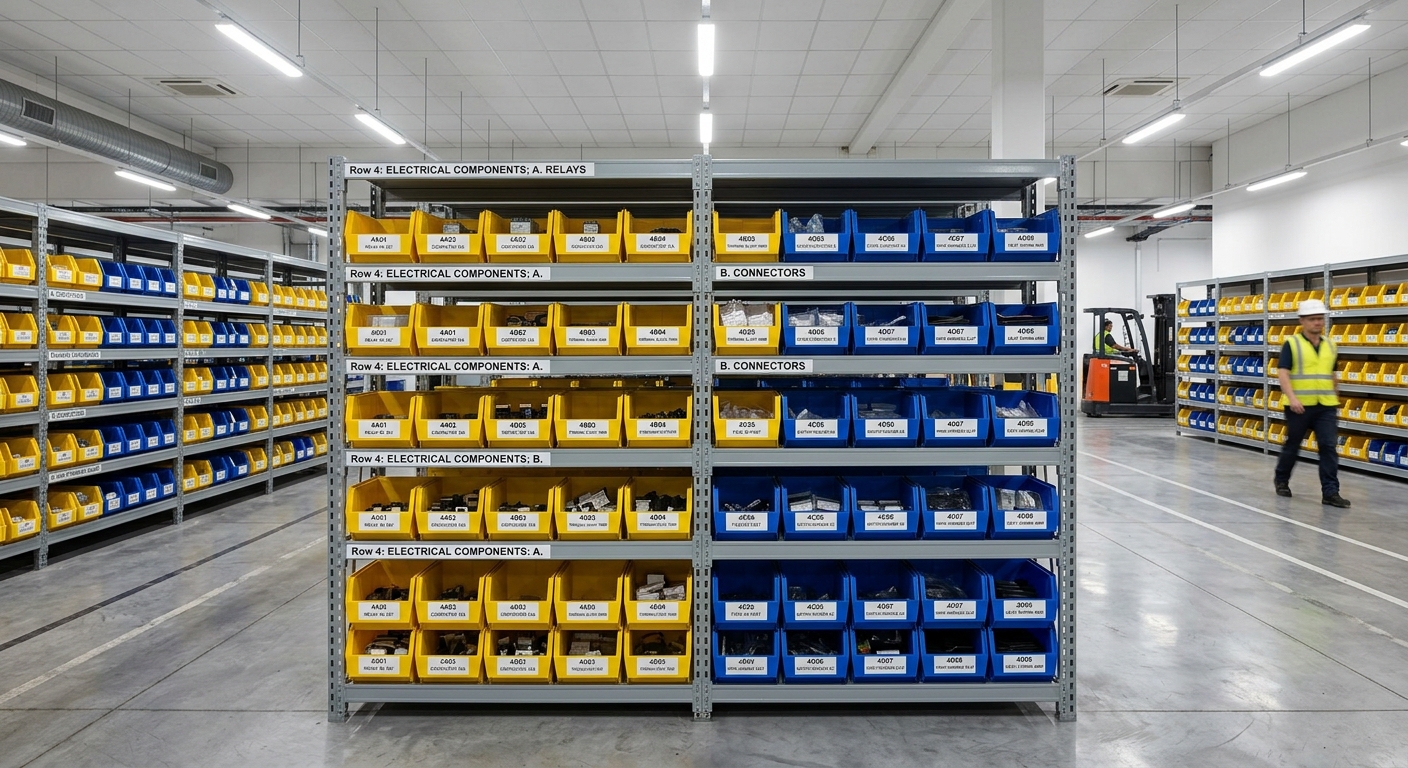
Organized spare parts depot shelving with electrical charger components
Who Pays for Labor? The Clause That Kills Margins Quietly
Parts coverage gets all the attention, but labor cost is where distributors quietly bleed margin. A typical on-site diagnostic and repair visit for a DC fast charger runs $150-$400 depending on region and complexity — and if that’s not spelled out in the warranty terms, guess who’s covering it? You are, or your customer is, and either outcome damages the relationship.
Negotiate explicit labor terms: full reimbursement for certified technician visits during the warranty period, or a shared-cost structure with a defined cap. Some manufacturers offer remote diagnostic support first, reducing unnecessary truck rolls — worth asking about directly, since it can cut resolution time and cost simultaneously.
A real scenario: a distributor selling into a bus depot electrification project negotiated full labor reimbursement into their warranty terms upfront. When three chargers needed contactor replacement in year one, the manufacturer covered $1,200 in technician costs the distributor would have otherwise absorbed. That single clause paid for itself many times over — see how depot-scale planning intersects with this in the bus depot charging design guide.
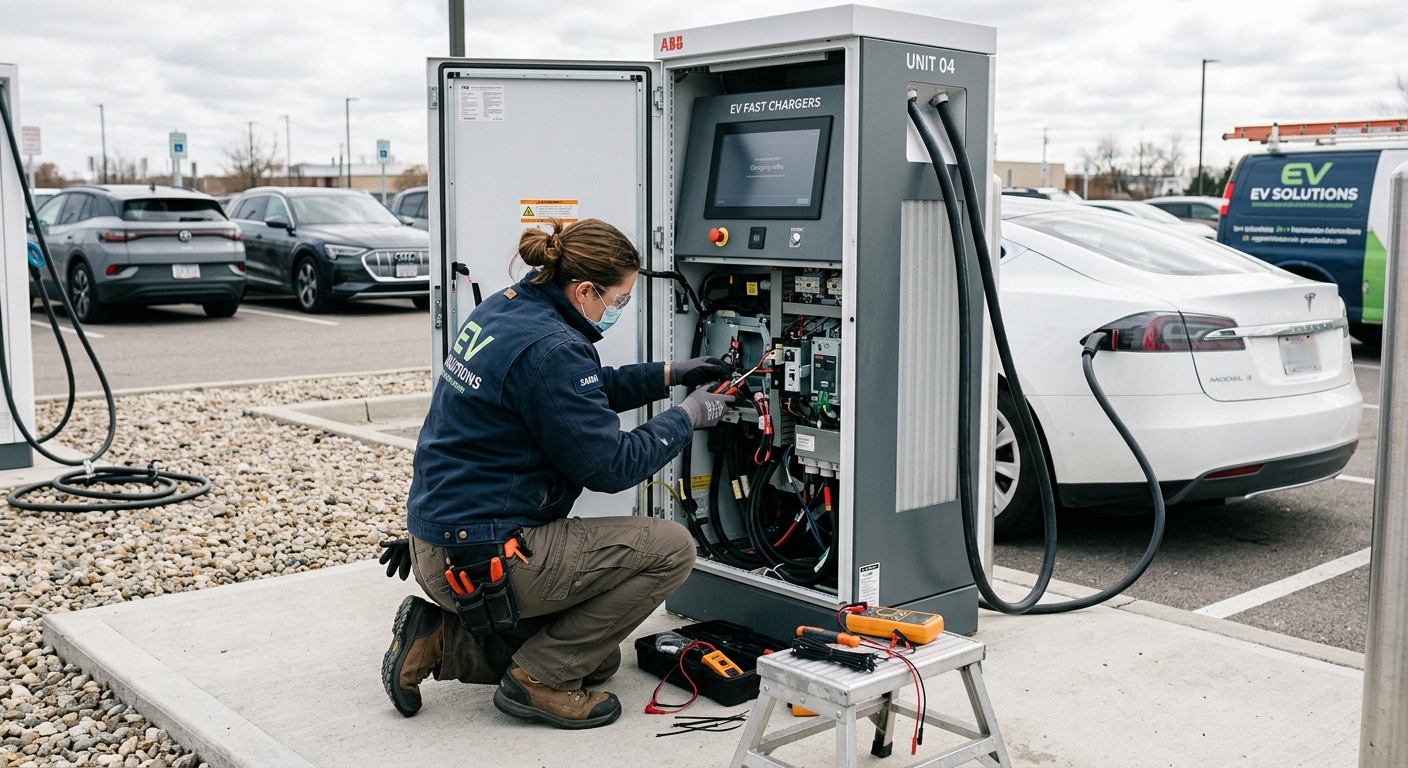
Technician performing on-site repair on an outdoor DC fast charging unit
Firmware and Software: The Warranty Gap Most Contracts Miss
Here’s something buyers rarely ask about but should: is firmware and software support included in the warranty, or does it lapse separately? A charger can be mechanically sound but functionally broken if it can’t receive OCPP updates, security patches, or compatibility fixes for new payment integrations.
This matters more every year as networks push toward OCPP 2.0.1 requirements and evolving payment terminal standards. A hardware warranty that says nothing about software updates leaves distributors exposed to a charger that’s technically “working” but non-compliant or incompatible with the customer’s network six months after installation.
Push for explicit language covering firmware update delivery for the full warranty term, including security patches. It costs the manufacturer almost nothing to commit to this in writing, but it closes a gap that causes real disputes down the line — particularly for public contract bids where compliance is non-negotiable.
How to Structure the Negotiation Conversation
Don’t lead with “can you extend the warranty?” — that question invites a price increase and gets you nothing structurally useful. Instead, ask for the SLA, parts depot location, and labor terms in writing before discussing warranty length at all. This flips the conversation from a discount request to a service-quality negotiation, which manufacturers take more seriously.
A Practical Negotiation Checklist
Response and acknowledgment SLA in hours, not “business days”
Named regional parts depot with shipping lead time guarantee
Labor reimbursement terms, capped or fully covered
Firmware/software update inclusion for the full warranty period
Penalty or credit clause if SLA commitments are missed
Manufacturers offering both OEM and ODM arrangements often have more flexibility here than pure resellers, since they control the production and parts pipeline directly. That’s leverage worth using — ask specifically how claims are handled for OEM partners versus standard retail buyers.
The Hidden Signal: Why Cheap Chargers Make This Worse
Warranty terms matter more, not less, when the hardware is cheap. A low-cost charger with thin margins built in often means the manufacturer can’t afford generous SLA or labor terms — the warranty language will reveal this if you know what to look for. Vague phrases like “reasonable effort” or “subject to availability” are red flags for exactly this reason.
This connects directly to a pattern distributors report after their first real claim: the hidden cost of cheap EV chargers shows up precisely in warranty execution, not the purchase price. A charger priced 15% lower but with no defined SLA and origin-only parts shipping can cost far more in downtime penalties and customer churn than the upfront savings ever justified.
Subscribe the newsletter to get updated to news and promotions
Cookies give you a personalized experience,Сookie files help us to enhance your experience using our website, simplify navigation, keep our website safe and assist in our marketing efforts. By clicking "Accept", you agree to the storing of cookies on your device for these purposes. Click "Adjust" to adjust your cookie preferences.For more information, review our Cookie Policy