Why DC Fast Chargers Derate in Summer — And What Engineering Teams Can Do About It
Home / Blog / Guidelines / Why DC Fast Chargers Derate in Summer — And What Engineering Teams Can Do About It
22 May, 2026
charging station heat derating
DC charger thermal management
EV charger summer performance
liquid cooled DC charger
DC fast chargers derate in summer because their IGBTs, rectifier modules, contactors, and connector pins all have hard temperature ceilings — and as ambient air climbs past about 35 °C, internal components hit those ceilings well before the vehicle's battery does. The fix isn't a magic firmware patch. It's a combination of smarter thermal design, correct site placement, and matching the charger's real-world duty curve to the climate it actually operates in.
What “Derating” Actually Means Inside the Cabinet
Derating is the charger's self-preservation reflex. When a temperature sensor inside a power module crosses its threshold — typically 85 °C on the IGBT junction or 70 °C on the DC bus capacitors — the firmware drops output current in steps to keep the silicon alive.
Most 150 kW units start shedding power around 40 °C ambient, and by 50 °C you can easily lose 30–40% of nameplate output. A 350 kW HPC unit on a black asphalt forecourt at noon? It might deliver 220 kW for the second car in the queue. The charger isn't broken. It's doing exactly what its protection logic says to do.
The key insight: derating curves are not industry-standardized. Two chargers rated “350 kW” can behave very differently at 45 °C. That's why distributors who only compare datasheet peak numbers get burned later.
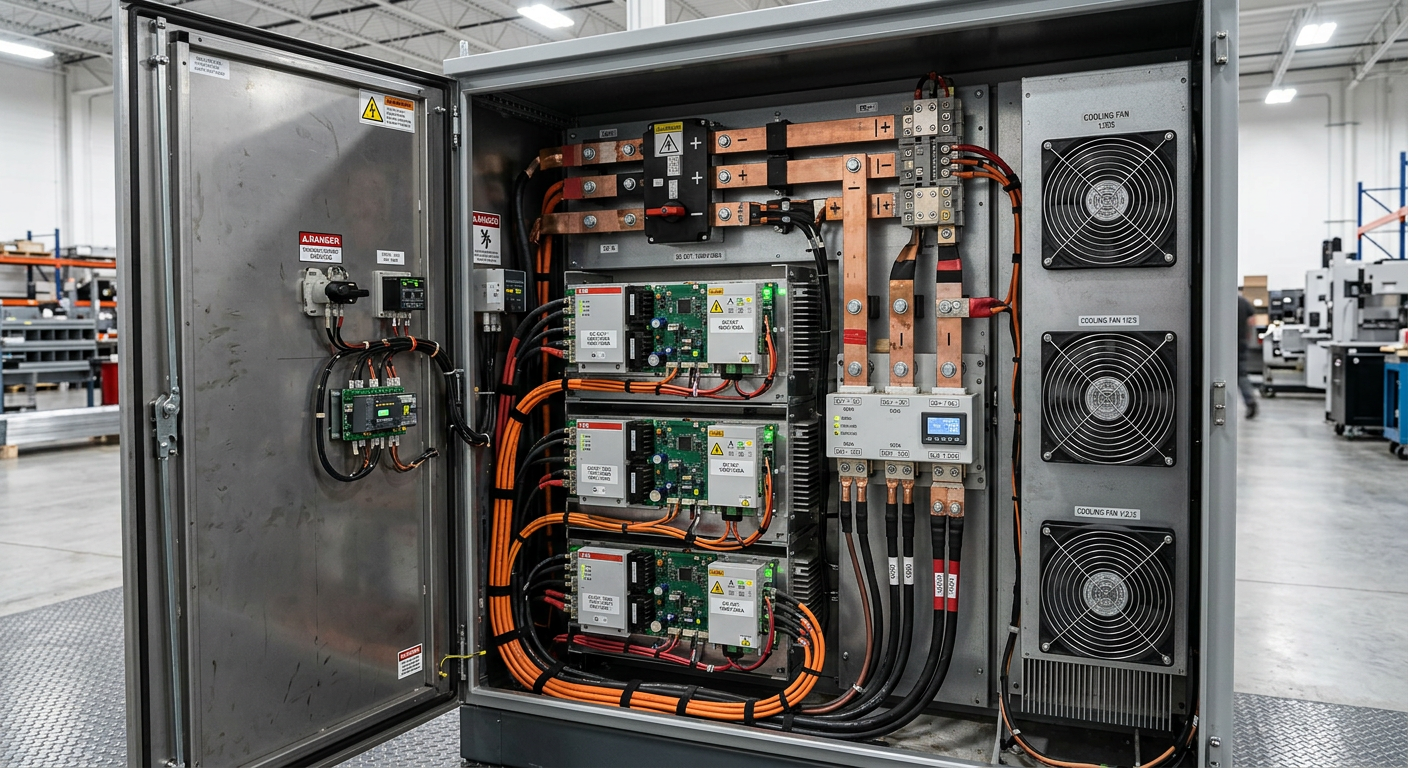
Open DC fast charger cabinet showing internal power modules and cooling fans
The Four Heat Sources That Cause Summer Power Loss
Inside every DC fast charger, heat comes from four predictable places. Knowing which one is your bottleneck tells you what to fix.
Power modules (IGBT / SiC): 2–3% of throughput becomes heat. At 200 kW output, that's 4–6 kW dumped into the cabinet.
Charging cable and connector: I²R losses scale with current squared. A CCS2 connector pulling 500 A can generate 1–2 kW at the handle alone.
Transformer and AC input stage: Often forgotten, but adds 1–2% loss as pure heat.
Filter inductors and busbars: Magnetic losses that climb with switching frequency.
Add it up and a 350 kW charger has to reject 15–25 kW of waste heat continuously. On a 40 °C day with poor airflow, that's a losing battle for any air-cooled design.
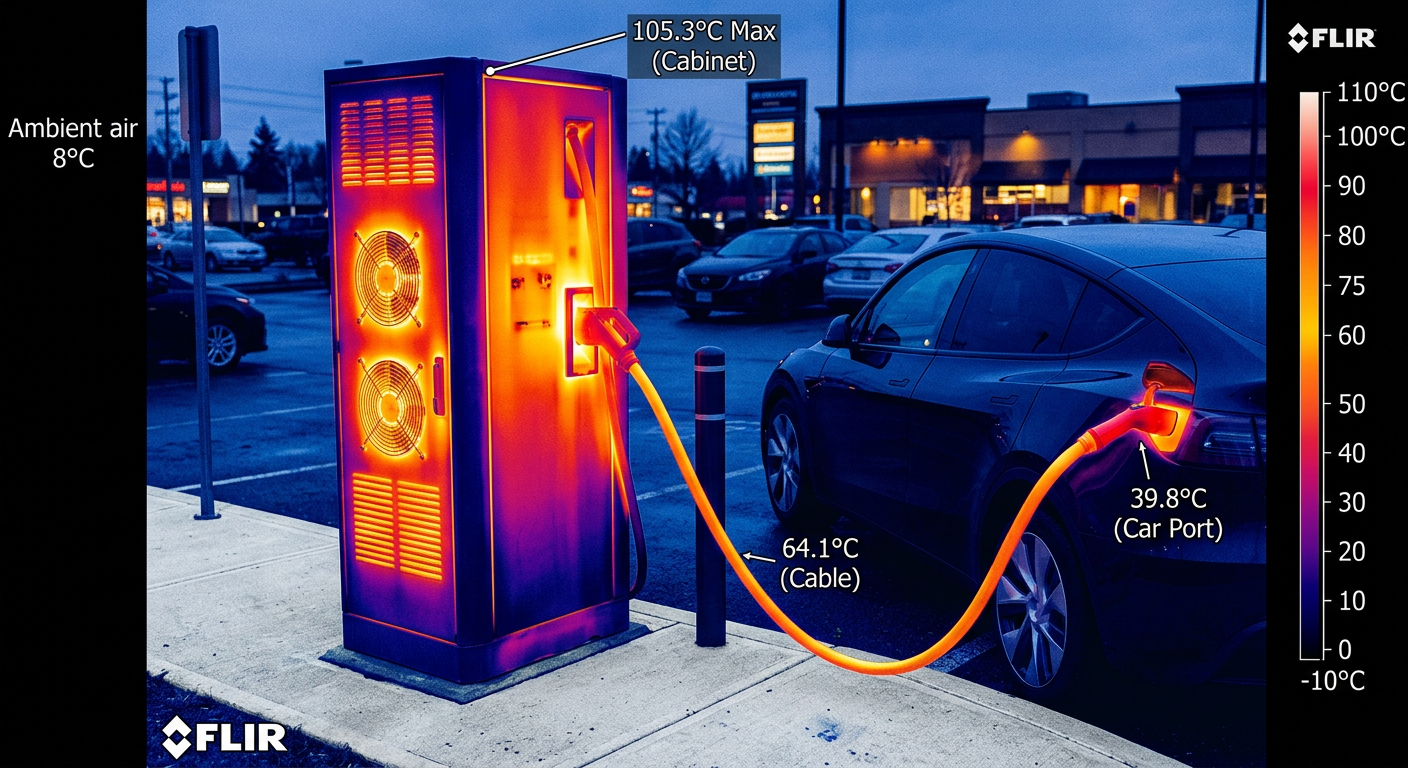
Thermal imaging style view of a DC charger showing hot spots
Why the Charging Cable Is Often the First Bottleneck
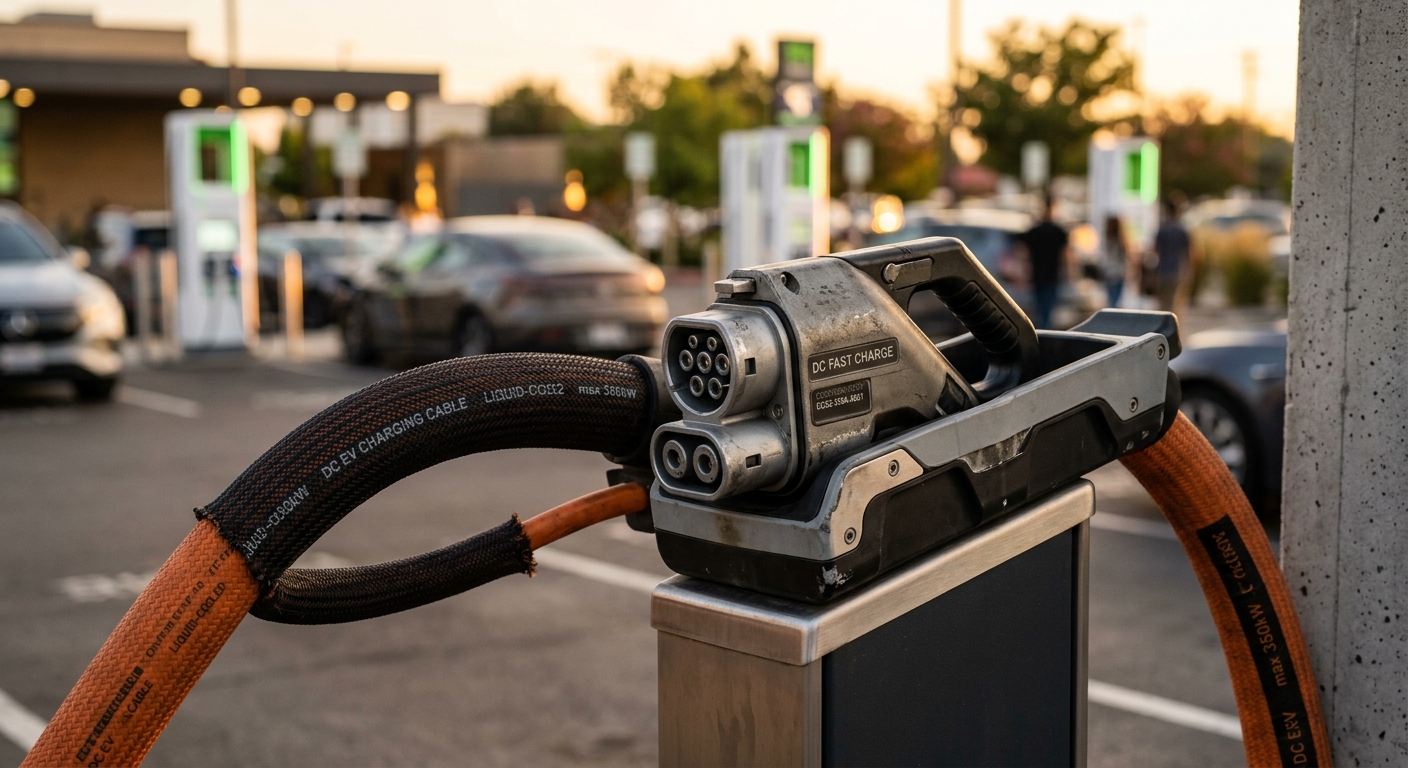
Here's something most buyers don't realize: the cable derates before the cabinet does. A standard air-cooled 200 A cable hits its insulation limit at around 90 °C jacket temperature. On a sunny day with the cable lying on dark pavement, the cable can start at 50 °C before any current flows.
That's why high-power charging above 250 kW has effectively moved to liquid-cooled cables. They circulate dielectric coolant through the conductor bundle, allowing 500–600 A in a cable that's actually thinner and lighter than a 200 A air-cooled one. For a deeper look at the trade-offs, our overview of new DC charger efficiency improvements covers how cable cooling fits into the bigger picture.
For example, a logistics operator running an electric truck depot in Phoenix swapped from air-cooled 200 A cables to liquid-cooled 500 A units. Same charger cabinets. Their afternoon throughput on 40 °C days went from roughly 140 kW per port back up to the rated 240 kW — purely because the cable was no longer the limiting factor.
Liquid-cooled DC fast charging cable and CCS2 connector
Air-Cooled vs. Liquid-Cooled: Choosing for Your Climate
The cooling architecture decision should start with your hottest-day ambient, not your average. A station in Hamburg and a station in Dubai are not the same project even if they use the same vehicles.
Rule of thumb: if your 95th-percentile summer ambient exceeds 38 °C, liquid-cooled cables pay back the added complexity within 18–24 months through avoided downtime and higher session revenue. Below 30 °C, air-cooled remains the more reliable, lower-maintenance choice.
One caveat — liquid-cooled systems add a pump, coolant reservoir, and flow sensors. That's three more failure modes. If your service network is thin, factor in spare-parts logistics before committing.
Site Design Choices That Matter More Than Spec Sheets
You can buy the best charger on the market and still derate badly if the site fights you. Three site-level decisions disproportionately affect summer performance:
Orientation and Shading
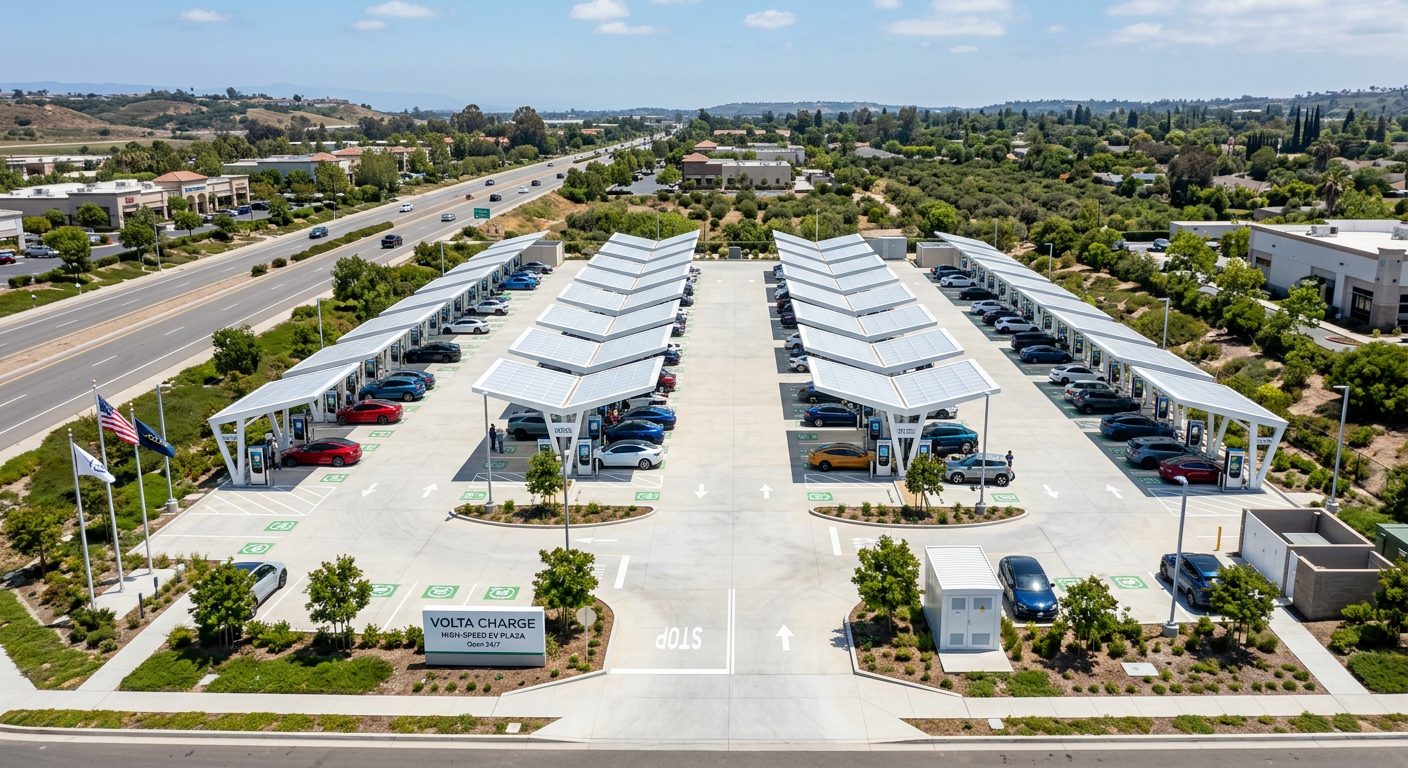
A charger cabinet facing direct afternoon sun can run 15–20 °C hotter internally than one in shade. A simple canopy or even orienting the cabinet's heat exhaust away from prevailing sun cuts derating events dramatically.
Cabinet Spacing
Charging hubs that pack cabinets tightly create heat recirculation — one charger's hot exhaust becomes the next charger's intake. Minimum 1.5 m clearance on the exhaust side, more if cabinets sit in a row.
Ground Surface
Black asphalt reaches 65 °C on a 35 °C day. Light-colored concrete or permeable pavers stay 15 °C cooler and reduce radiant load on cables lying on the ground. Distributors planning sites for fleet charging infrastructure should treat ground surface as a real engineering parameter, not a landscaping afterthought.
Aerial view of an EV fast charging plaza with shade canopies and light concrete paving
Firmware and Smart Power Management
Modern chargers can derate intelligently instead of just stepping down. Three firmware techniques are worth specifying when you place an OEM order:
Predictive thermal modeling: The controller predicts module temperature 30 seconds ahead and softens current ramps to avoid hitting hard limits.
Dynamic load sharing across ports: If port A is derating, the cabinet routes the freed capacity to port B instead of leaving it idle.
Pre-cooling cycles: Coolant pumps spin up before a session starts based on reservation data, giving the system a thermal head start.
This kind of intelligence pairs well with broader site-level infrastructure scaling decisions — there's no point optimizing one charger if your transformer is the real limit.
Real-World Example: A Last-Mile Depot in Southern Spain
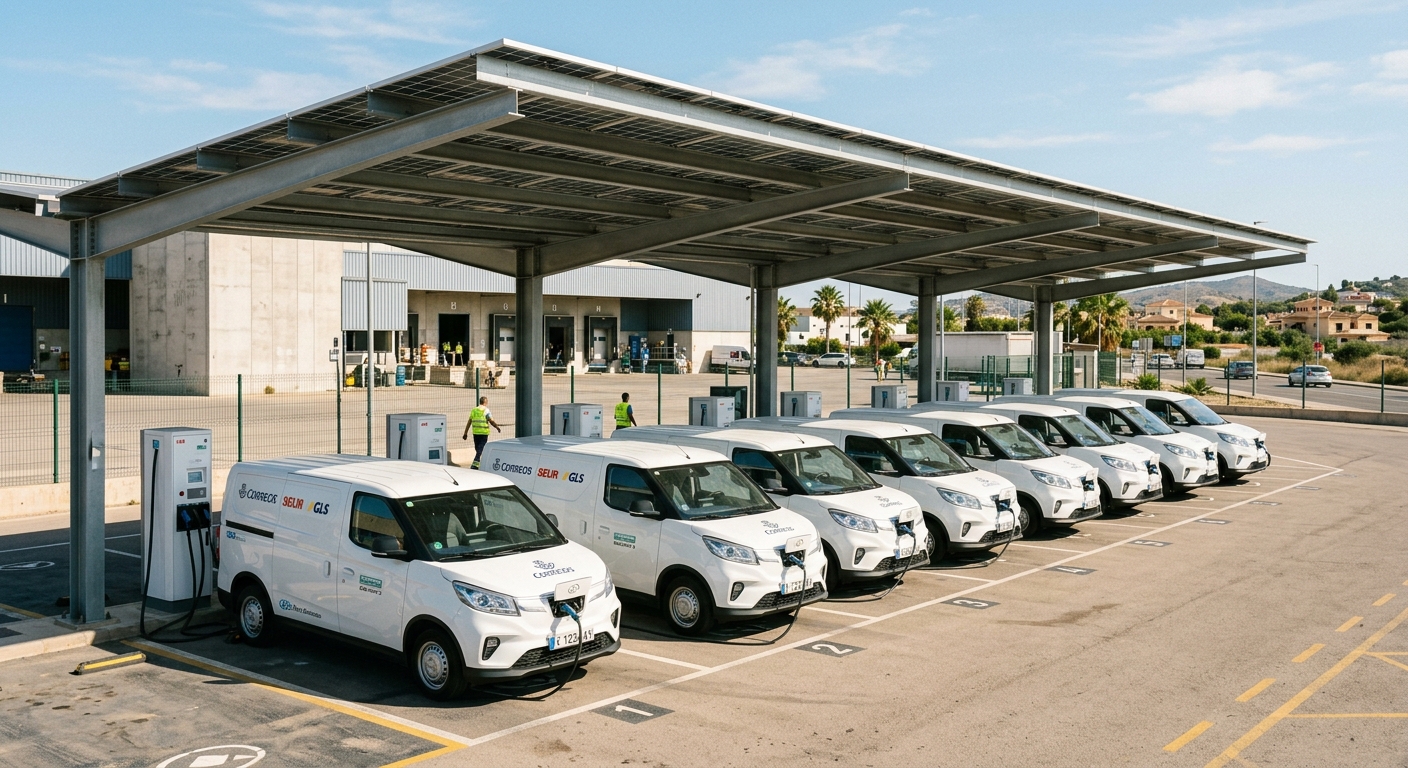
A regional parcel operator running 40 electric delivery vans wanted 90-minute midday top-ups during route turnarounds. Summer ambient regularly hit 42 °C. Their original 120 kW air-cooled chargers were derating to 70 kW by 13:00 — pushing turnaround times past schedule and forcing extra vehicle deployments.
The fix wasn't bigger chargers. It was:
Shade canopies installed over the cabinets (interior temperature dropped 11 °C)
Cabinet exhausts redirected away from neighboring units
Firmware updated to enable dynamic load sharing across paired ports
Coolant pre-cycle tied to fleet management software via OCPP
Net result: sustained 105 kW per port through the hottest hours, no hardware swap required. Total project cost was under 8% of replacing the chargers. The takeaway — derating problems are often site problems wearing a hardware costume. For depot planning fundamentals, our last-mile fleet charging guide covers the broader framework.
Electric delivery vans charging under a shade canopy at a logistics depot
What to Ask Your Charger Manufacturer Before You Order
Datasheets show peak power. Real life shows sustained power. Before signing a PO, get these five answers in writing:
What is the rated continuous output at 40 °C ambient with full sun load?
At what ambient does derating begin, and what's the slope (kW lost per °C)?
Is the cable rated separately from the cabinet, and what's its independent thermal curve?
What's the maximum coolant inlet temperature before the liquid-cooling system itself derates?
Does the firmware support OCPP-reported thermal status so site operators can see derating events?
If a supplier can't answer question 2 with specific numbers, walk away. It means they haven't characterized their own product under real conditions.
Planning for the Charger You'll Actually Need in 5 Years
Battery sizes keep growing. A 2026 long-range EV pulls 250 kW peak; a 2030 model will likely sustain 400 kW for 15+ minutes. If your station is thermally marginal today at 150 kW, it will be unusable when next-generation vehicles arrive and demand sustained high current.
The smart move for distributors and project developers is to over-spec the thermal envelope by one tier — buy chargers rated for a climate one zone hotter than yours, or specify liquid cooling even if today's vehicles don't strictly need it. The capital delta is 10–15%. The operational delta over a 10-year asset life is far larger.
If you're sourcing equipment for hot-climate deployments or building out fleet hubs, the team at evaisun can help spec DC charging hardware around your actual ambient profile and duty cycle — not just nameplate numbers. Browse our product range or reach out to discuss an OEM or ODM project tailored to your market.
Subscribe the newsletter to get updated to news and promotions
Cookies give you a personalized experience,Сookie files help us to enhance your experience using our website, simplify navigation, keep our website safe and assist in our marketing efforts. By clicking "Accept", you agree to the storing of cookies on your device for these purposes. Click "Adjust" to adjust your cookie preferences.For more information, review our Cookie Policy