Curbside EV Charging: Solving the Single-Family vs. Multi-Unit Dwelling Access Gap
Home / Blog / Guidelines / Curbside EV Charging: Solving the Single-Family vs. Multi-Unit Dwelling Access Gap
23 Jul, 2026
apartment EV charging solutions
curbside charger installation
multi-unit dwelling EV charging
on-street EV charging
The single-family vs. multi-unit dwelling (MUD) charging gap is solved not by better home chargers, but by treating the curb itself as shared charging infrastructure — lamppost-integrated units, bollard chargers, and metered curbside stations that give apartment and condo residents the same overnight charging convenience homeowners take for granted. Roughly 40% of U.S. households and a majority of urban EU renters don’t have access to a private driveway or garage, which means the standard Level 2 wall box simply isn’t an option for them. Curbside deployment models close that gap by converting public parking spaces into charging points, but only if the hardware, billing, and permitting are designed specifically for shared, unattended, weather-exposed use — not repurposed home chargers bolted onto a pole.
Why the Access Gap Is Bigger Than It Looks
Ask any distributor selling into urban markets and they’ll tell you: the biggest barrier to EV adoption in cities isn’t range anxiety anymore — it’s parking anxiety. A homeowner with a driveway plugs in at 6pm and wakes up to a full battery. A renter on the fourth floor of a walk-up has no such luxury.
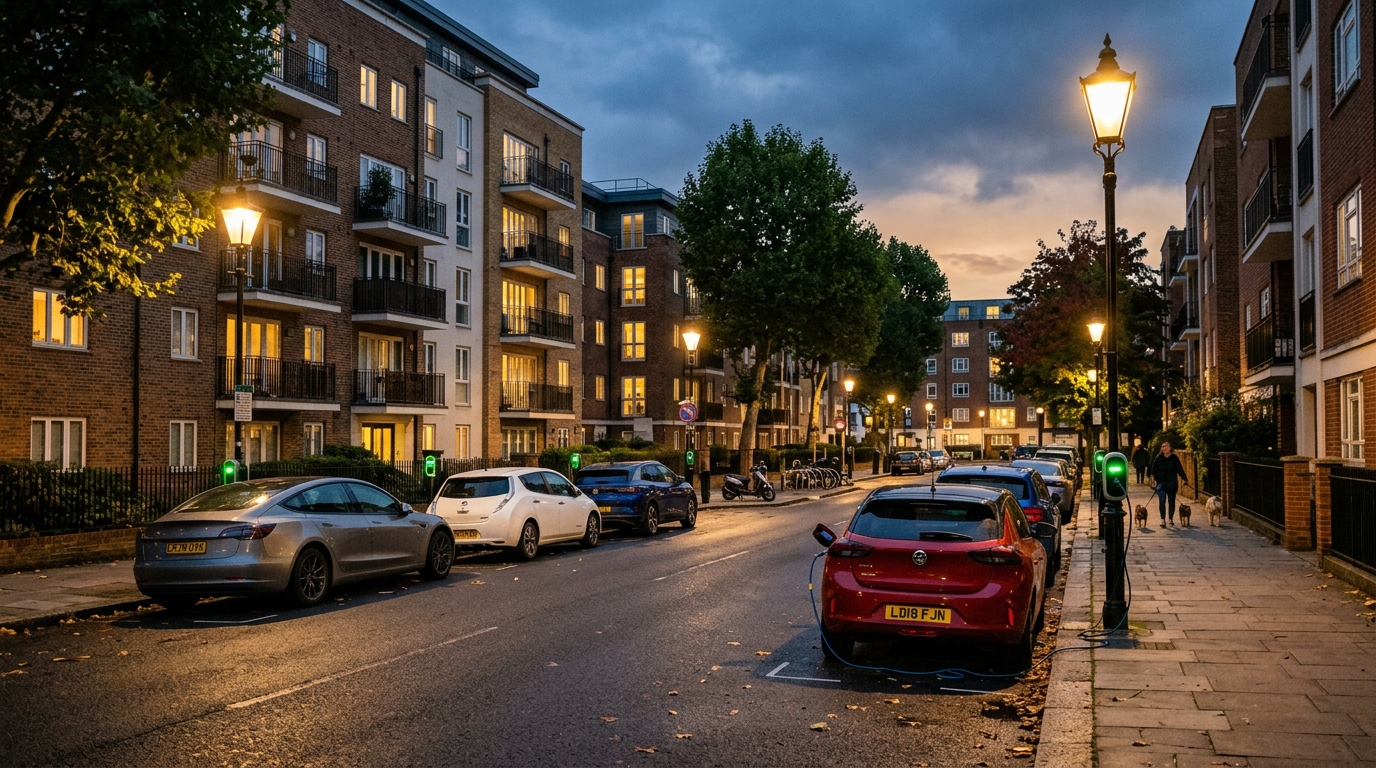
This isn’t a niche problem. In dense cities like Amsterdam, London, or Boston, curbside parking is the only parking most residents have. Multi-unit dwellings with shared garages often can’t retrofit charging either — the building’s electrical service was sized for lighting and elevators, not 40 EVs charging simultaneously at 2am.
The Ripple Effect on Fleet and Rideshare Drivers
It’s not just private car owners. Rideshare and delivery drivers who live in MUDs are often the ones putting the most miles on their EVs, yet they have the least reliable access to overnight charging. That pushes them toward public fast chargers during the day, which is expensive and inefficient compared to slow overnight curbside charging.
Dense urban street with apartment buildings and no private driveways for EV charging
Curbside Hardware: What Actually Survives the Street
Most home chargers would not survive a single winter bolted to a curb. Curbside units need a fundamentally different design brief: vandal resistance, extreme weather exposure, and unattended operation for years without a service visit.
Lamppost-Integrated Chargers
Retrofitting existing streetlight poles with charging modules is one of the fastest-growing curbside models in Europe. It uses existing electrical infrastructure and avoids new trenching — a huge cost saver. Units typically deliver 3.7-7kW, enough for overnight top-ups.
Bollard-Style Chargers
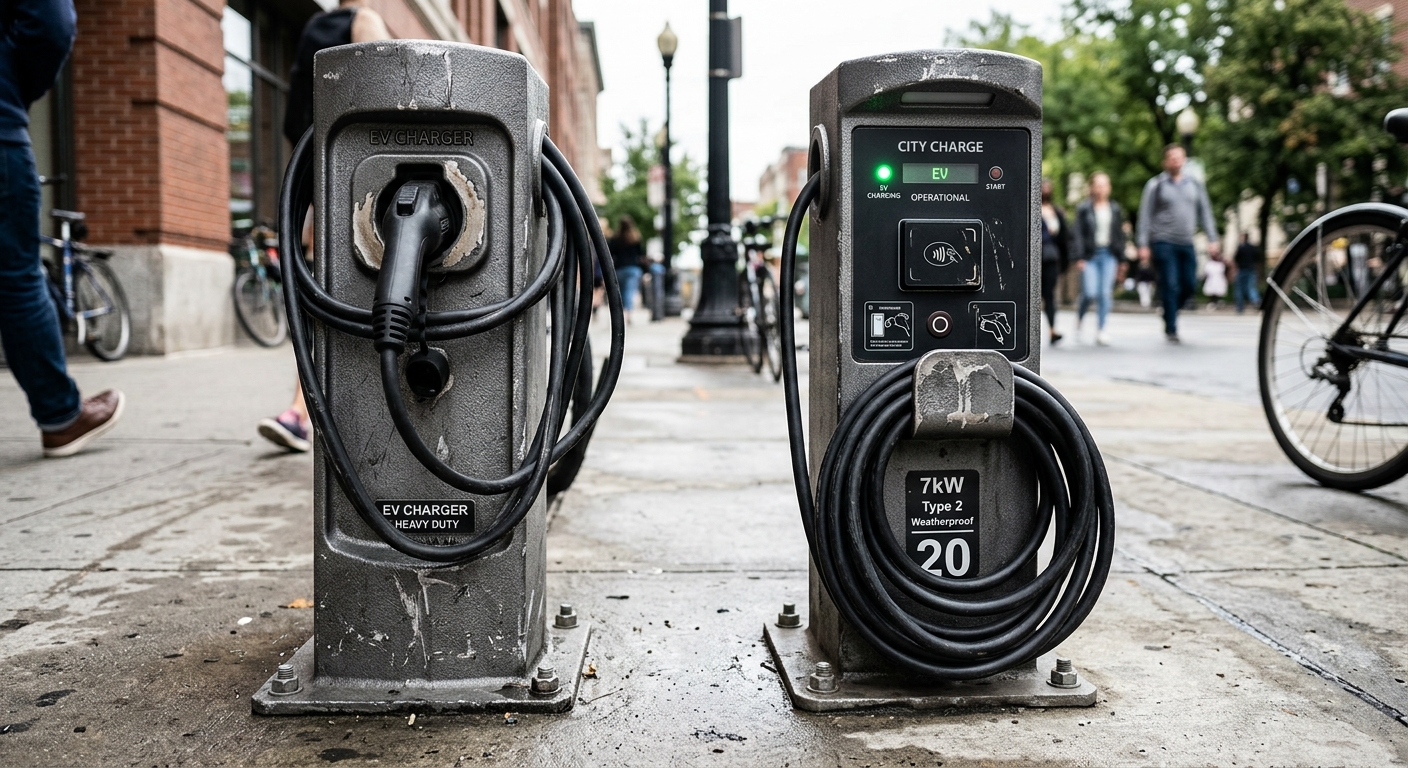
These standalone units are built like small tanks — IK10 impact ratings, IP65 weatherproofing, and reinforced housings that shrug off snowplows and careless parking. For a deeper look at how enclosure ratings translate to real-world durability, see our breakdown on why IP rating alone doesn’t predict outdoor charger lifespan — the same logic applies doubly to curbside units facing constant public exposure.
Shared Power Distribution
Because curbside sites often serve 5-20 charging points off a single transformer connection, dynamic power sharing isn’t optional — it’s the only way to avoid an expensive grid upgrade for a residential street.
Rugged weatherproof bollard EV charger on a city sidewalk
Single-Family vs. Curbside: A Side-by-Side Comparison
The economics and logistics diverge sharply once you move from a private driveway to a shared public curb. Here’s how the two models actually compare in practice:
Criteria
Single-Family Home Charging
Curbside / On-Street Charging
Typical install cost
$800-$2,200
$4,000-$12,000 per unit
Ownership model
Private, owner-controlled
Municipal, utility, or third-party operated
Access hours
24/7 unrestricted
Often time-limited or metered
Hardware type
Level 2 wall-mounted, 7-11kW
Bollard or lamppost-integrated, 7-22kW
Permitting complexity
Low — single homeowner permit
High — right-of-way, ADA, utility coordination
Vandalism/weather exposure
Low
High — needs IK10/IP65-rated enclosures
Billing/payment
Home electricity bill
App, RFID, or contactless payment terminal
Scalability per street
N/A — one household
5-20 units per block
Notice the trade-off: curbside costs 3-5x more per unit upfront, but it’s the only way to serve density. One curbside charging hub can serve an entire block that would otherwise have zero charging access.
Real-World Example: Retrofitting a 1970s Apartment Block
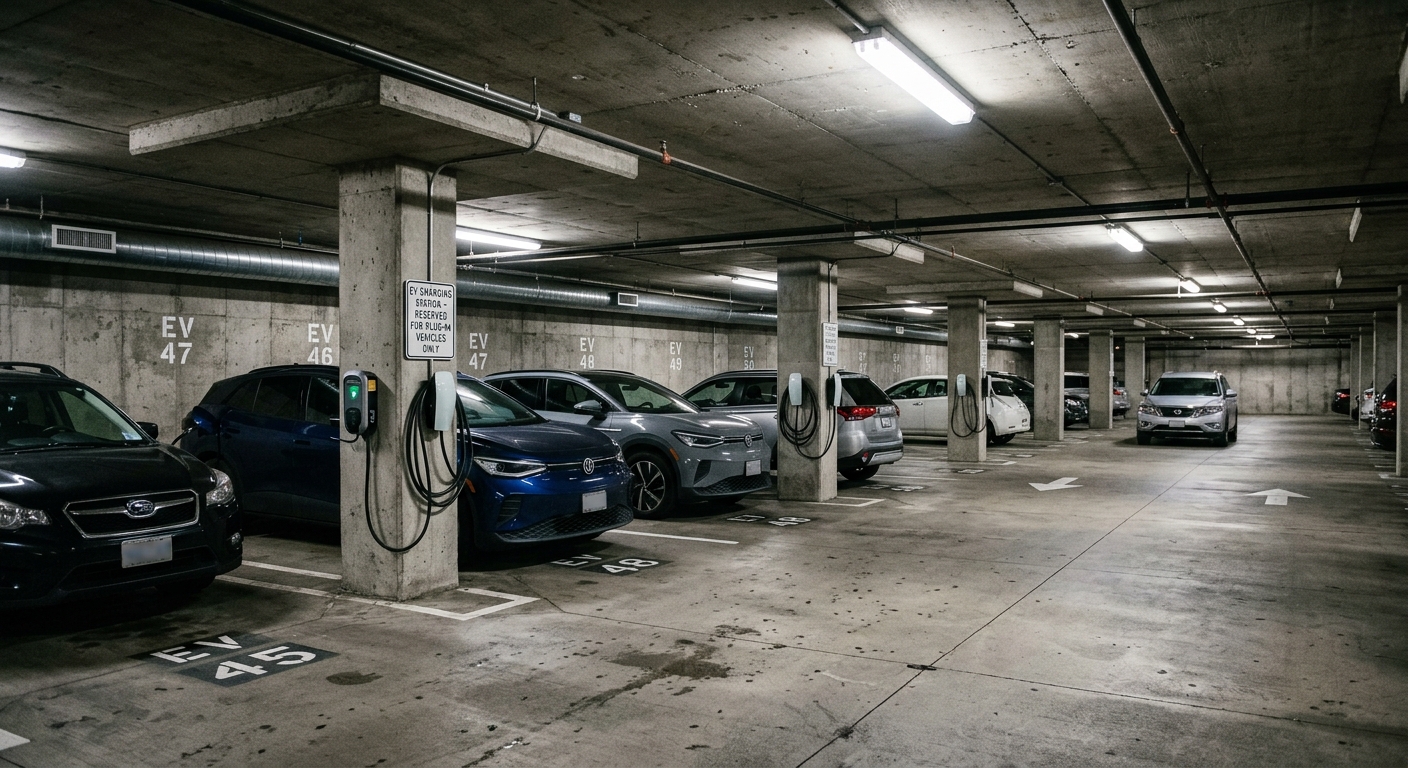
Consider a mid-rise apartment building in a European city built in the 1970s, with underground parking sized for 60 cars but an electrical service that maxes out at 100kW total. The building council wants EV charging but can’t add a single new grid connection without a six-figure utility upgrade.
The solution wasn’t more chargers — it was smarter distribution. A dynamic load management system now allocates power across 12 Level 2 stations, prioritizing residents who plug in earliest and throttling back others as demand peaks. No new transformer needed. Combined with a curbside charger installed on the adjacent public street for residents without a garage spot, the building went from zero EV access to covering roughly 70% of resident demand within eight months.
The lesson for distributors and contractors: MUD charging problems are rarely solved by adding capacity. They’re solved by managing existing capacity intelligently, the same way fleet depots design overnight charging for 50+ vehicles on constrained grid connections.
Underground apartment parking garage retrofitted with EV chargers
Billing and Access Control: The Part Everyone Underestimates
Here’s a mistake we see constantly: operators spend all their budget on the charger hardware and almost nothing on the payment and access system — then wonder why utilization is low. Curbside charging isn’t a private amenity; it’s a public-facing service, and it needs to behave like one.
What Works
Contactless payment terminals — drivers expect tap-to-pay, not a mandatory app download for a one-time charge.
RFID for residents — MUD residents with recurring use want a fast-tap card, not a login screen every time.
Dynamic pricing by time of day — discourage all-day parking squatting on a charging spot meant for overnight turnover.
If you’re bidding on municipal curbside contracts, payment integration is often the deciding factor in the RFP. We covered the technical requirements in detail in payment terminal integration for public charging contracts — worth reading before quoting any curbside project.
Connectivity Standards That Make Shared Curbside Networks Work
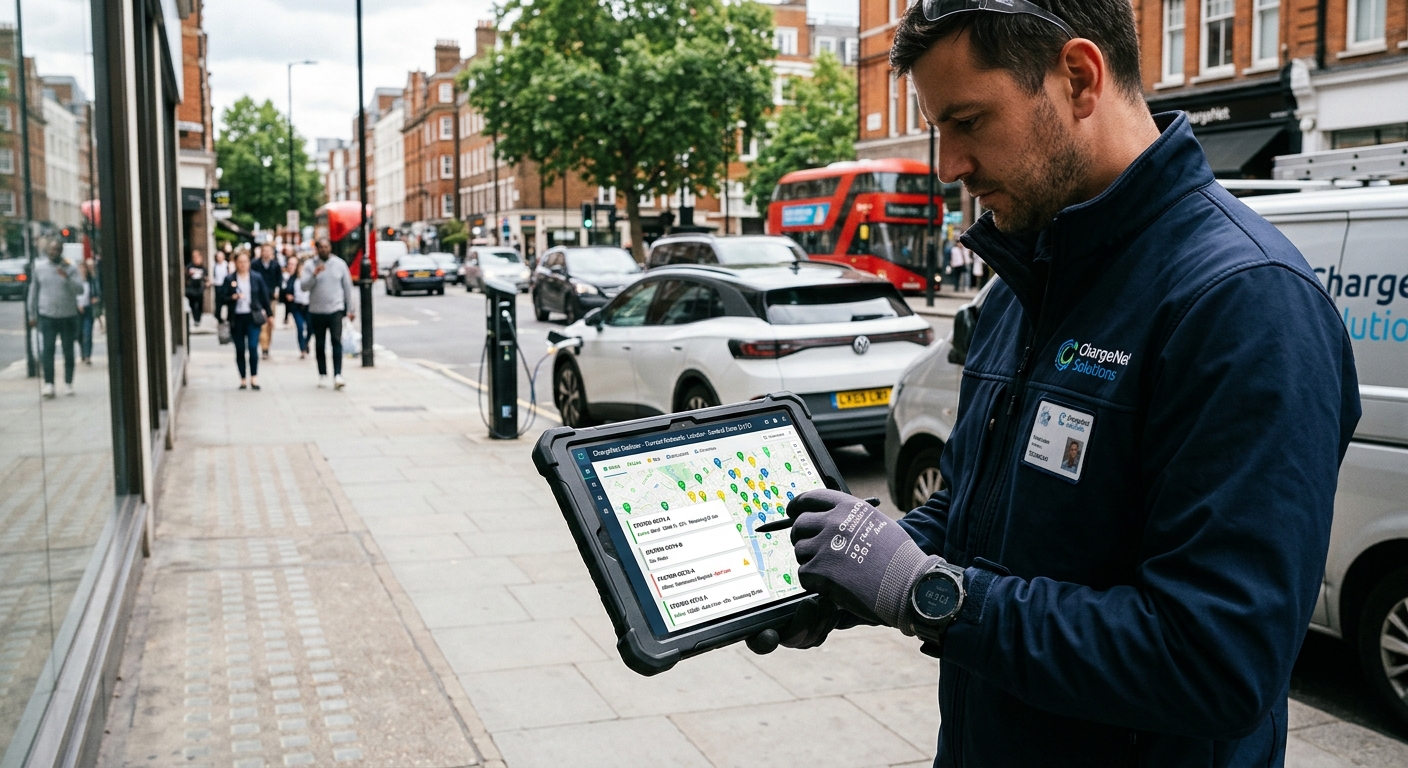
A curbside charger that can’t talk to a central management system is a liability, not an asset. Municipalities and utilities need remote diagnostics, usage reporting, and the ability to push firmware updates without sending a technician to every pole on the street.
This is where OCPP compliance matters more than almost any other spec. If you’re specifying or distributing curbside hardware, understand the practical differences covered in OCPP 1.6 vs. OCPP 2.0.1 — curbside deployments increasingly require the newer protocol’s better support for load management across shared transformer groups.
A Common Failure Point
Communication errors are disproportionately common in curbside units because of cellular signal dead zones between buildings. Before specifying a site, check signal strength at ground level, not just on a coverage map — we’ve seen entire blocks of curbside chargers go offline for this exact reason. Our guide on fixing EV charger communication errors covers diagnostic steps that apply directly here.
Technician monitoring curbside EV charger network on a tablet dashboard
Choosing the Right Power Level for Curbside Deployment
More power isn’t automatically better at the curb. Most curbside parking is overnight — 8-12 hours — which means even a modest 7kW charger delivers 50-80kWh, more than enough for a full daily commute battery refill. Installing 22kW curbside stations to save charging time is usually wasted money; the driver isn’t coming back to unplug faster, they’re asleep.
Where higher power does make sense is short-stay curbside spots near retail corridors or transit hubs, where turnover matters more than overnight dwell time. For guidance on matching power level to actual use case rather than defaulting to the highest spec, our Level 2 amperage guide breaks down exactly how to size 7kW through 22kW installations.
What Distributors and Contractors Should Ask Before Bidding
Municipal curbside RFPs look attractive on paper — steady utility relationships, recurring maintenance contracts, public visibility. But they come with procurement requirements that catch a lot of distributors off guard.
Does the hardware meet local right-of-way and ADA accessibility clearance requirements?
What’s the warranty structure for unattended, publicly-exposed equipment — and who absorbs vandalism costs?
Is the OEM partner able to customize enclosure ratings and mounting for pole-integration or bollard form factors?
If you’re new to structuring these bids, our RFP procurement checklist is a solid starting framework, even though it was written with fleet operators in mind — the due diligence steps transfer directly to municipal curbside contracts.
Subscribe the newsletter to get updated to news and promotions
Cookies give you a personalized experience,Сookie files help us to enhance your experience using our website, simplify navigation, keep our website safe and assist in our marketing efforts. By clicking "Accept", you agree to the storing of cookies on your device for these purposes. Click "Adjust" to adjust your cookie preferences.For more information, review our Cookie Policy