Construction Site EV Charging: Temporary Power Setups for Electric Excavators and Equipment
Home / Blog / Guidelines / Construction Site EV Charging: Temporary Power Setups for Electric Excavators and Equipment
09 Oct, 2026
electric construction equipment charging infrastructure
mobile charging construction equipment
temporary power for electric excavators
A 20-ton electric excavator can draw 60-80 kWh for a full shift — that’s roughly what a small apartment uses in a week, consumed in hours, on a site that often doesn’t have permanent grid power yet. The real answer to temporary construction power isn’t picking one solution; it’s matching the charging method to the project phase, because a six-week foundation job and an 18-month highway build need completely different infrastructure. Most contractors underestimate this and end up with a generator running flat-out next to a charger that’s only using 40% of its rated output.
Why Construction Sites Break the Normal EV Charging Playbook
Forget everything you know about fleet depot charging for a second. A warehouse or bus depot has a fixed address, a permanent utility connection, and equipment that comes back to the same spot every night. A construction site has none of that. The site itself moves — literally, as grading and phases progress — and the grid connection you had in month one might be 200 meters away from where the excavator is working in month four.
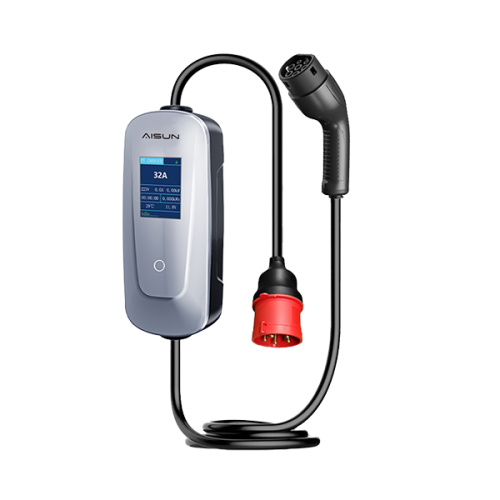
That’s the core engineering problem. Temporary power setups need to tolerate relocation, rough terrain, dust, vibration, and crews who are not electricians moving equipment around. Compare that to the controlled environment assumptions baked into most EV charger types designed for fixed installations, and you start to see why off-the-shelf residential or commercial chargers rarely survive a job site past week two.
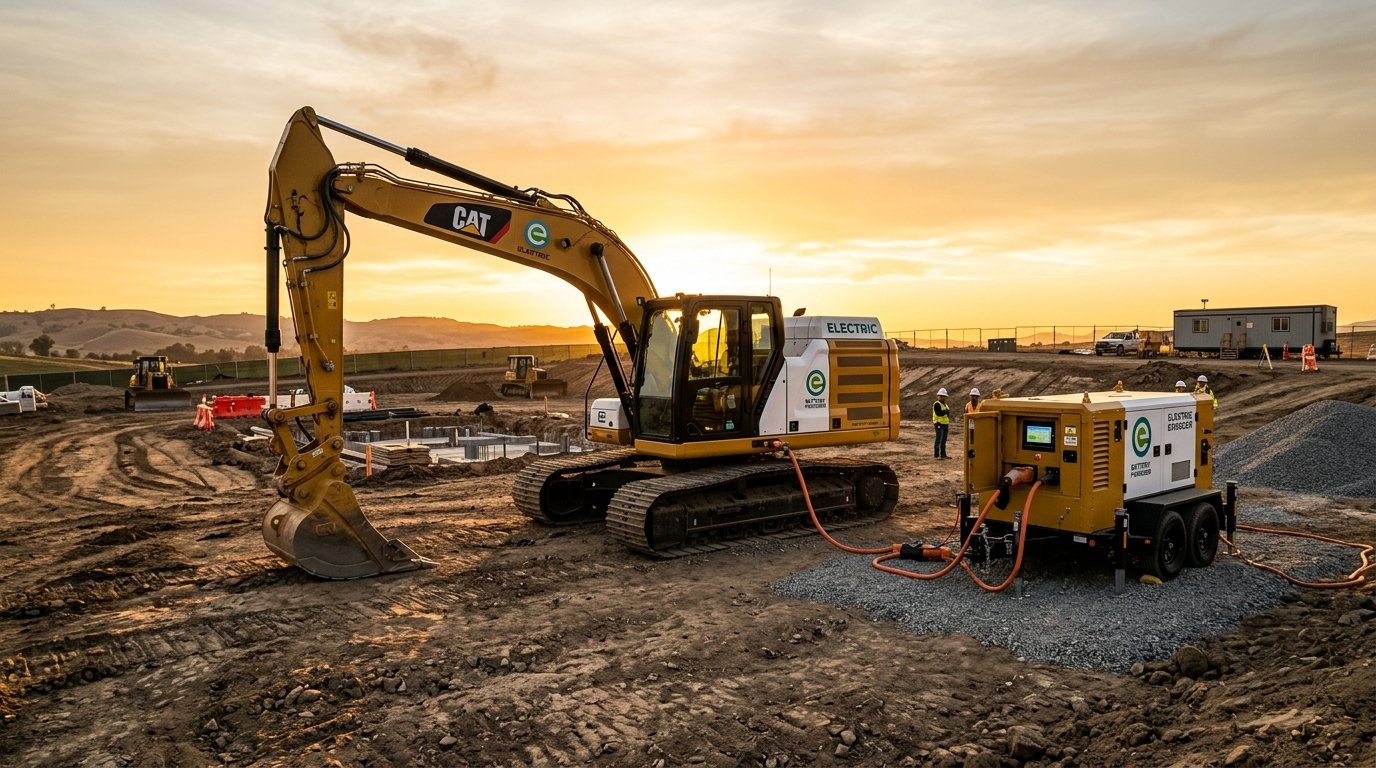
Electric excavator and mobile charger on dirt construction site
Three Power Architectures That Actually Work On-Site
Grid Extension with Temporary Service
If the project will run for over a year on roughly the same footprint, pulling a temporary utility service — often 200-400A three-phase — and running feeder cable to a distribution panel still wins on cost per kWh. The catch is lead time. Utilities routinely take 6-10 weeks to energize a temporary drop, so this only works if you plan it before groundbreaking, not after the first diesel bill shocks the site manager.
Diesel-Hybrid Generator Banks
For remote sites — think highway interchanges or quarry access roads with no nearby substation — a generator paired with a battery buffer lets the genset run at a steady, efficient load instead of cycling up and down to match charging spikes. This is the same principle behind battery-buffered DC fast chargers used to avoid grid upgrades, just adapted for diesel instead of utility power.
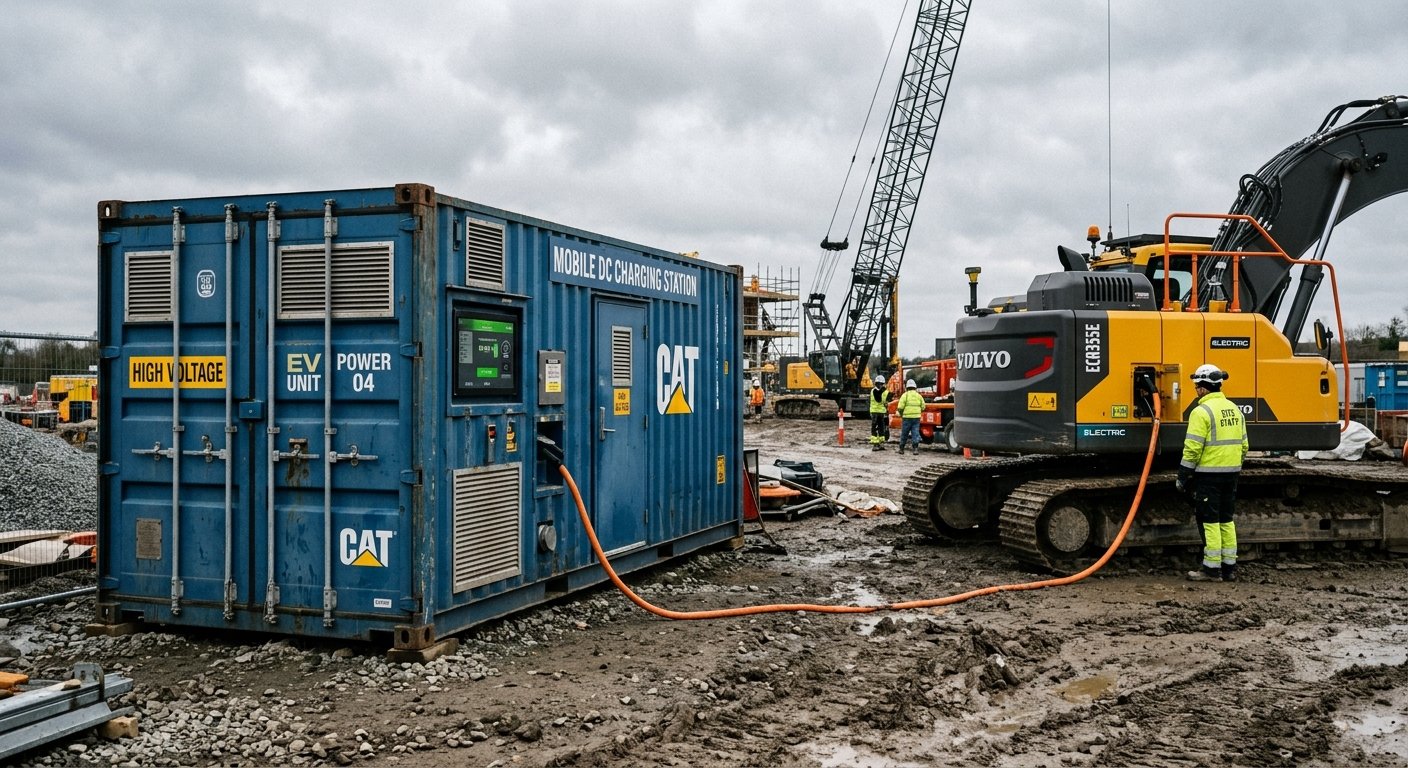
Containerized Mobile DC Chargers
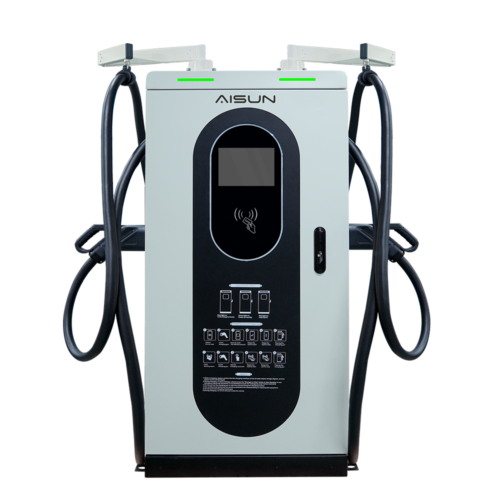
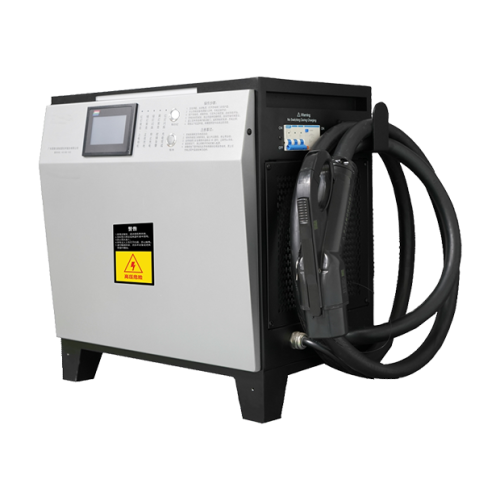
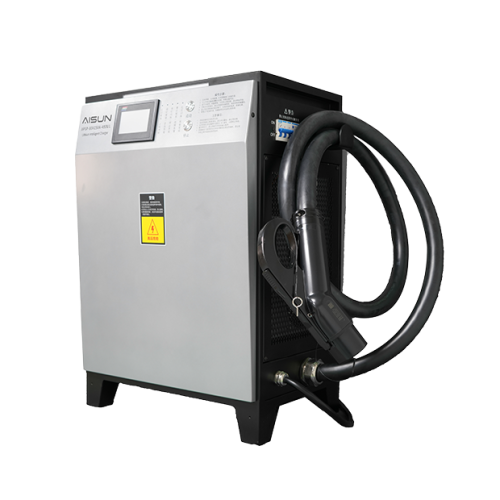
These are purpose-built units — essentially a DC charger, transformer, and sometimes a battery buffer packed into a skid or container — that get trucked between sites. They plug into whatever power source is available, grid or generator, and deliver 60-180 kW to equipment through standard or custom connectors. For contractors running multiple active sites, owning two or three mobile units and rotating them is often cheaper than building fixed infrastructure at every location.
Containerized mobile DC charger connected to construction equipment
Sizing the Charger to the Equipment Duty Cycle
Here’s where a lot of contractors get burned: they size the charger to the equipment’s battery capacity, not its actual work pattern. An electric excavator with a 300 kWh battery doesn’t need a 300 kW charger — it needs enough power to top up during lunch breaks and fully recharge overnight within the window the crew has.
Run the math: if the excavator works an 8-hour shift and consumes 70% of its battery, you have roughly 14-16 hours overnight to replenish it. A 60 kW charger handles that comfortably with margin for cold-weather derating. Jumping to 150 kW because it sounds safer just adds cost and heat without improving uptime. This is the same logic covered in matching DC chargers to warehouse duty cycles — construction equipment just has rougher, less predictable cycles than a forklift on a fixed warehouse schedule.
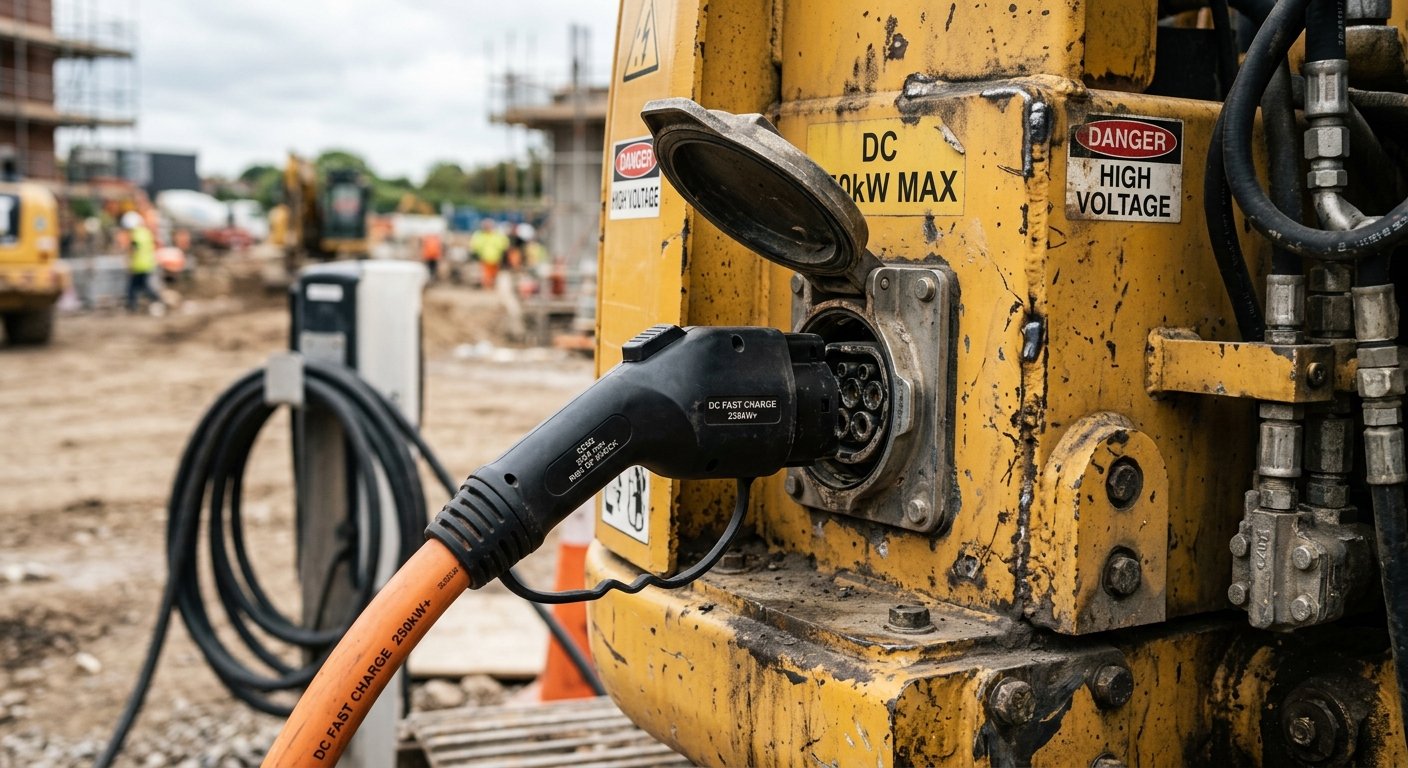
DC charging connector plugged into electric excavator charging port
Case Example: A Highway Interchange Project
A mid-size contractor working a 14-month highway interchange project faced a familiar problem — the nearest grid connection was 800 meters from the active work zone, and that distance shifted every few months as grading progressed. Running temporary utility feeder that far wasn’t economical for a project with a defined end date.
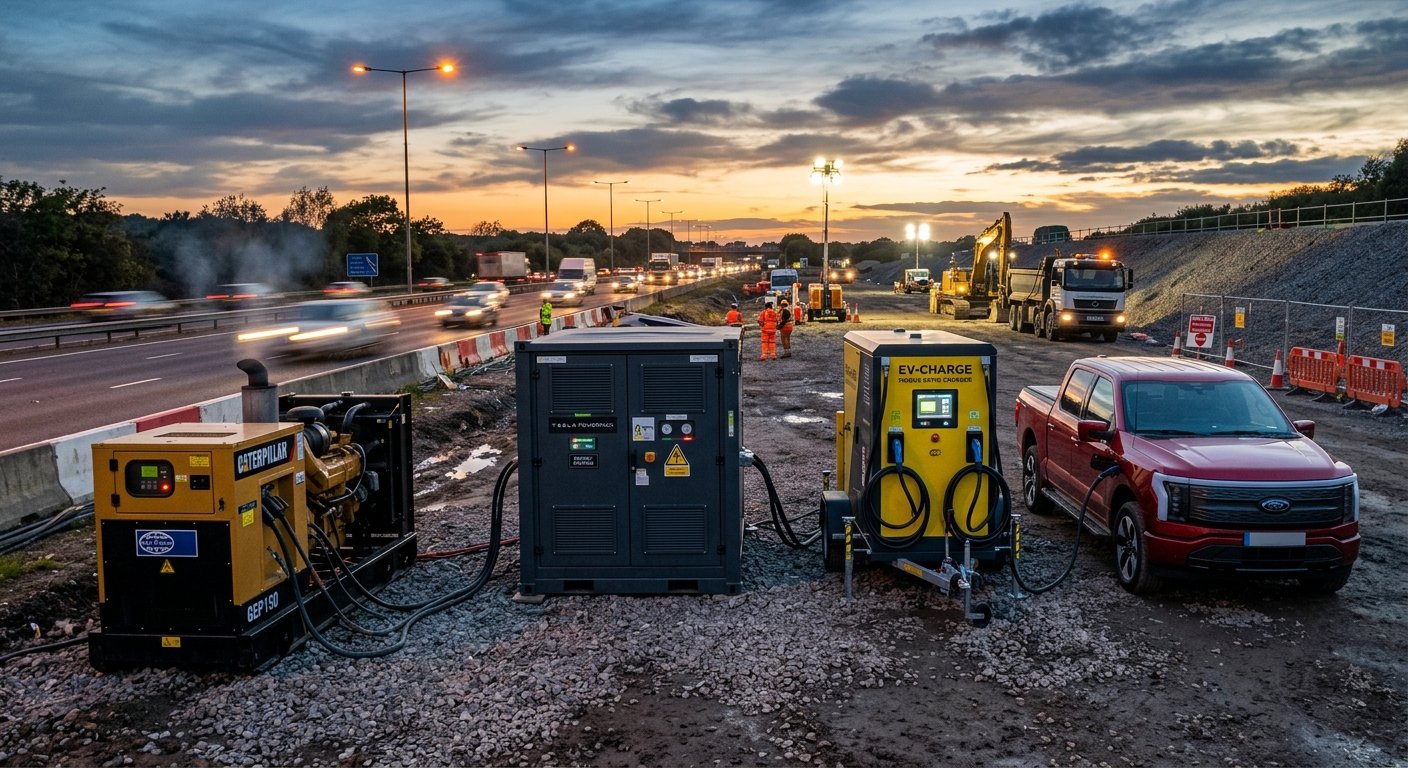
Their solution: two containerized mobile DC chargers, each fed by a 150 kVA diesel generator with a battery buffer sized to absorb charging spikes. The buffer let the generators run near-constant load instead of lugging through on-off cycling, cutting fuel consumption by an estimated 18% compared to a straight generator-to-charger setup the crew had used on a prior project. When the excavation zone moved, the units got towed on their skids to the new location in under four hours — no permits, no utility coordination.
Diesel generator and battery buffer powering mobile EV charger at highway construction site
Connector and Communication Challenges Unique to Job Sites
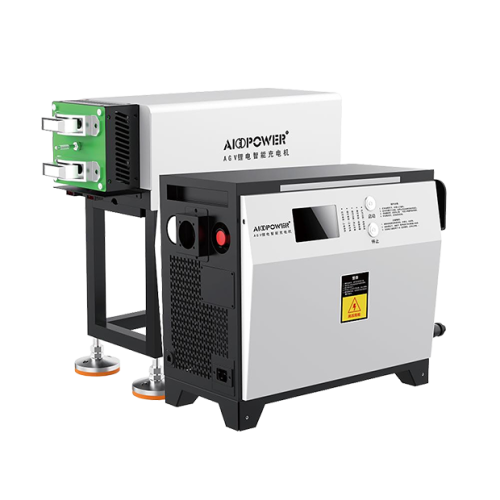
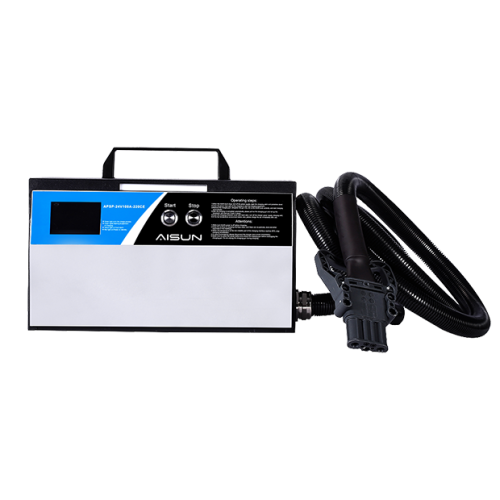
Construction equipment doesn’t follow the same connector standards as passenger EVs. Many electric excavators and compactors use proprietary or heavy-duty industrial connectors rated for dust, moisture, and repeated rough handling — closer to what you’d see on AGV charging systems than a CCS2 port on a sedan. If you’re sourcing mobile chargers for a mixed fleet of equipment brands, confirm connector compatibility before the unit ships, not after it arrives on-site and nobody can plug in.
Communication protocols matter less here than on public networks — nobody’s doing OCPP-based billing on a job site — but basic load reporting and fault diagnostics still save enormous headaches. A charger that silently derates due to dust ingress or overheating, without any status indicator the crew can read, turns into unplanned downtime exactly when the excavator is needed most.
Environmental Stress: Dust, Vibration, and Temperature Swings
A charger that’s perfectly reliable in a parking garage can fail within weeks on an active earthworks site. Dust ingress is the biggest killer — fine particulate works into connectors and cooling vents in ways standard IP ratings don’t always anticipate under real vibration loads. This is a close cousin to the issue explored in why IP rating alone doesn’t predict outdoor charger lifespan — a unit rated IP65 in a lab test can still underperform when it’s bounced around on a flatbed truck weekly and parked next to a crusher.
Temperature swings compound the problem. Sites in desert regions see 40°C+ midday heat that stresses power electronics, while the same project in winter months might face sub-zero mornings that affect battery buffer performance and startup reliability — similar startup challenges to what’s documented for cold climate charger heater design, just compressed into a single project timeline instead of a fixed geography.
Planning Power Budgets Before the Equipment Arrives
The projects that avoid charging headaches are the ones that budget power the same way they budget concrete or steel — before the equipment shows up, not after. That means mapping out total connected load across all electric machines on-site simultaneously, not just the biggest one. A site running two excavators, a compactor, and support equipment could easily need 250-350 kW of total charging capacity even though no single machine draws more than 100 kW.
This is where load balancing and dynamic power sharing principles — typically discussed for fleet depots — apply just as directly to construction sites. Dynamic sharing between chargers lets you avoid oversizing a generator or temporary service for a peak load that rarely actually occurs, since equipment rarely all plugs in and charges at full power at the exact same moment.
Procurement Lessons for Contractors New to Electrified Fleets
If this is your first electrified equipment purchase, resist the temptation to buy whatever charger the equipment OEM bundles with the machine. Those bundled units are often sized for ideal conditions, not job-site reality, and support can be thin once the warranty window closes. Treat the charging infrastructure as its own procurement decision, with the same scrutiny you’d apply to specifying an EV charger RFP — define duty cycle, environmental exposure, and mobility requirements explicitly before requesting quotes.
It’s also worth asking suppliers directly about field failure rates in dusty, high-vibration environments, not just lab-rated specs. The hidden cost of cheap EV chargers shows up fast on construction sites, where a single unplanned outage can idle a $500,000 excavator and the crew depending on it for a full shift.
Subscribe the newsletter to get updated to news and promotions
Cookies give you a personalized experience,Сookie files help us to enhance your experience using our website, simplify navigation, keep our website safe and assist in our marketing efforts. By clicking "Accept", you agree to the storing of cookies on your device for these purposes. Click "Adjust" to adjust your cookie preferences.For more information, review our Cookie Policy