Home / Blog / Guidelines / AGV Battery Charger Selection Checklist: Voltage, BMS, Docking & Duty Cycle
09 Nov, 2026
AGV battery charger
AGV charging system
AMR charger
BMS CAN communication
Lithium Battery Charger
Introduction
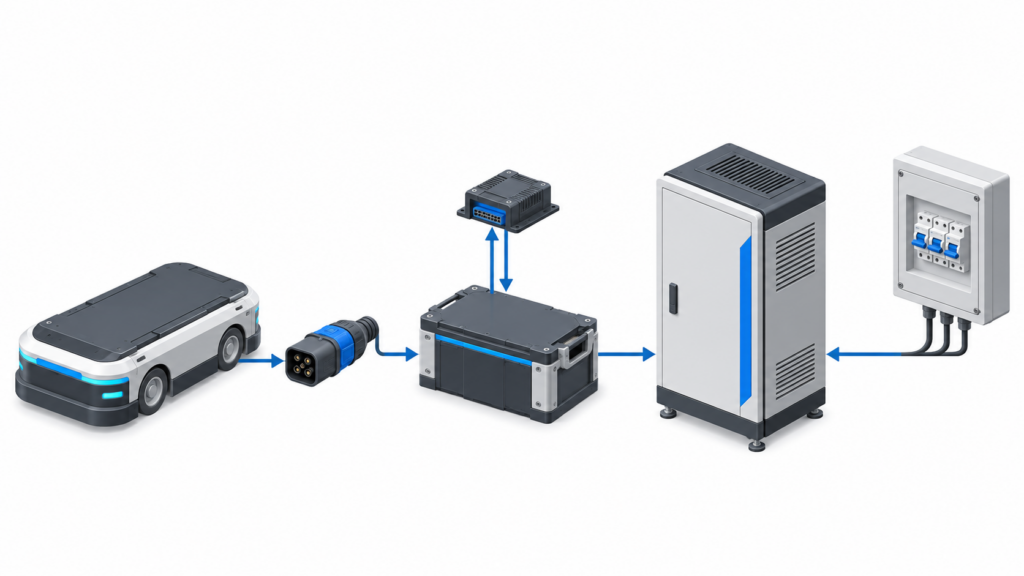
Choosing an AGV battery charger is not simply a matter of matching the charger to a battery voltage. An automated guided vehicle or AMR must charge reliably within its real operating workflow, communicate correctly with the battery management system (BMS), and connect through the right plug or automatic docking arrangement.
Use this checklist before requesting a quotation or comparing charger models. It helps project teams define the technical information a charger supplier needs to assess compatibility and propose a suitable charging approach.
Quick answer: Confirm the battery chemistry and nominal voltage first. Then verify the permitted charging voltage and current, BMS/CAN requirements, connector or docking arrangement, available AC input, charging windows and expected daily operating hours.
For a broader overview of AGV charging systems, charging strategies and fleet considerations, read our Smart AGV Charging Guide.
1. Confirm the battery system before selecting charger power
Start with the battery, not the charger catalogue. Record the following information for every AGV or AMR battery system:
Battery chemistry, such as lithium iron phosphate or another lithium chemistry
Nominal battery voltage and operating voltage range
Battery capacity in Ah and usable energy in kWh
Permitted charging voltage and maximum charging current
BMS manufacturer, communication interface and required protocol
Temperature limits and any battery-side charging restrictions
The nominal voltage printed on a battery is not enough to specify a charger. The charging profile must match the battery system and its BMS limits. A charger that is incorrectly configured can reduce availability, cause fault messages or be prevented from charging by the BMS.
2. Match charging current to the AGV duty cycle
The right charging current depends on how the vehicle works during the day. A lightly used AGV with a long off-shift charging window has different requirements from a high-utilization AMR that charges repeatedly during short idle periods.
Before charger selection, document:
Number of vehicles in the fleet
Operating shifts and total hours of use per day
Typical battery state of charge at the start and end of a shift
Available charging windows, including breaks, waiting periods and shift changes
Required vehicle availability and acceptable charging downtime
Expected future fleet growth
For opportunity-charging workflows, charger output, battery acceptance limits and charging location must work together. A higher charger rating does not automatically mean faster useful charging if the battery or BMS limits the permitted current.
3. Verify BMS and CAN communication requirements
Many lithium battery systems use BMS communication to manage charge current, battery temperature, fault conditions and charge completion. Confirm whether the project requires CAN communication, the protocol details, connector pinout and the responsibility for validating communication during commissioning.
Ask the battery supplier and charger supplier to confirm:
Whether CAN communication is required or optional
Protocol name, message requirements and documentation availability
Connector and pinout details
Charging enable, fault and emergency-stop logic
Required test procedure before volume deployment
Do not assume that two chargers with the same voltage and current rating will communicate with every battery. Communication compatibility must be checked for the selected battery and charger configuration.
4. Choose the right connector or docking interface
AGV charging interfaces commonly include manual industrial connectors, vehicle-side charging sockets and automatic docking contacts. The interface should reflect the operating workflow, insertion-cycle requirement and environmental conditions.
For manual charging, confirm the connector type, current rating, keying, cable length and operator-access requirements. For automated charging, provide drawings or photos of the docking position, available installation space, vehicle approach method and contact arrangement.
Key questions include:
Does the vehicle use a manual plug, a charging socket or automatic contact charging?
Is the connector suitable for the required current and daily connection cycles?
Is there clearance for cable routing, docking movement and service access?
Are dust, moisture, vibration or washdown conditions relevant?
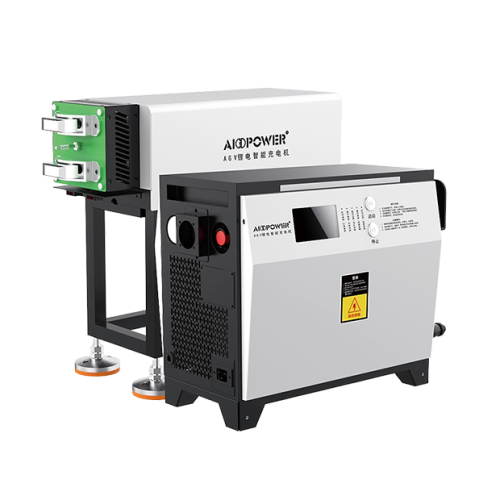
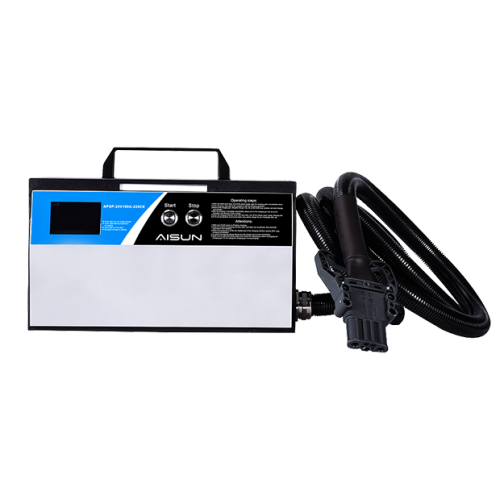
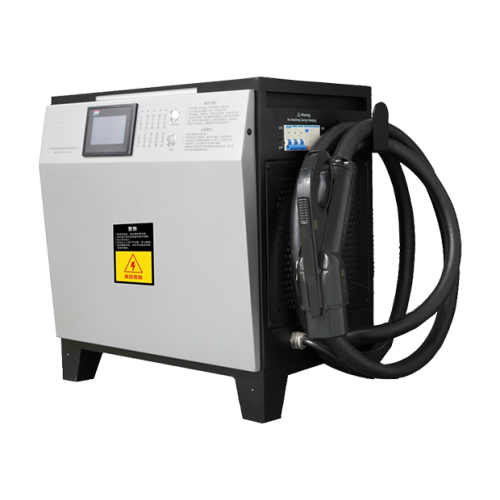
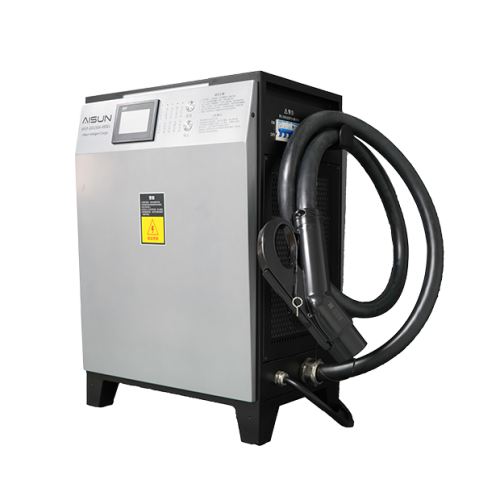
For an example of a charger solution configured around battery BMS requirements, connection method and operating workflow, see our AGV & AMR lithium battery charger.
5. Check the available AC input and site conditions
The charging system must fit the site electrical supply as well as the AGV battery. Confirm available input voltage, phase arrangement, service capacity, protection devices and cable routing before finalizing a charger configuration.
Prepare the following site information:
Available AC voltage, frequency and phase arrangement
Existing circuit capacity and distribution-board information
Installation location, ambient temperature and ventilation conditions
Cable distance from the electrical supply to the charging area
Required enclosure or ingress-protection conditions
Local electrical code and installation requirements
Site electrical design and protective-device sizing must be completed by qualified electrical professionals under applicable local rules.
6. Decide between central charging and distributed charging points
Central charging works well when vehicles can return to a defined charging area. Distributed charging can be more suitable when AGVs charge at several points along their routes or during frequent short idle periods.
When comparing these approaches, consider travel time to the charging point, queue risk, available floor space, maintenance access and the operational impact if one charger is unavailable. The charger layout should support the workflow rather than force vehicles into inefficient detours.
Information to prepare before requesting an AGV charger quotation
Share the following package with the charger supplier:
Battery datasheet, including chemistry, voltage, capacity and permitted charging limits
BMS/CAN protocol information, where applicable
Vehicle and charging-interface drawings or clear photos
Required connector or automatic docking details
Available AC input and installation conditions
Fleet quantity, operating hours and charging windows
Target market and any project-specific compliance requirements
Expected delivery schedule and future expansion plan
Providing this information early reduces configuration errors and helps the supplier assess whether a standard charger configuration, a project-specific configuration or additional engineering review is required.
FAQ
Can one AGV battery charger work with every lithium battery?
No. Battery chemistry, voltage range, permitted charging current, BMS protocol and connector arrangement must be checked for the specific vehicle and battery system.
What is opportunity charging for AGVs?
Opportunity charging uses planned idle periods, such as loading, waiting or shift-change intervals, to add energy during operation. It requires a compatible battery, charger profile and charging interface.
Is automatic docking required for AGV charging?
Not always. Manual connectors may be appropriate for some workflows. Automatic docking is evaluated when vehicles must charge without operator intervention or when frequent short charging events are part of the operation.
What information does a charger supplier need first?
The battery datasheet, BMS/CAN requirements, charging-interface information, available AC input and operating duty cycle are the most useful starting points.
Next step
AISUN supports charger-selection discussions for AGV and AMR projects. For an initial compatibility review, prepare the battery, BMS, interface and site information listed above, then contact the team with the expected fleet quantity and operating workflow.
Subscribe the newsletter to get updated to news and promotions
Cookies give you a personalized experience,Сookie files help us to enhance your experience using our website, simplify navigation, keep our website safe and assist in our marketing efforts. By clicking "Accept", you agree to the storing of cookies on your device for these purposes. Click "Adjust" to adjust your cookie preferences.For more information, review our Cookie Policy