Vehicle-to-Grid (V2G) Readiness: What Distributors Should Ask OEM Partners Now
Home / Blog / Industry News / Vehicle-to-Grid (V2G) Readiness: What Distributors Should Ask OEM Partners Now
10 Sep, 2026
bidirectional EV charging OEM
ISO 15118-20 V2G
V2G distributor questions
vehicle-to-grid charger requirements
If you’re placing OEM orders for chargers that will still be in the field in 2030, ask your supplier three things right now: does the power electronics architecture support bidirectional flow, does the firmware speak ISO 15118-20, and can the unit pass grid interconnection certification without a hardware redesign. Skip these questions and you’ll either overpay for V2G capability nobody uses, or you’ll sell fleets a charger that can’t be upgraded when their utility contracts start rewarding bidirectional discharge. This isn’t a hypothetical concern for 2028 — several fleet operators in California and the Netherlands are already piloting V2G programs, and the OEM contracts being signed today determine who can participate.
Why V2G Readiness Is a Hardware Decision, Not a Software Update
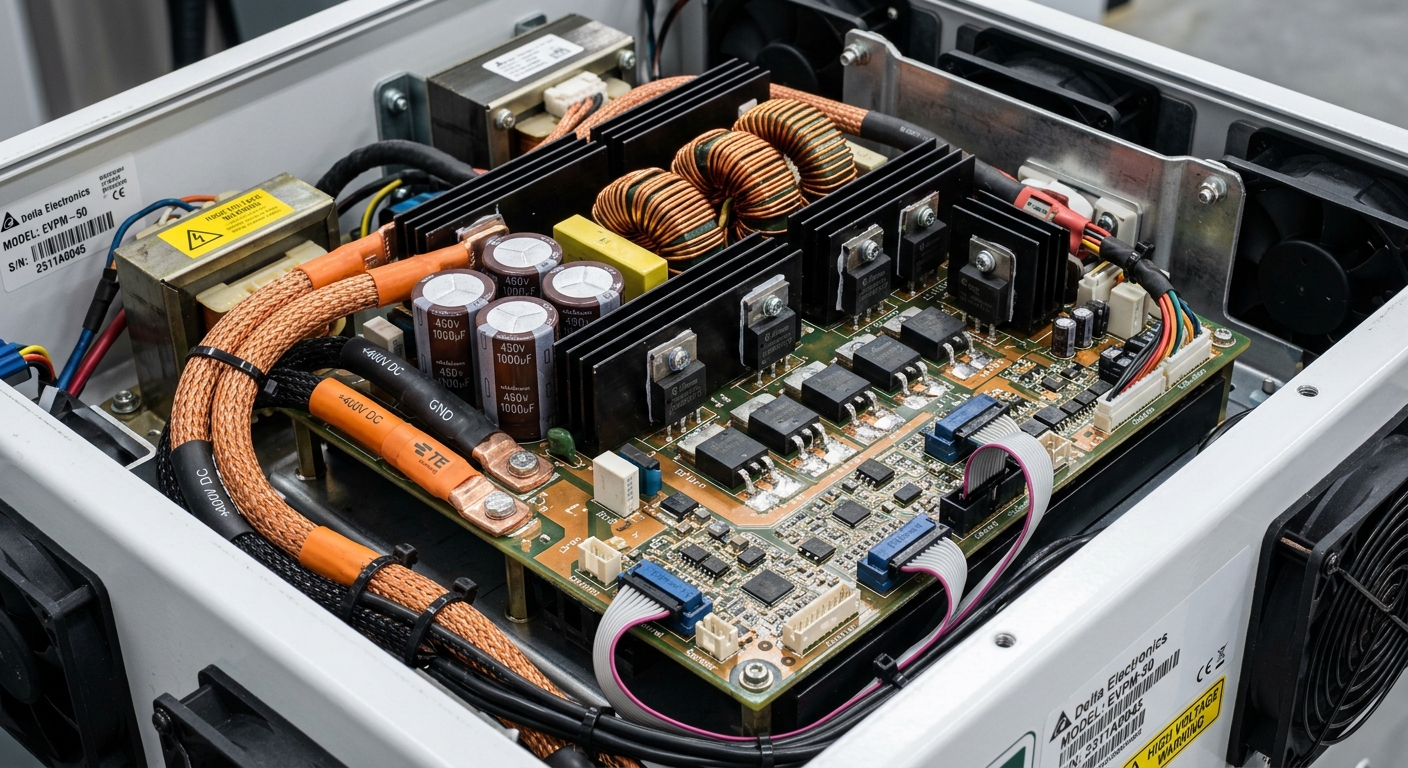
Here’s the mistake distributors keep making: assuming V2G is just a firmware flag you flip on later. It isn’t. Bidirectional power flow requires an inverter architecture capable of converting DC back to AC cleanly, with the same power quality standards the grid demands on the way in. Most unidirectional AC/DC chargers use rectifier topologies that simply can’t reverse the flow without a board-level redesign.
If your OEM partner tells you a charger is “V2G-ready” but the power module wasn’t designed for bidirectional conversion, that’s a red flag. Ask specifically whether the inverter stage uses a topology like an active front-end (AFE) that supports both directions, or whether it’s a simpler diode-bridge rectifier that only ever moves power one way. This is the same due diligence covered in our breakdown of power module architecture and reliability — the module design determines what’s physically possible, not what’s marketed.
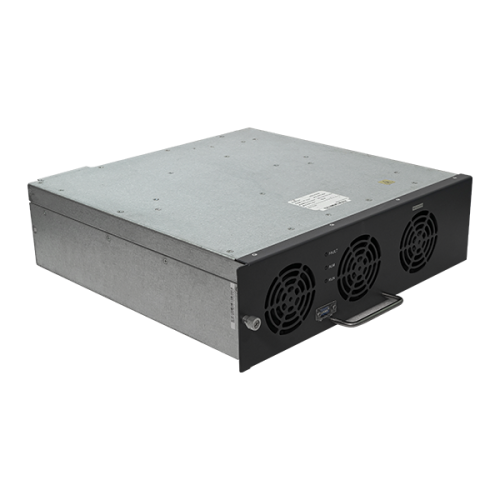
Internal power module of an EV charger showing bidirectional inverter circuitry
The ISO 15118-20 Question You Need to Ask Before Anything Else
Ask this directly: does the charger’s communication stack support ISO 15118-20, or only ISO 15118-2? This single detail separates chargers that can actually participate in V2G programs from those that can’t, no matter how capable the power electronics are.
ISO 15118-2 handles Plug & Charge and basic smart charging signals. ISO 15118-20 adds the bidirectional power transfer negotiation layer — the protocol that lets a vehicle and charger agree on discharge schedules, state-of-charge reserves, and grid service participation. Our earlier piece on ISO 15118 Plug & Charge implementation covers the OEM side of this in depth, but for V2G specifically, -20 compliance is non-negotiable. If your OEM partner is vague about which version they’ve implemented, get it in writing before signing.
Grid Interconnection Certification: The Step Most OEMs Skip
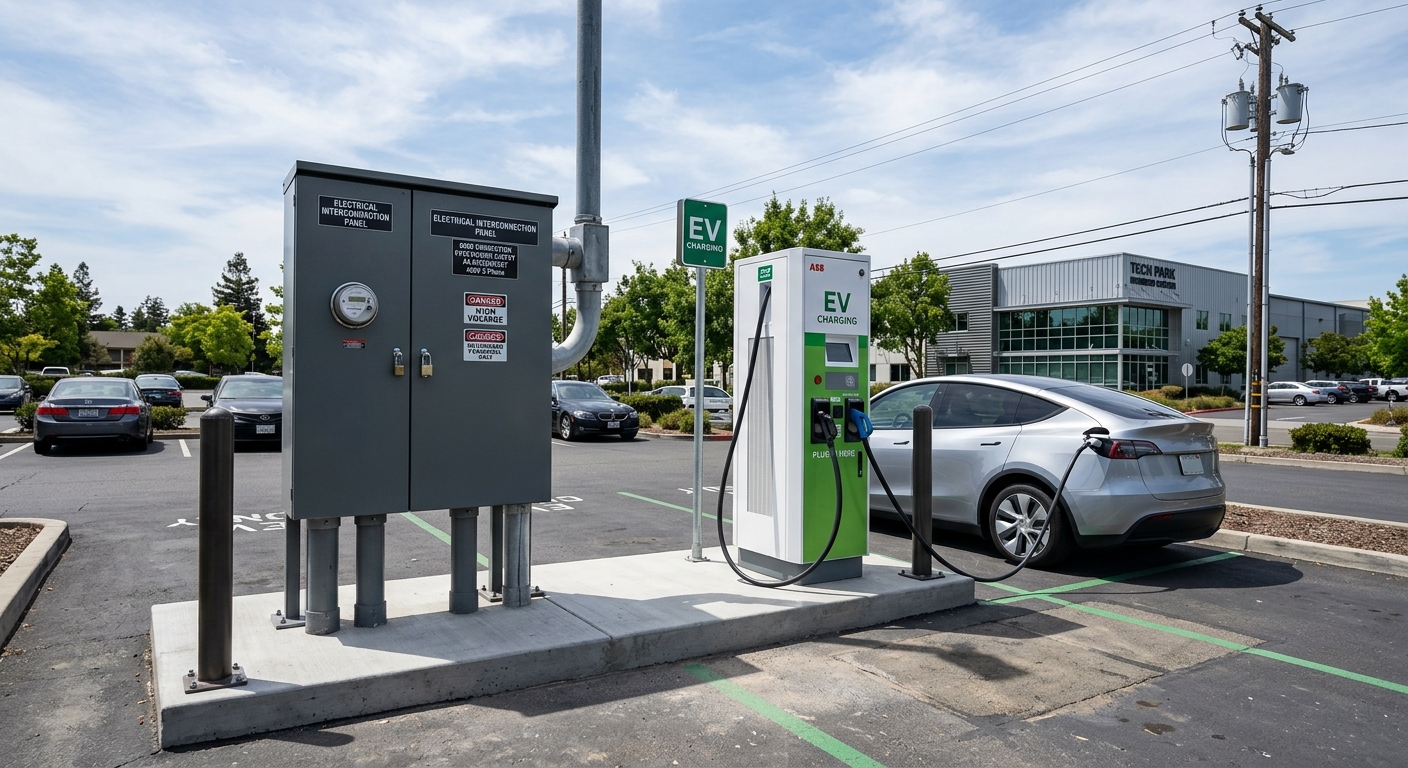
A charger that can technically push power backward still needs certification to legally connect to the grid in reverse mode. In the US, that means IEEE 1547-2018 compliance and, in most states, UL 1741 SB certification for grid-support functions. In the EU, it’s typically VDE-AR-N 4105 or equivalent national codes.
Here’s the practical problem: many OEMs building for the Asian domestic market have never pursued these certifications because V2G demand there has been slower to develop. If you’re distributing into California or the Netherlands — two markets actively running V2G pilots — ask your OEM partner point-blank whether they’ve already secured or budgeted for this certification path. Retrofitting certification onto a finished product line is expensive and slow. It’s far cheaper to specify it at the design stage.
Real-world example: a European distributor we spoke with signed an OEM contract in 2024 assuming V2G certification would follow within a year. It took 22 months and a partial hardware revision because the original inverter design couldn’t meet anti-islanding protection requirements under IEEE 1547. That delay cost them a utility pilot contract entirely.
Utility grid interconnection point next to an outdoor EV charging station
Battery Warranty Implications: What Fleet Customers Will Ask You
Fleet operators considering V2G will ask you one blunt question: does discharging the vehicle battery back to the grid void the manufacturer’s warranty? You need an answer before they do, because most vehicle OEMs still treat V2G cycling as additional depth-of-discharge stress that isn’t covered under standard warranty terms.
This isn’t your charger OEM’s problem to solve, but it is information you need to package with your sales pitch. Ask your charger OEM whether their firmware includes configurable state-of-charge floor limits and discharge rate caps — these settings let fleet operators limit V2G participation to a range that keeps them within their vehicle warranty’s acceptable cycling parameters. A charger without granular SoC control puts that liability entirely on the fleet operator’s shoulders, which is a hard sell.
Cybersecurity: The Overlooked V2G Attack Surface
Bidirectional chargers are a bigger cybersecurity target than standard ones, and most distributors haven’t priced that risk in. Why? Because a compromised V2G charger doesn’t just stop working — it can potentially be used to inject power at the wrong time or destabilize local grid segments if enough units are hijacked simultaneously.
Ask your OEM partner about firmware signing, encrypted OCPP 2.0.1 communication (TLS 1.2 minimum), and whether they’ve had any third-party penetration testing done specifically on the V2G control logic. Standard charger security audits often don’t cover the discharge command pathway at all. This matters more with every networked unit you deploy — see our discussion on OCPP 1.6 vs. OCPP 2.0.1 for why protocol version affects your exposure here.
Networked EV charging infrastructure security concept with server racks
Firmware Upgrade Path: Because V2G Standards Are Still Moving
V2G grid codes are not finalized globally — they’re still evolving market by market, which means the charger you buy today needs a real over-the-air firmware upgrade path, not just a USB service port. Ask your OEM partner exactly how firmware updates are deployed at scale: can they push updates to thousands of deployed units simultaneously, or does each unit need manual technician access?
This matters because grid operators are actively revising V2G participation rules as pilots mature. A charger that can’t receive remote firmware updates for new grid code requirements becomes obsolete for V2G purposes within a couple of years, even if the hardware is still sound. Long-term support contracts should explicitly commit to firmware updates covering emerging grid interconnection standards, not just bug fixes.
Pricing the Premium: Is V2G Capability Worth It Today?
V2G-capable hardware typically costs 15-30% more than standard unidirectional units, and right now, most of your customers won’t use that capability for years. So should you stock it anyway? It depends on the deployment timeline and customer type.
For fleet depot projects with 10+ year planning horizons — the kind covered in our fleet depot overnight charging design guide — specifying V2G-ready hardware now avoids a costly rip-and-replace later. For short-term retail or curbside deployments where the charger’s expected service life is 5-7 years, the premium often isn’t justified yet. Match the capability to the customer’s actual planning horizon, not to what sounds impressive in a sales deck.
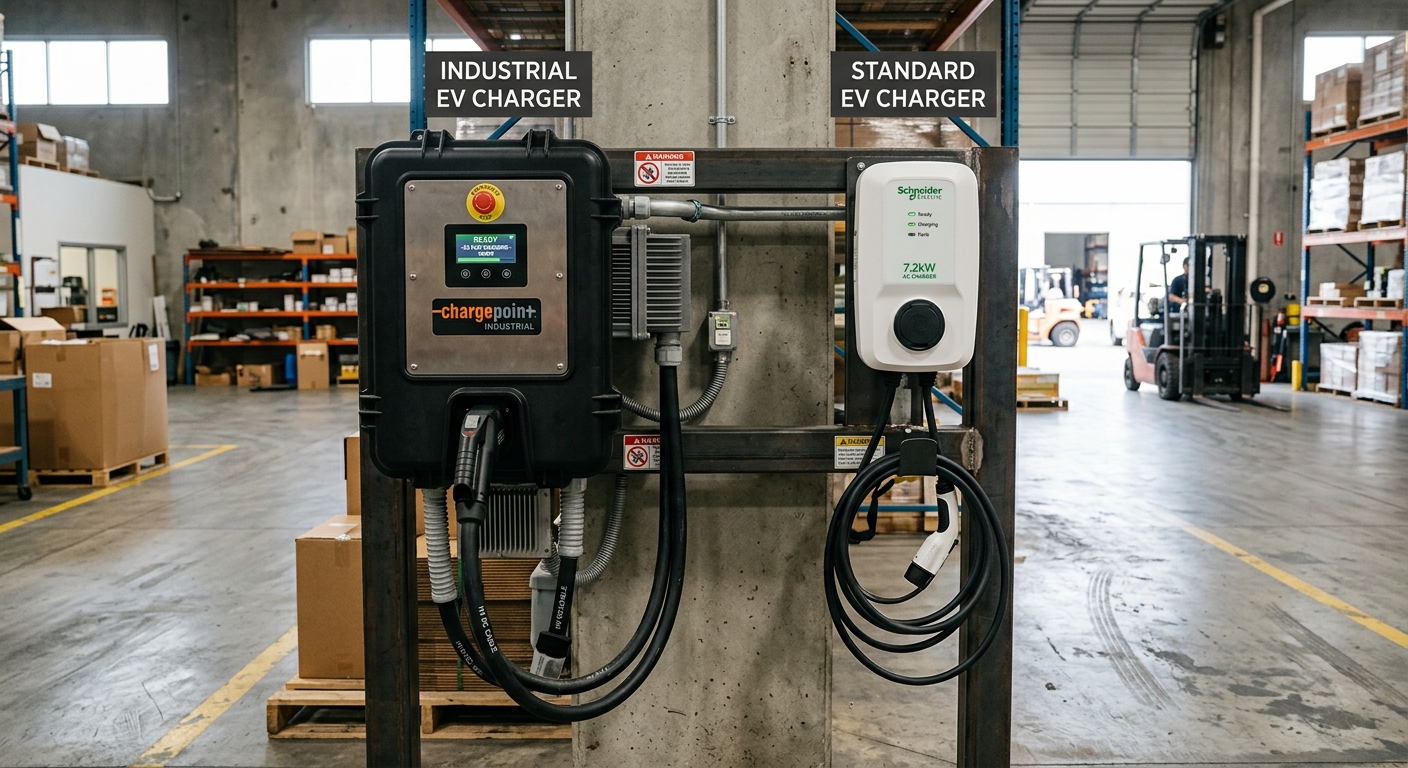
Comparison of a V2G-capable EV charger and a standard unidirectional charger in a warehouse
Subscribe the newsletter to get updated to news and promotions
Cookies give you a personalized experience,Сookie files help us to enhance your experience using our website, simplify navigation, keep our website safe and assist in our marketing efforts. By clicking "Accept", you agree to the storing of cookies on your device for these purposes. Click "Adjust" to adjust your cookie preferences.For more information, review our Cookie Policy