Connector Cable Wear and Tear: How to Spot a Charger Nearing End of Life
Home / Blog / Guidelines / Connector Cable Wear and Tear: How to Spot a Charger Nearing End of Life
03 Sep, 2026
charging connector lifespan
connector cable damage
DC charger maintenance
EV charger end of life signs
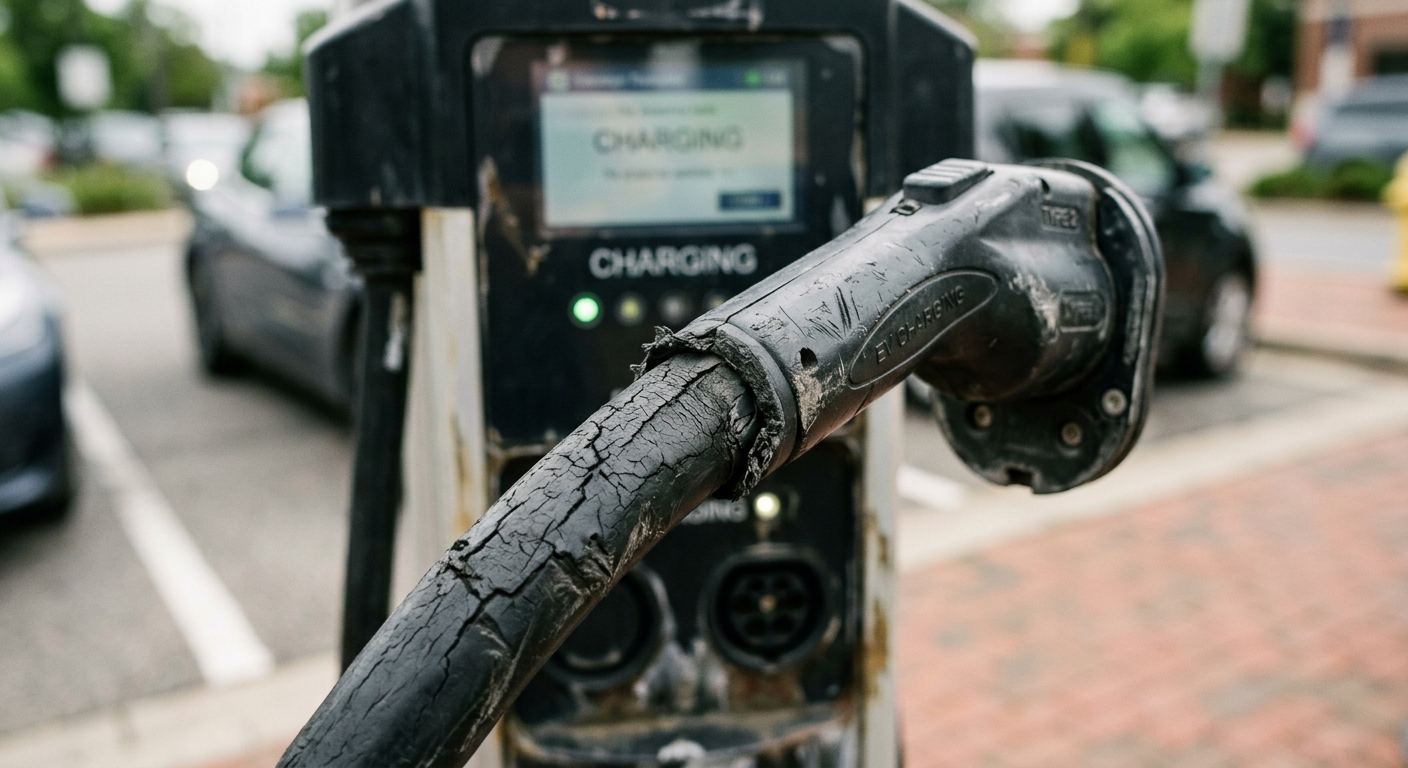
A charger nearing end of life almost always tells you before it fails outright — and the cable is usually where it starts talking. Look for cracked or chalky insulation, stiffness that wasn’t there a year ago, discoloration around the connector housing, or a latch that no longer clicks with confidence. These aren’t cosmetic issues; they’re leading indicators of insulation breakdown, contact resistance, and eventual thermal failure that show up weeks or months before a unit actually stops working.
Why Cables Fail Before the Rest of the Charger Does
Here’s a fact most fleet managers don’t know: the connector cable assembly is almost always the first component to show its age, even on a charger with a rock-solid power module inside. Why? Because it’s the only part that gets physically handled, flexed, dropped, dragged, and exposed to weather every single cycle. A DC fast charger cabinet might sit untouched for years. The cable gets grabbed, coiled, and stretched hundreds of times a week.
Industry data on high-use DC fast charging cables suggests a typical service life of 10,000 to 30,000 connection cycles before insulation fatigue becomes measurable — but that number swings wildly based on cable compound, bend radius design, and how the site handles storage. A depot that lets cables lie on hot asphalt all day is burning through that lifespan far faster than one using a cable management arm.
Cracked and worn EV charging cable jacket at an outdoor charging station
Reading the Physical Signs Before They Become Failures
Most charger downtime isn’t sudden — it’s the result of ignoring signs that were visible for weeks. Train your maintenance team to check for these five things during every routine inspection:
Surface cracking or a chalky, faded jacket — a sign of UV and ozone degradation, especially common on outdoor installations without shade structures.
Stiffness that appears seasonally — if a cable that was flexible in summer turns rigid in winter, the plasticizers in the compound are migrating out, a known issue discussed in our piece on cold climate charger reliability.
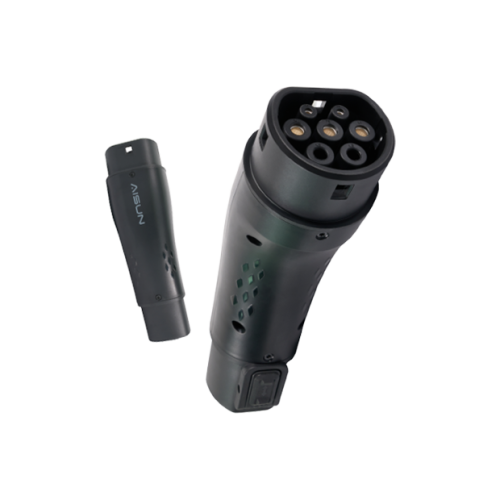
Discoloration or warping near the connector head — almost always a symptom of contact resistance generating heat at the pin interface.
A latch or retention clip that no longer locks firmly — mechanical fatigue after tens of thousands of insertion cycles.
Visible copper strands at bend points — this is the point of no return. That cable should be pulled from service immediately.
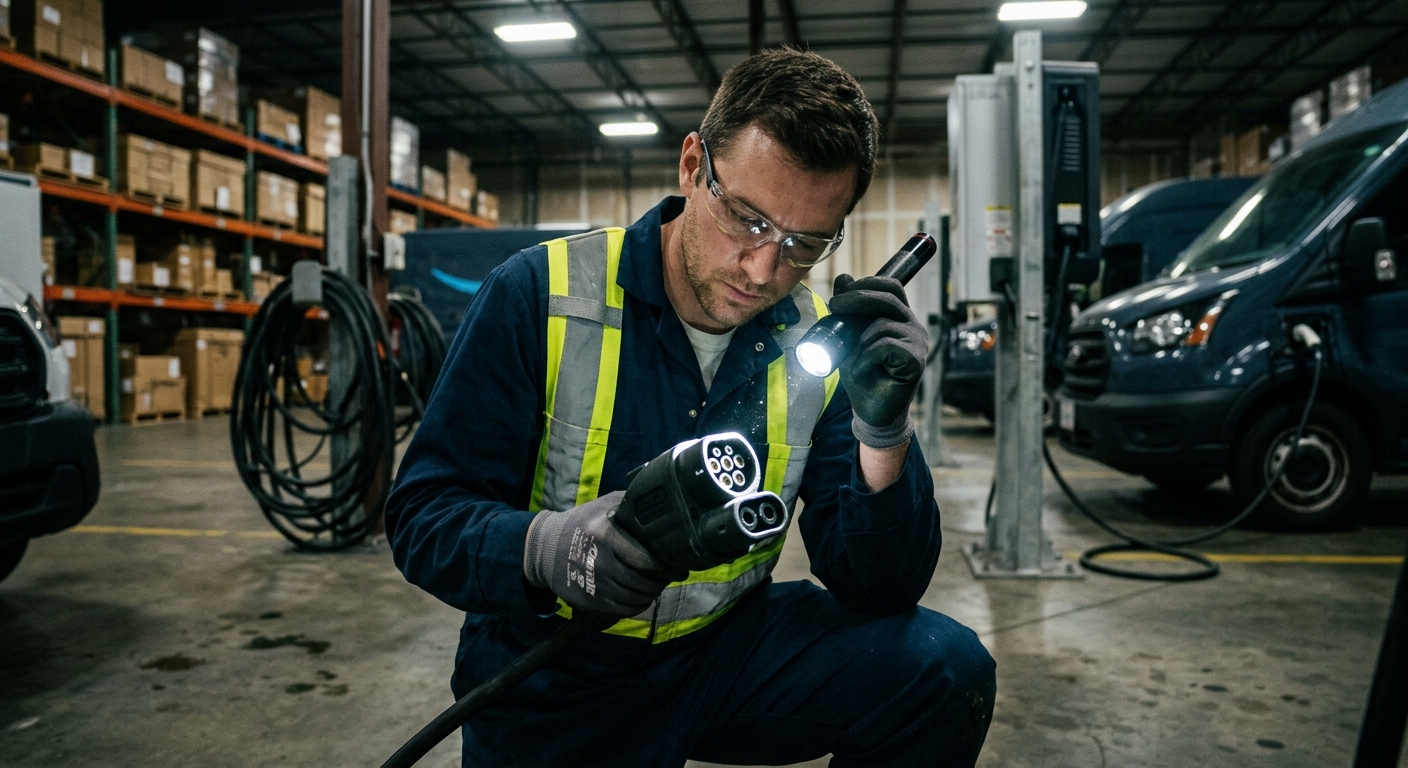
Technician inspecting EV charger connector pins for wear and contact damage
The Hidden Culprit: Contact Resistance Heat
Most people assume cable failure is a mechanical problem. It’s often an electrical one hiding behind a mechanical symptom. Every time a connector is inserted and removed, the mating surfaces of the pins experience micro-wear. Over thousands of cycles, that wear increases contact resistance — and resistance under a 60A or 125A DC load generates heat, even if it’s just a few extra degrees per cycle.
That heat is what actually degrades the insulation from the inside out, long before the outer jacket shows obvious cracking. A connector rated for 500 mating cycles that’s pushed to 2,000 cycles without inspection is running hotter every single session — and by the time you see discoloration on the housing, the internal pin plating may already be pitted beyond a simple cleaning fix.
A Real Example From the Field
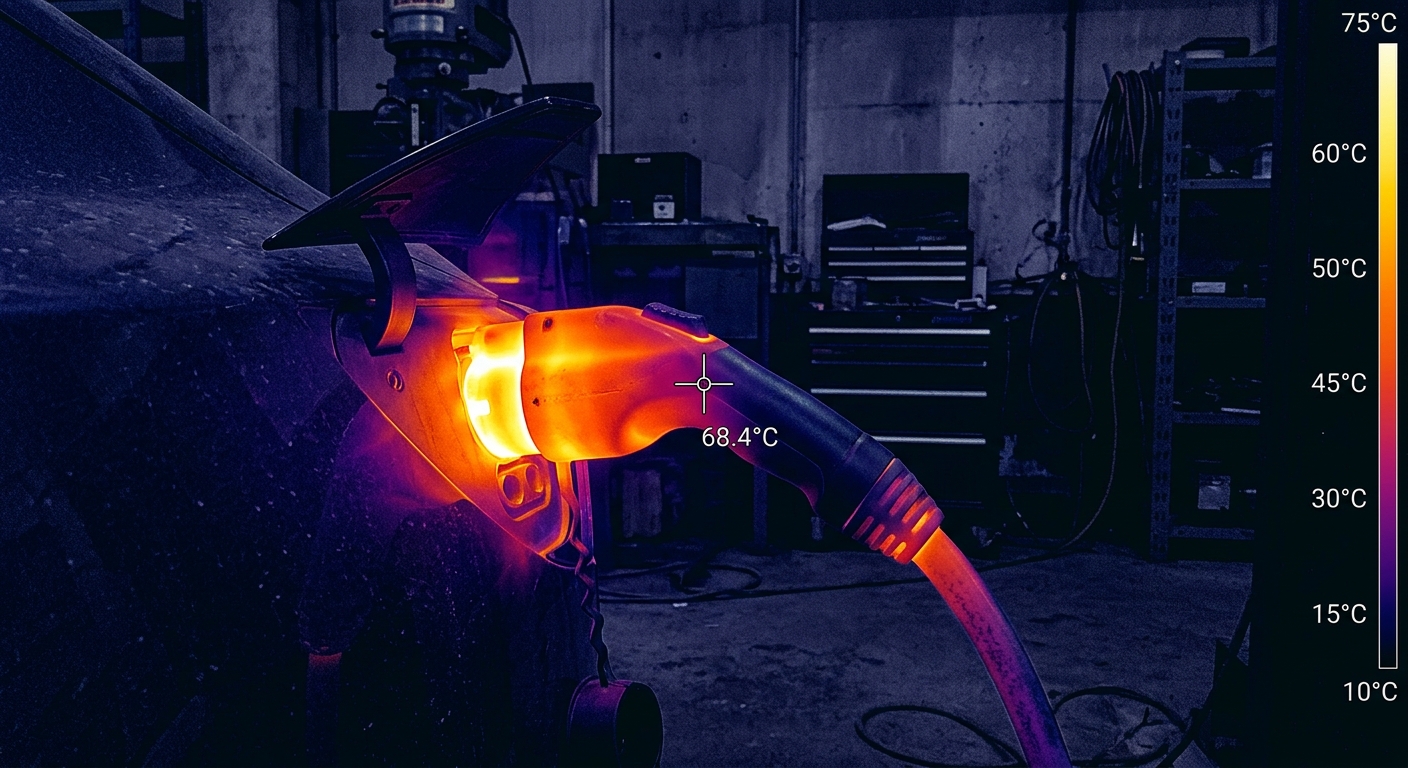
A logistics fleet operator running 40 forklifts on overnight charging noticed intermittent charge faults on three units — all traced back to the same connector batch installed 14 months earlier. The cable jackets looked fine. But thermal imaging showed a 22°C hotspot at the connector interface compared to neighboring units. The root cause: a slightly bent pin from repeated forceful insertion, which nobody caught because the visual inspection focused only on the cable, not the connector geometry.
Thermal imaging visualization of heat buildup at an EV charger connector contact point
Bend Radius Violations: The Mistake Almost Every Site Makes
Ask any charger manufacturer what kills cables fastest, and bend radius abuse tops the list — not weather, not UV, not even cycle count. Every charging cable has a minimum bend radius specified by the manufacturer, typically 4 to 6 times the cable’s outer diameter. Coil it tighter than that, day after day, and you’re creating micro-fractures in the copper strands long before the jacket shows any visible sign.
Sites using a simple wall-mounted hook instead of a proper cable management arm are the worst offenders. The cable gets yanked at an angle, coiled too tightly, and sometimes runs over sharp cabinet edges. If your team is seeing repeated failures at the same point along the cable — usually 12 to 18 inches from the connector — that’s a strong signal the storage method, not the cable quality, is the actual problem.
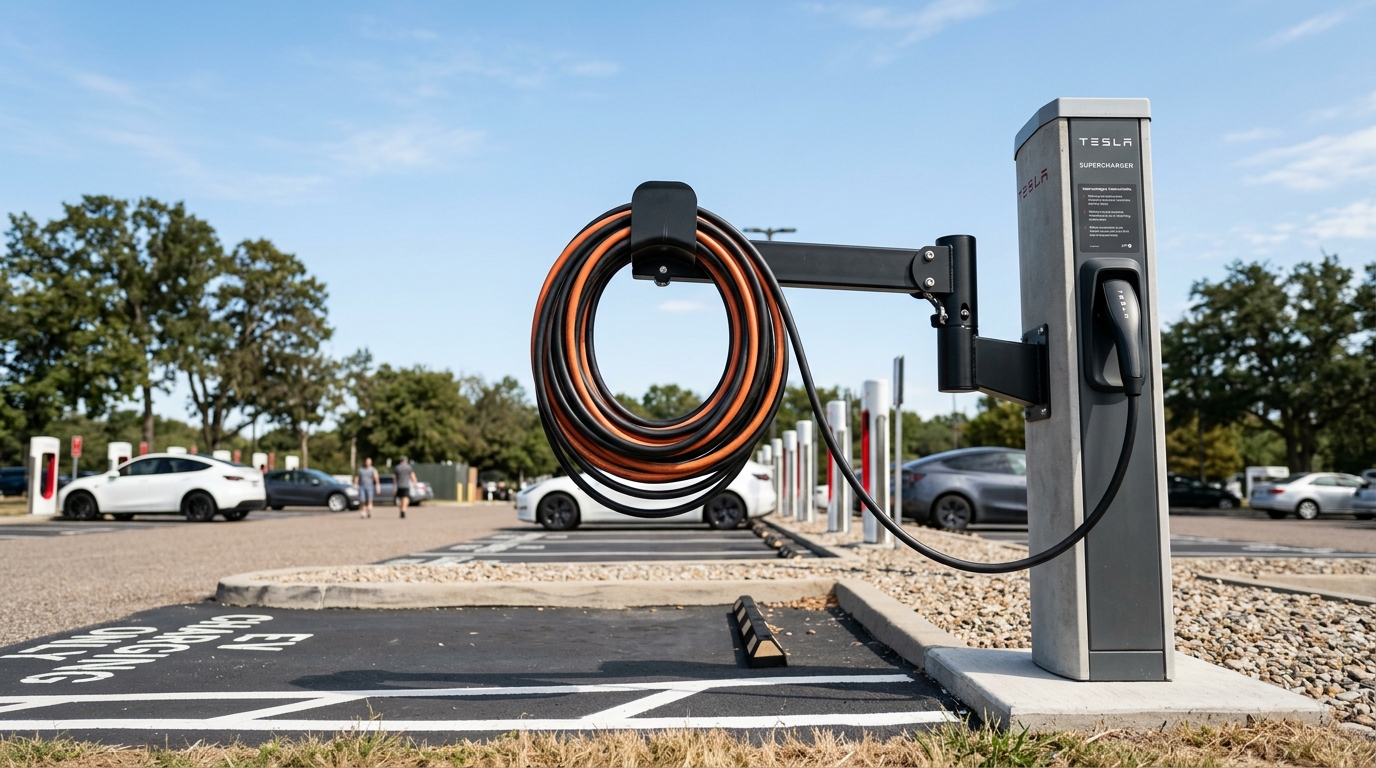
Properly coiled EV charging cable on a cable management arm to prevent bend radius damage
How Climate Accelerates the Timeline
A cable rated for a 10-year service life in a temperate climate might not make it past year three in a desert depot or a coastal site with high salt exposure. UV radiation breaks down the polymer chains in standard PVC jackets, while extreme cold makes TPE and rubber compounds brittle at the exact moment they need to flex most during connector insertion.
Coastal and marine-adjacent sites bring a different problem: corrosion at the connector pins accelerates contact resistance buildup, which loops back into the heat problem covered earlier. If you’re specifying chargers for a harsh-climate deployment, cable compound selection deserves the same engineering attention as enclosure IP rating — a point we’ve covered in detail in our breakdown of why IP rating alone doesn’t predict outdoor charger lifespan.
What to Do When You Spot Early Wear
Finding wear early isn’t a reason to panic — it’s a reason to plan. A cracked jacket with no exposed conductor doesn’t need an emergency shutdown; it needs to go on next quarter’s maintenance list. A discolored connector housing, on the other hand, needs the unit pulled from service today.
A Simple Triage Framework
Cosmetic only (fading, minor surface cracking): log it, schedule replacement within the next service window.
Functional but stable (stiffness, minor latch play): monitor monthly, replace within 3-6 months.
Active risk (exposed conductor, warped housing, heat smell): take offline immediately.
For sites managing dozens of units, this is exactly the kind of checklist that should be baked into procurement specs from day one — something we cover in our EV charger RFP procurement checklist.
Choosing Cables That Actually Last Longer
Not all charging cables are built to the same standard, even when the connector type looks identical on a spec sheet. If you’re specifying or replacing cables, three factors matter more than price: jacket compound (TPE outperforms standard PVC in flex fatigue and cold weather), strain relief design at the connector transition point, and whether the manufacturer publishes an actual mating cycle rating rather than a vague “durable” claim.
Understanding the different connector standards also matters here — a CCS2 cable and a GB/T cable don’t necessarily share the same construction quality even from the same factory. Our guide to charging connector types breaks down what to look for by standard, and for regional buyers, our comparison of CCS2, NACS, and GB/T connector standards covers the mechanical differences that affect long-term wear.
Subscribe the newsletter to get updated to news and promotions
Cookies give you a personalized experience,Сookie files help us to enhance your experience using our website, simplify navigation, keep our website safe and assist in our marketing efforts. By clicking "Accept", you agree to the storing of cookies on your device for these purposes. Click "Adjust" to adjust your cookie preferences.For more information, review our Cookie Policy