Battery-Buffered DC Fast Chargers: When Adding Storage Beats Upgrading the Grid Connection
Home / Blog / Guidelines / Battery-Buffered DC Fast Chargers: When Adding Storage Beats Upgrading the Grid Connection
18 Jun, 2026
battery buffered EV charging
BESS EV charging
DC fast charger with storage
grid connection upgrade alternative
A battery-buffered DC fast charger beats a grid upgrade whenever the cost and lead time of bringing more utility capacity to the site exceeds the cost of installing a battery buffer that can deliver short bursts of high power from a modest connection. In practice, that crossover hits earlier than most operators expect — a site with a 50 kVA service can comfortably run a 150 kW fast charger if average daily energy throughput stays under roughly 600–800 kWh. The catch: get the sizing wrong and you build a bottleneck that frustrates drivers and wastes battery cycles.
Why Grid Upgrades Have Become the Bottleneck
In most European and North American markets in 2026, the wait time for a new MV transformer or feeder upgrade ranges from 12 to 24 months. Utility connection costs for a 150 kW DC fast charger frequently land between $80,000 and $250,000 once trenching, transformer pad, and protection equipment are included — and that is before the charger itself.
For a single-charger retail site, an off-highway dealership, or a small fleet depot, that math kills projects. The site operator is not capacity-constrained on energy — they need 400 to 800 kWh per day, which a 50 kVA service delivers easily. They are constrained on instantaneous power. That is exactly the gap a battery buffer fills.
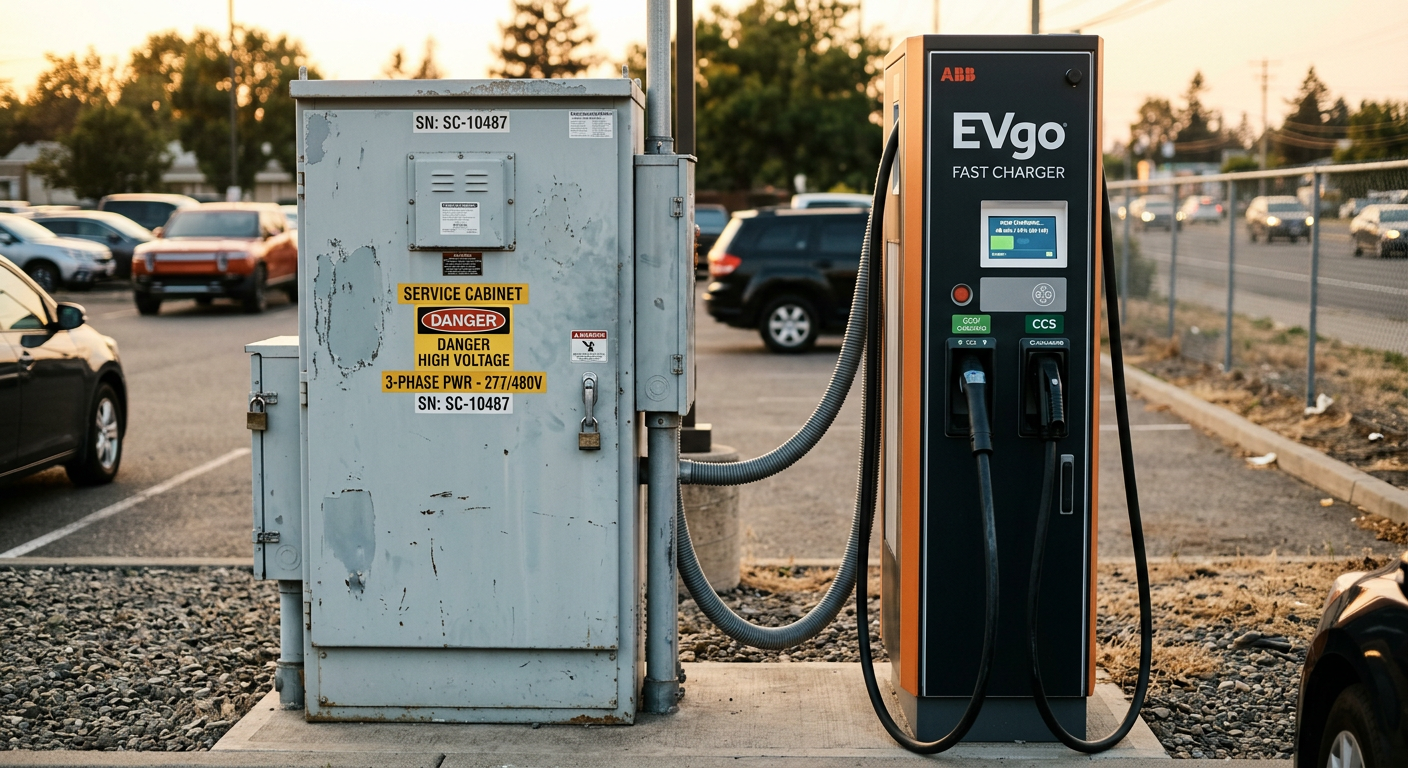
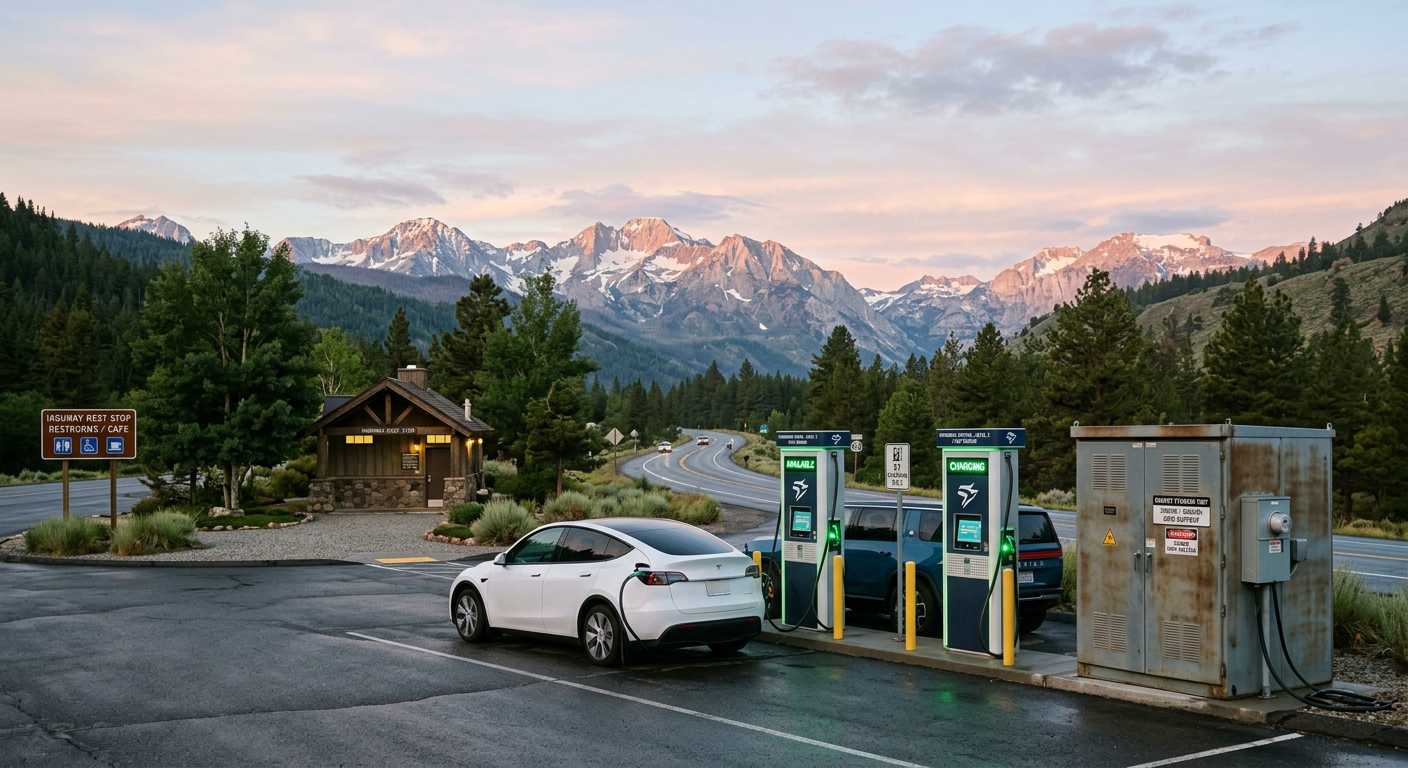
Outdoor electrical service equipment next to a DC fast charger
How a Battery-Buffered Charger Actually Works
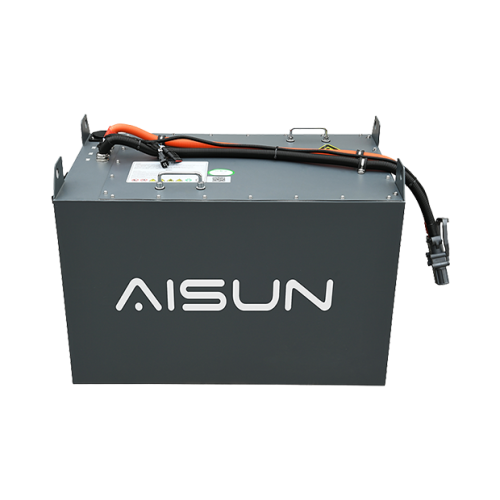
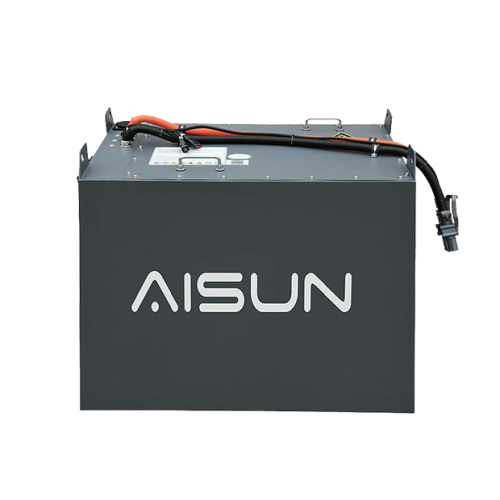
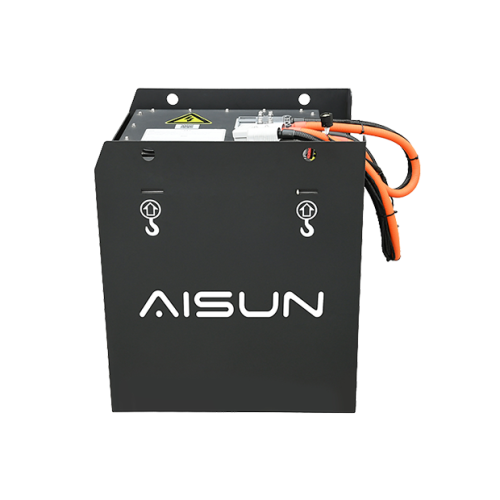
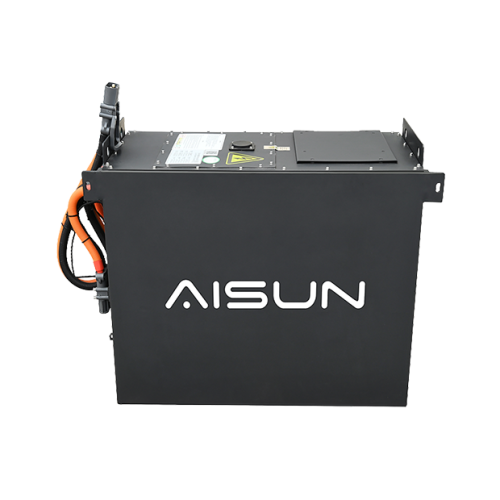
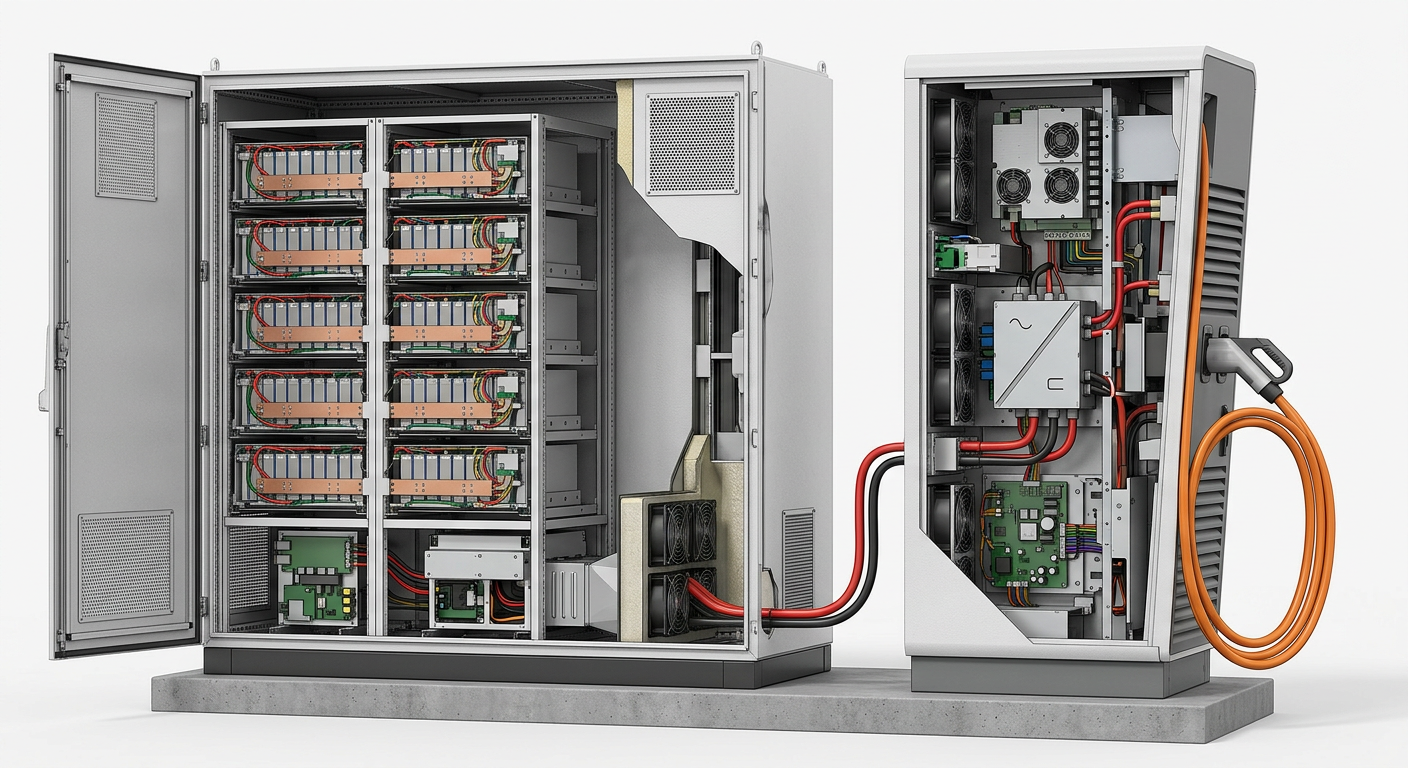
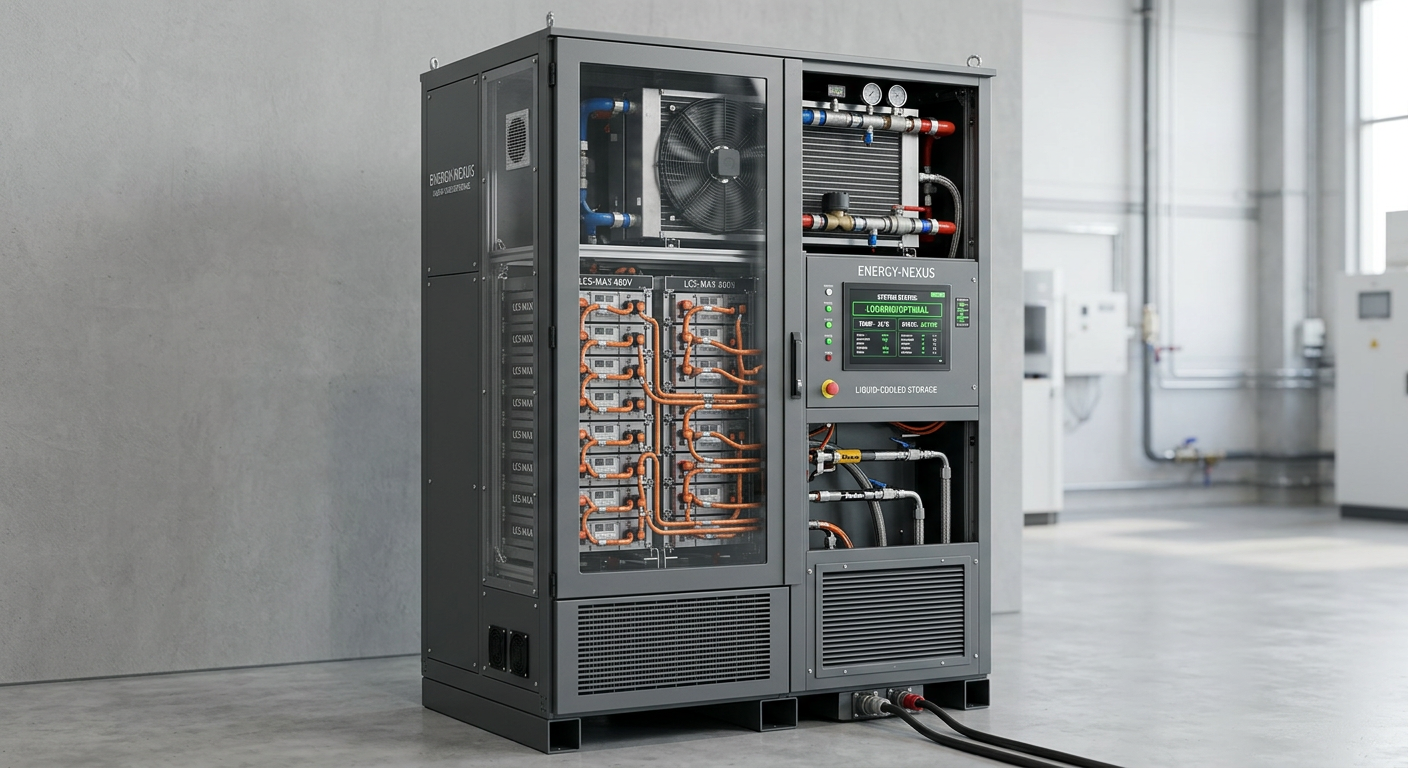
The architecture is straightforward: a lithium battery pack (typically 100–300 kWh, LFP chemistry) sits between the grid AC service and the DC charger’s power modules. The grid trickle-charges the battery at a low, steady rate — say 30–50 kW — while the battery discharges at 150–360 kW into the vehicle during a charging session.
The energy balance equation
For the buffer to work over a full day, this must hold:
Grid input (kW) × 24h ≥ Daily energy delivered to vehicles + system losses
A 50 kW grid feed at 90% round-trip efficiency through the battery yields about 1,080 kWh per day of usable energy — enough for roughly 20 cars taking a 50 kWh top-up. If your traffic exceeds that, you either upsize the grid, upsize the battery (for off-peak harvesting), or accept queuing.
Battery storage cabinet integrated with DC charging system
Sizing the Battery: The Numbers That Matter
Battery sizing is driven by three inputs: peak session energy, expected back-to-back session frequency, and the grid input you can sustain. Get one wrong and the system either underdelivers or wastes capex.
Peak session energy: For a 150 kW charger serving passenger EVs, plan on 40–60 kWh per session at average dwell times of 20 minutes.
Back-to-back factor: Two consecutive sessions with only 10 minutes between them require the battery to deliver ~100 kWh while only refilling ~8 kWh. The buffer must absorb that gap.
Useable DoD: LFP packs are typically cycled between 10% and 90% SoC to preserve calendar life — so a 200 kWh nameplate battery gives you 160 kWh of usable energy.
A practical rule of thumb: size the battery to handle three consecutive worst-case sessions without grid help. For a 150 kW station that means roughly 150–180 kWh usable, or a 200 kWh nameplate.
Real-World Scenario: A Rural Highway Site in Central Europe
A distributor we work with took on a project for a roadside cafe on a regional route, about 40 km from the nearest substation with spare capacity. The utility quoted €180,000 and 22 months for a 250 kVA upgrade. Traffic projections showed 12–18 sessions per day — far below what a 150 kW grid-tied charger would justify.
The deployed solution: one 150 kW dual-outlet DC charger paired with a 215 kWh LFP buffer, fed by the existing 63 A three-phase service (~43 kW continuous). Total install: €94,000 including civil works. Commissioned in 11 weeks. After six months of operation, the site averaged 14 sessions per day with zero queueing events and demand charges roughly 70% lower than a direct-grid equivalent would have incurred.
The lesson is not that batteries always win — it is that utilization shapes the answer. At 40+ sessions per day this site would have justified the grid upgrade. At 14, the buffer was the right call.
Battery-buffered fast charging station at a rural highway location
When a Grid Upgrade Still Wins
Battery buffering is not a universal answer. There are clear cases where you should pay the utility and skip the BESS:
High-throughput corridor stations: If average daily energy exceeds about 2,000 kWh per dispenser, the battery never gets a chance to rest. You are paying for storage that barely buffers anything.
24/7 fleet depots: Overnight charging of buses or trucks pulls steady, predictable load. There is no peak-shaving benefit because the load profile is already flat. For depot design specifics, see our guide on designing reliable overnight charging for 50+ vehicles.
Cheap, abundant utility power: In regions with low demand charges and no connection fees, the battery’s payback period stretches past its warranty.
Megawatt charging for heavy trucks: The energy throughput at MCS sites (covered in our piece on heavy-duty electric truck charging site design) makes buffering economically impractical above ~500 kW continuous.
The Thermal and Cycle-Life Trade-offs Nobody Talks About
Battery buffers solve one problem and create another: every kWh delivered to a vehicle is a kWh cycled through the BESS. At 1 full cycle per day, an LFP pack rated for 6,000 cycles lasts about 16 years — fine. But heavy sites doing 2–3 equivalent cycles per day shrink that to 5–8 years, well within the charger’s expected service life.
Thermal management matters more than spec sheets suggest. Buffer batteries cycled aggressively in hot climates degrade faster than the data sheet implies — sometimes 30–40% capacity loss in five years if cooling is undersized. Pair that with the derating challenges we covered in why DC fast chargers derate in summer, and you can see why thermal headroom across the whole system is non-negotiable.
Specify liquid-cooled BESS for any site doing more than one full cycle per day in climates above 30°C average summer temperature. The capex premium of 8–12% pays back through extended pack life.
In many utility tariffs, demand charges (billed on monthly peak kW) account for 40–60% of a fast-charging site’s electricity bill. A 150 kW direct-grid charger triggers a 150 kW demand peak the moment one car starts charging. A battery-buffered version pulling 50 kW from the grid creates a 50 kW peak — a 67% reduction.
At a typical commercial demand charge of $15–25 per kW per month, that gap is worth $1,500–3,000 per month, or $18,000–36,000 annually. On a $200k project, that is a sub-7-year payback on the BESS portion alone, before factoring in deferred grid upgrade costs.
This is where load balancing and dynamic power sharing compound the savings — a smart buffer combined with intelligent load management can extract another 10–15% reduction in peak draw.
Integration Considerations for OEM and ODM Partners
If you are sourcing battery-buffered DC fast chargers as a distributor or integrator, a few specification details separate well-engineered systems from problem units:
Bidirectional capability: Some buffers support V2G and grid services. Worth paying for in markets with frequency regulation revenue; pure waste in markets without.
BMS-to-charger communication: The charger must throttle output gracefully as battery SoC drops. Look for systems that publish their derating curve, not just peak specs.
Modular pack design: Field-replaceable battery modules avoid full-system swaps when one cell group fails.
Islanding mode: A bonus for resilience — the system can keep charging during a grid outage until the battery depletes.
OCPP compliance: Buffer state-of-charge should be exposed as a telemetry parameter. Our breakdown of OCPP 1.6 vs. 2.0.1 covers what to expect from networked systems.
For partners exploring custom configurations, our solutions team regularly co-engineers buffered charger packages with battery capacity matched to specific site load profiles.
Decision Framework: Buffer, Upgrade, or Both
Strip the analysis down to four questions and you can usually decide in an afternoon:
What is the utility quote and lead time? If the quote is under $40k and lead time under 6 months, just upgrade.
What is the projected daily energy throughput? Under 800 kWh/day per dispenser: buffer wins. Over 2,000 kWh/day: upgrade wins. Between: model it carefully.
What are the demand charges? Over $15/kW/month tips the scale strongly toward buffering.
How fast does the site need to be live? If the business case dies past 6 months of waiting, buffer.
Hybrid deployments — a modest grid upgrade plus a smaller battery — are increasingly the answer for medium-traffic sites. The buffer absorbs peaks; the upgraded service handles base load. Capex sits between the two extremes, and you preserve future-proofing for traffic growth.
Putting It Into Practice
The shift from “always upgrade the grid” to “buffer first, upgrade later” is one of the most consequential design changes in DC fast charging this decade. It opens up sites that were economically impossible two years ago — rural rest stops, small dealerships, secondary fleet depots — and it turns demand charges from a fixed cost into a design variable.
The trade-offs are real: more equipment to maintain, battery degradation to plan for, and a more complex commissioning process. But for the right site profile, the capex savings and faster time-to-revenue make the choice obvious.
If you are scoping a project where the utility timeline or connection cost is killing the business case, talk to our engineering team at evaisun. We can model your daily load curve against a buffered configuration and tell you within a week whether storage or a grid upgrade is the right call — and ship a system matched to the answer.
Subscribe the newsletter to get updated to news and promotions
Cookies give you a personalized experience,Сookie files help us to enhance your experience using our website, simplify navigation, keep our website safe and assist in our marketing efforts. By clicking "Accept", you agree to the storing of cookies on your device for these purposes. Click "Adjust" to adjust your cookie preferences.For more information, review our Cookie Policy