OCPP 1.6 vs. OCPP 2.0.1: What Your Charging Network Actually Needs in 2026
Home / Blog / Guidelines / OCPP 1.6 vs. OCPP 2.0.1: What Your Charging Network Actually Needs in 2026
17 Jun, 2026
EV charger communication protocol
OCPP 2.0.1 benefits
OCPP charging network
OCPP for fleet charging
smart charging protocol comparison
For any greenfield EV charging deployment in 2026, OCPP 2.0.1 is the correct choice — full stop. It delivers mandatory security, native multi-connector support, and the smart charging intelligence that fleet operators and CPOs now demand. That said, OCPP 1.6 still powers millions of operational chargers worldwide, and a forced migration without clear ROI is money poorly spent. The real question isn't which protocol is “better” in the abstract — it's which one matches your network's scale, security requirements, and growth trajectory right now.
The Core Architectural Difference You Need to Understand
OCPP 1.6 treats a charging station as a single device with one connector. OCPP 2.0.1 treats it as a station containing multiple EVSEs, each with their own connectors and meters. This sounds like a minor data-modeling choice. It's not — it fundamentally changes how your backend sees and controls hardware.
In a 1.6 world, a dual-socket AC charger often registers as two separate charge points in your management system. Your backend maintains two WebSocket connections, two heartbeat cycles, two firmware update processes. Multiply that across 200 chargers and you've doubled your connection overhead for no functional reason.
Why This Matters for Scaling
OCPP 2.0.1's component-based architecture means one connection per physical station, with internal EVSE IDs handling the rest. For operators deploying scalable fleet charging infrastructure, this reduces backend load, simplifies monitoring dashboards, and makes capacity planning far more intuitive. A 50-charger depot with dual connectors goes from 100 managed endpoints to 50.
The practical upshot: less bandwidth, fewer dropped connections on constrained cellular links, and cleaner data for billing reconciliation.
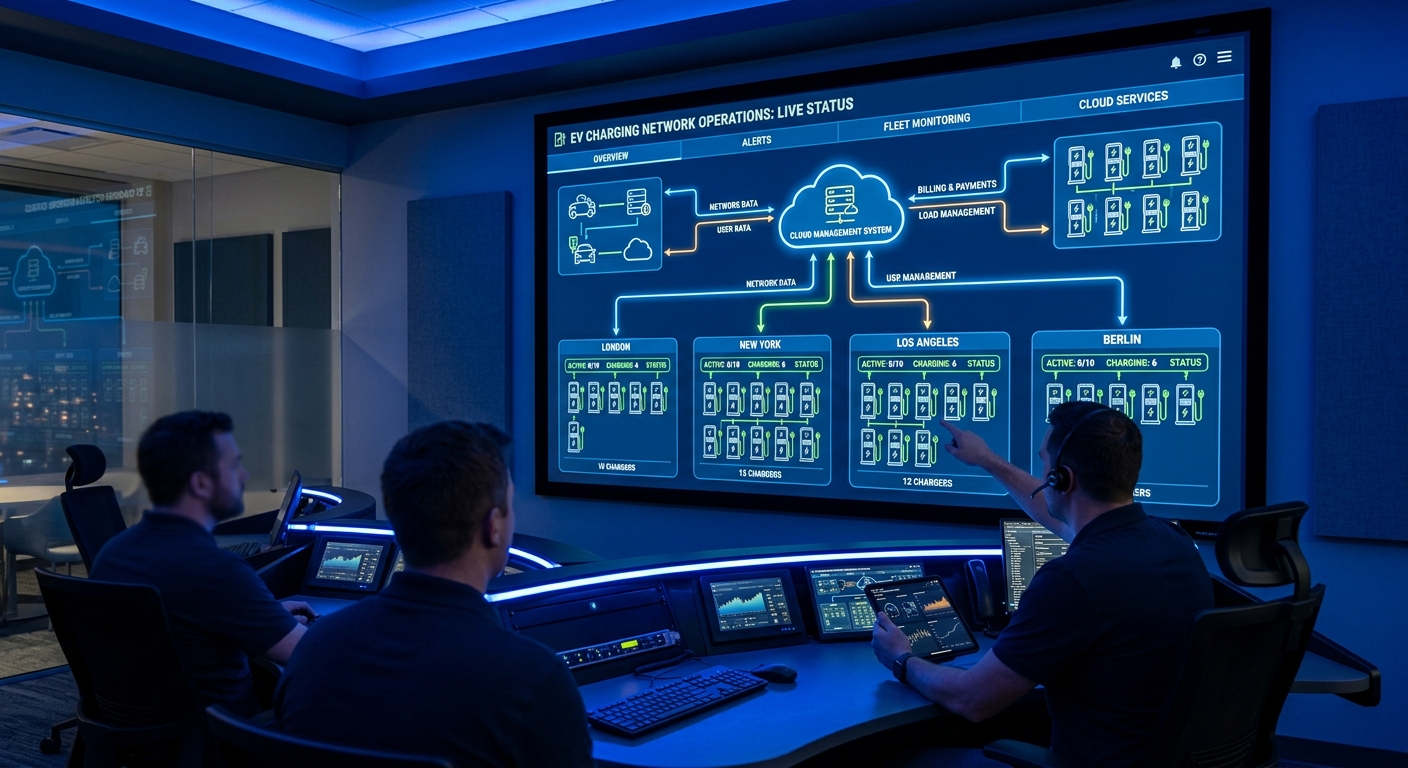
Network diagram showing EV chargers connected to a centralized cloud management system on a control room monitor
Security: Where OCPP 1.6 Has a Genuine Vulnerability
Here's a fact that should concern any CPO still running unpatched OCPP 1.6: the protocol's security is entirely optional. TLS encryption, client-side certificates, secure boot — none of it is mandated by the spec. Many 1.6 deployments run over unencrypted WebSocket connections, meaning transaction data, authorization tokens, and firmware commands travel in plaintext.
OCPP 2.0.1's Three Security Profiles
OCPP 2.0.1 introduces three mandatory security profiles:
Profile 1: Unsecured transport with basic HTTP authentication (minimum baseline)
Profile 2: TLS with server-side certificate
Profile 3: TLS with mutual authentication (client + server certificates)
For public-facing networks handling payment card data, Profile 3 is effectively required to meet PCI-DSS adjacent requirements. For private fleet depots behind corporate firewalls, Profile 2 typically suffices.
Real-World Impact
In 2025, several European charging networks reported man-in-the-middle attacks exploiting unencrypted OCPP 1.6 connections — attackers spoofed authorization responses to enable free charging. The fix wasn't a simple patch; it required hardware capable of TLS handshakes, which older 1.6-era controllers sometimes lacked. This is exactly the kind of technical debt that makes greenfield 2.0.1 deployment a no-brainer.
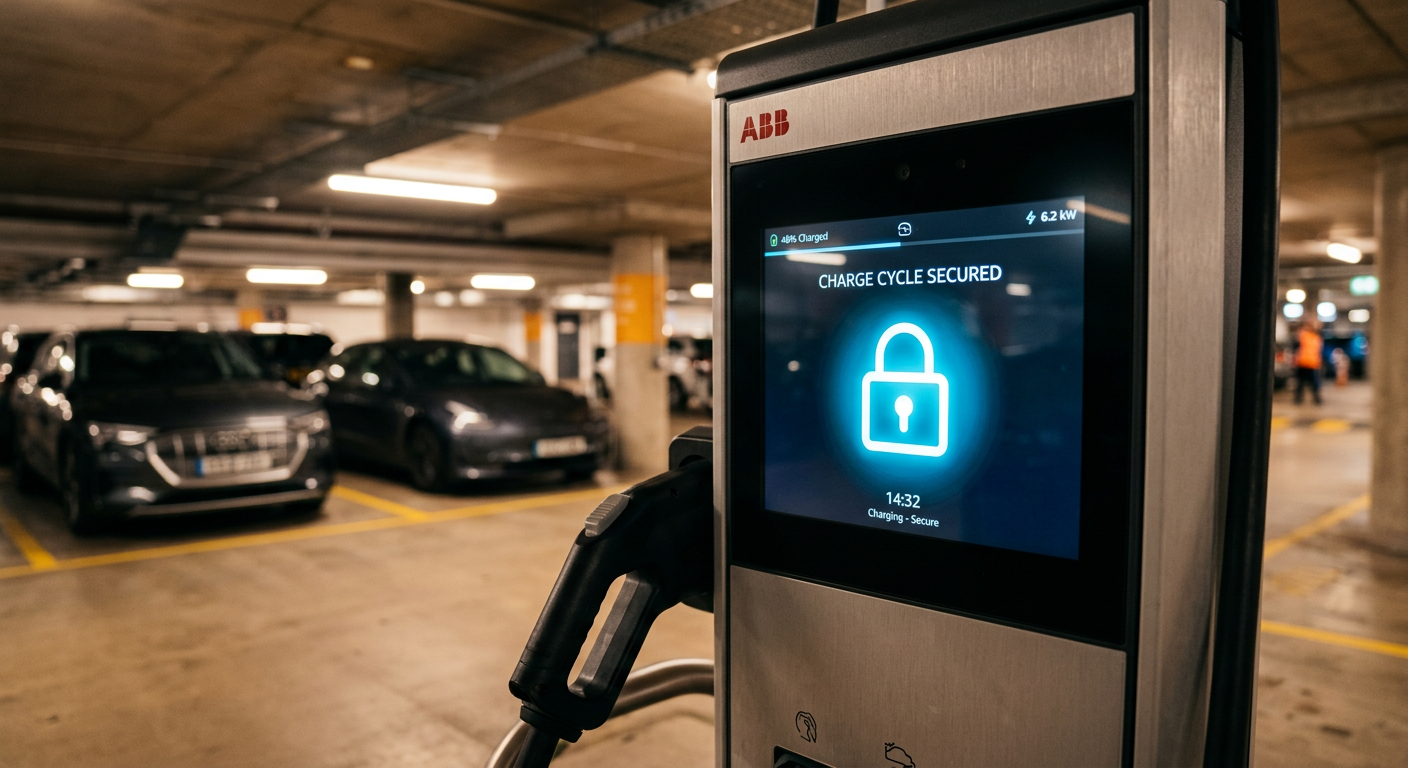
Secure digital lock icon on an EV charger touchscreen interface indicating encrypted OCPP communication
Smart Charging and ISO 15118: The Killer Feature Gap
OCPP 1.6 supports basic smart charging through charging profiles — you can set power limits, stack schedules, and define transaction-level constraints. It works. But it was designed before ISO 15118 Plug & Charge existed, before vehicle-to-grid was commercially viable, and before dynamic electricity tariffs became a standard grid-edge tool.
What 2.0.1 Adds
OCPP 2.0.1 natively integrates with ISO 15118-2 and 15118-20, enabling:
Plug & Charge: Automatic authentication via vehicle certificate — no RFID card, no app
Bidirectional power flow messaging: V2G and V2H scenarios with proper metering and authorization
Dynamic charging profiles: Real-time power adjustments based on grid signals, not just pre-set schedules
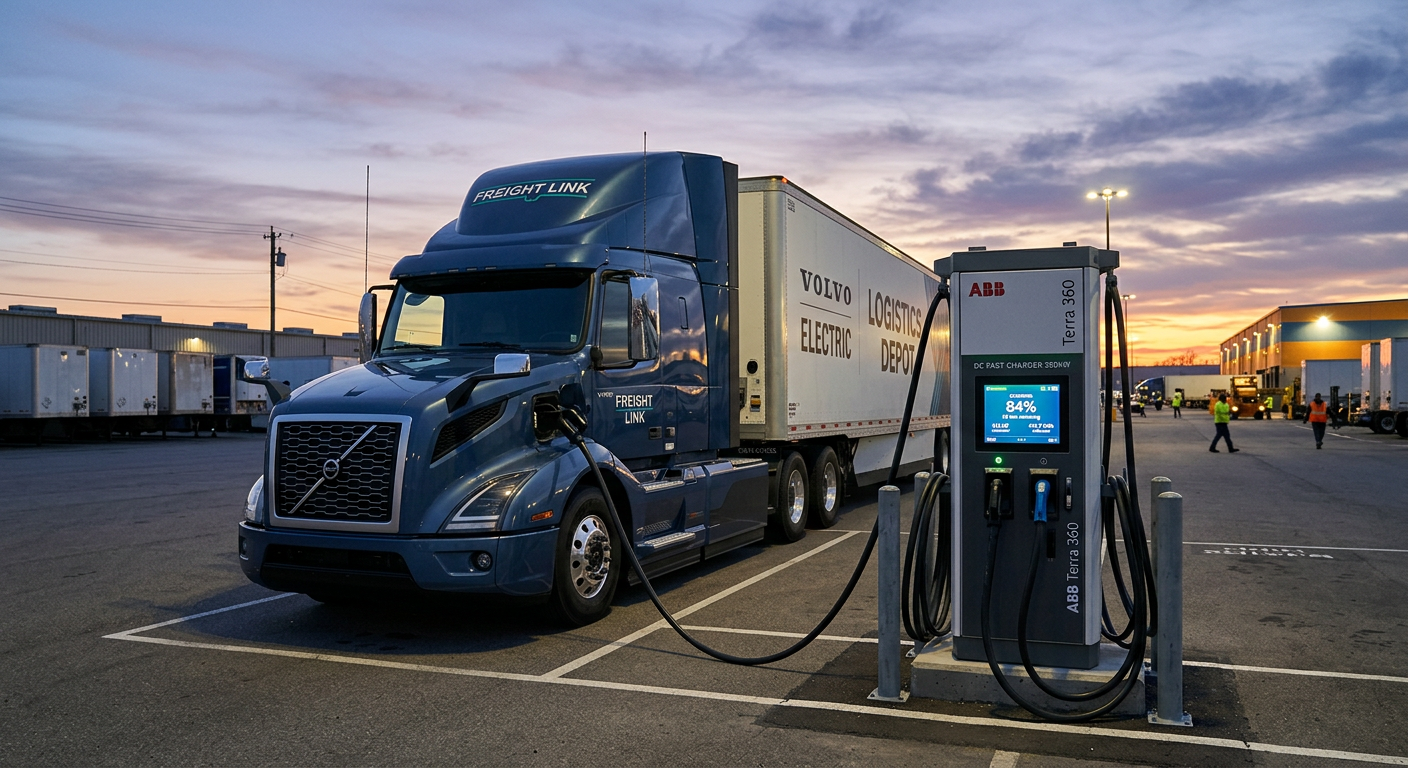
For a fleet operator running 50+ electric trucks on overnight depot charging, dynamic profiles mean the difference between a 500 kW grid connection and a 2 MW one. That's not a software preference — it's a six-figure infrastructure cost difference.
If you're evaluating electric truck charging stations or bus depot solutions, OCPP 2.0.1's smart charging capabilities directly impact your electrical infrastructure budget.
Electric truck connected to a DC fast charger at a fleet logistics depot during early morning
Head-to-Head Comparison Table
Here's the practical breakdown across the criteria that matter most for procurement and deployment decisions:
Criteria
OCPP 1.6
OCPP 2.0.1
Transport Layer
SOAP or WebSocket (JSON)
WebSocket (JSON) only
Security Model
Basic (optional TLS)
Mandatory TLS + security profiles
Device Management
Flat single-EVSE model
Multi-EVSE per charging station
Smart Charging
Basic profiles (TxProfile, Stack)
ISO 15118 integration, dynamic limits
Firmware Updates
Single-step update
Signed firmware, staged updates
Transaction Handling
Start/Stop only
Event-driven with cost transparency
Backend Ecosystem Maturity
Widely supported
Growing rapidly, some gaps
Best Fit
Legacy sites, simple AC installs
New builds, fleets, DC fast charging
The ecosystem maturity point deserves emphasis. While every major CSMS vendor now supports 2.0.1, some niche regional platforms and older white-label backends still only handle 1.6-J. Verify your backend compatibility before specifying hardware.
When OCPP 1.6 Still Makes Sense (Yes, Really)
Not every deployment needs the full 2.0.1 feature set. Here are legitimate scenarios where 1.6 remains defensible in 2026:
Small-Scale AC Installations
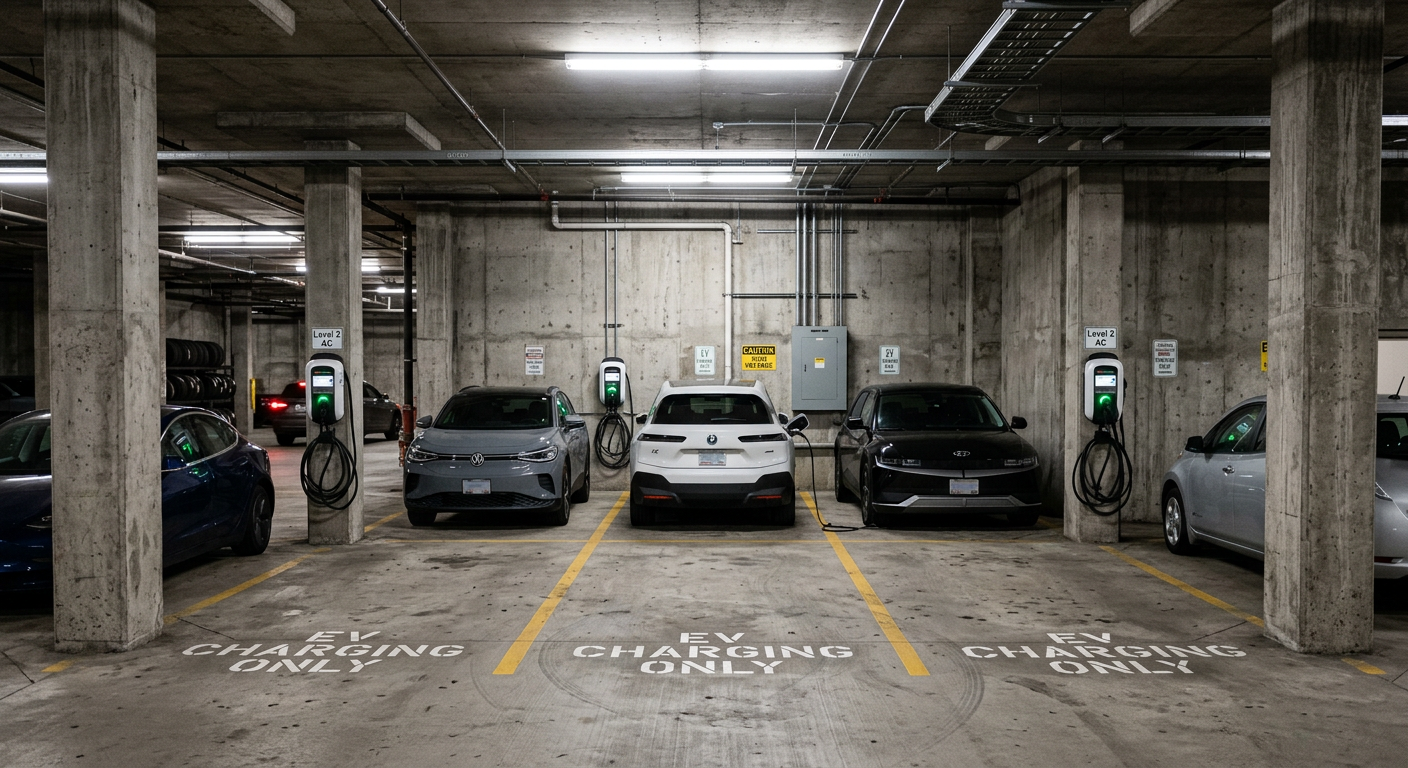
A property manager installing 10 Level 2 chargers in an apartment complex with simple RFID access and flat-rate billing doesn't need ISO 15118 or signed firmware updates. OCPP 1.6-J chargers are cheaper, the backend integration is proven, and the security risk profile for a private residential network behind a building firewall is low.
Brownfield Expansion
If you have 200 OCPP 1.6 chargers on a working CSMS and you're adding 20 more of the same model to the same site, introducing a second protocol version creates operational complexity without proportional benefit. The exception: if those 20 new units are DC fast chargers or serve a fleet with ISO 15118 vehicles, then 2.0.1 is worth the added integration effort.
Markets with Immature Backend Ecosystems
In some emerging EV markets, local CSMS providers haven't fully validated their 2.0.1 implementations. Deploying 2.0.1 hardware against a half-baked backend is worse than running stable 1.6. Always test end-to-end before committing.
Wall-mounted Level 2 AC EV chargers installed in an underground apartment parking garage
Firmware and Remote Management: The Operational Cost Angle
Every truck roll to manually update a charger costs $150–$400 depending on geography. Across a 500-unit network, even one firmware cycle per year adds up to six figures in field service costs. This is where OCPP 2.0.1's firmware management shines.
Signed Firmware and Staged Rollouts
OCPP 2.0.1 requires firmware packages to be cryptographically signed. The charger verifies the signature before applying the update — eliminating the risk of corrupted or malicious firmware being pushed to field units. It also supports staged updates: download first, install during a maintenance window, then report status.
OCPP 1.6's firmware update mechanism is simpler — download and install in one step, with minimal verification. It works for small networks where you can monitor each update manually. At scale, it's a liability.
Real-World Scenario
A European CPO managing 1,200 DC chargers across 8 countries reported that moving from OCPP 1.6 to 2.0.1 reduced their annual firmware-related truck rolls by 73%. The signed firmware mechanism caught three corrupted packages that would have bricked units under the old protocol. At their scale, that translated to roughly €180,000 in avoided service costs per year.
Transaction Handling and Revenue Assurance
OCPP 1.6 uses a simple StartTransaction/StopTransaction model. The charger tells the backend when charging begins and ends, along with meter values. If the connection drops mid-session, you might lose granular consumption data — and with it, accurate billing.
Event-Driven Transactions in 2.0.1
OCPP 2.0.1 replaces this with TransactionEvent messages — a stream of timestamped events (started, updated, ended) that the charger queues locally and delivers when connectivity resumes. This means:
No lost meter data during network outages
Real-time cost updates pushed to the driver's app mid-session
Precise energy attribution for sites with multiple tariff zones
For any operator billing per-kWh (which is increasingly mandated by weights-and-measures regulations), this isn't a nice-to-have — it's a compliance requirement. The business strategy for charging networks must account for revenue leakage from poor transaction handling.
Migration Strategy: How to Move from 1.6 to 2.0.1 Without Breaking Everything
Most operators won't do a big-bang migration — nor should they. Here's the pragmatic approach:
Step 1: Dual-Protocol Backend
Ensure your CSMS supports both 1.6-J and 2.0.1 simultaneously. Most modern platforms (SteVe, Open E-Mobility, commercial options like Driivz or Ampeco) handle this natively. New chargers connect via 2.0.1; legacy units stay on 1.6 until end-of-life.
Step 2: Prioritize High-Value Sites
Migrate DC fast charging hubs, fleet depots, and public highway corridors first — these benefit most from enhanced security, smart charging, and transaction resilience. Low-utilization AC destination chargers can wait.
Step 3: Specify 2.0.1 in All New Procurement
This is non-negotiable for 2026. Any charger you buy today should support OCPP 2.0.1 at minimum, even if you initially connect it via 1.6 for backend compatibility. Hardware that only speaks 1.6 is already technically obsolete.
Step 4: Validate Before Deployment
OCPP compliance testing through the Open Charge Alliance's certification program matters. A charger claiming “OCPP 2.0.1 support” on a datasheet may only implement core profiles. Confirm which feature profiles (smart charging, ISO 15118, reservation, etc.) are actually certified.
What to Demand from Your OEM Partner
Whether you're a distributor stocking chargers or a fleet operator specifying equipment, here's what your hardware supplier should guarantee regarding OCPP support:
OCA certification — not just “compatible” but formally tested and listed
Security Profile 2 minimum — with Profile 3 available for public networks
Over-the-air protocol upgrades — if a charger ships with 1.6-J today, can it be upgraded to 2.0.1 via firmware?
Local authorization cache — critical for sites with unreliable connectivity
Transparent feature profile support — which optional 2.0.1 profiles are implemented?
At evaisun, our OEM and ODM charger platforms ship with OCPP 2.0.1 as the default configuration, with 1.6-J fallback available for legacy backend integration. We test against multiple CSMS platforms before release — because protocol compliance on paper means nothing if the handshake fails in the field.
If you're evaluating charger hardware for your network — whether that's Level 2 AC units from 7kW to 22kW or high-power DC stations — protocol support should be near the top of your specification checklist, right after electrical safety certification.
The Bottom Line: Match Protocol to Purpose
OCPP 2.0.1 wins on security, scalability, smart charging, and future-proofing. There's no technical argument for choosing 1.6 in a new deployment. But technology decisions don't happen in a vacuum — they happen within existing infrastructure, budget constraints, and backend ecosystems.
Here's your decision framework:
New network, any scale: OCPP 2.0.1, no exceptions
Expanding an existing 1.6 network with the same use case: Continue 1.6, but ensure new hardware is 2.0.1-capable for future migration
Adding DC fast chargers or fleet depot infrastructure: OCPP 2.0.1, even if the rest of your network runs 1.6
Operating in a market with immature 2.0.1 backend support: Deploy 2.0.1-capable hardware, connect via 1.6 temporarily, upgrade when the backend catches up
The protocol is the nervous system of your charging network. Get it right, and every subsequent decision — from load management to billing to grid integration — becomes easier. Get it wrong, and you'll be paying for truck rolls, lost revenue, and security patches for years.
Subscribe the newsletter to get updated to news and promotions
Cookies give you a personalized experience,Сookie files help us to enhance your experience using our website, simplify navigation, keep our website safe and assist in our marketing efforts. By clicking "Accept", you agree to the storing of cookies on your device for these purposes. Click "Adjust" to adjust your cookie preferences.For more information, review our Cookie Policy