Understanding EV Charging: Types, Speeds, and Infrastructure
Home / Blog / Guidelines / Understanding EV Charging: Types, Speeds, and Infrastructure
06 Mar, 2026
Electric Vehicle Charging
EV Charging
EV charging levels
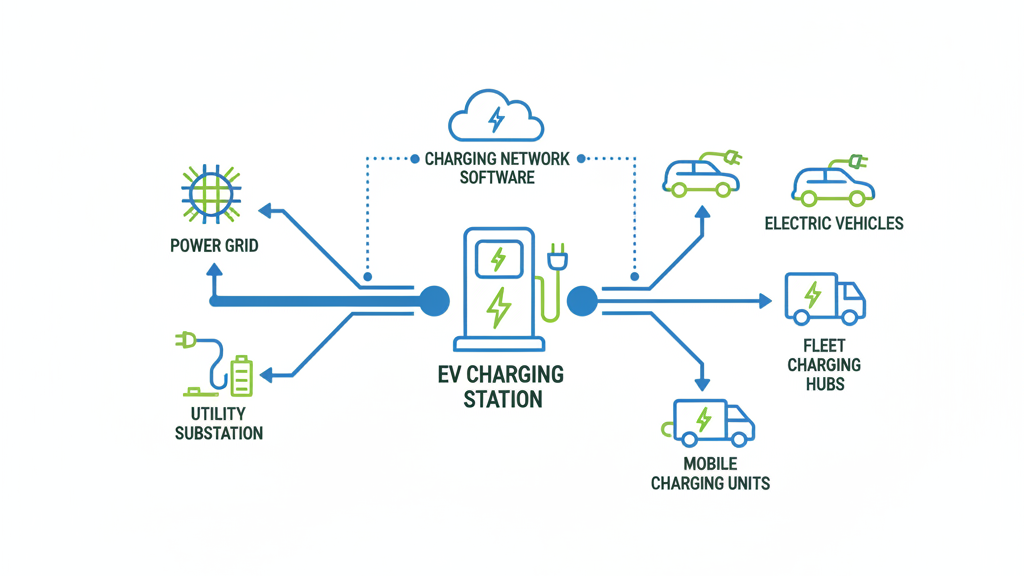
Electric vehicle charging is the process of transferring electrical energy from the power grid into an EV battery using controlled charging equipment. Unlike refueling gasoline vehicles, EV charging involves coordinated interaction between the electrical grid, charging station, vehicle charging system, and battery management system.
Understanding EV charging helps drivers, businesses, and fleet operators choose the right charging equipment, estimate charging time, and plan charging infrastructure effectively.
This guide explains EV charging from a complete system perspective, including how charging works, charging types, speed factors, connectors, and real-world charging infrastructure.
What Is EV Charging
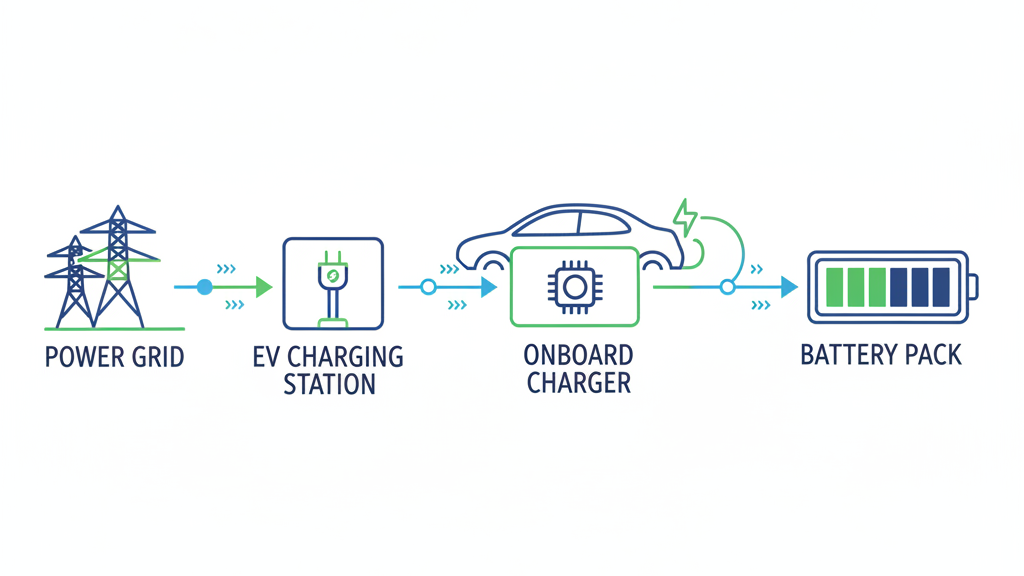
EV charging is the process of supplying electrical energy to recharge an electric vehicle battery. The charging system includes four main components:
Electrical grid
Charging station
Vehicle charging system
Battery pack
Electricity flows from the grid through charging equipment and into the vehicle battery in a controlled and safe manner.
How EV Charging Works Step by Step
EV charging follows a controlled sequence managed by both the charger and the vehicle.
Step 1: Power Comes from the Electrical Grid
EV charging begins with electricity supplied by the local power grid. This electricity is delivered through distribution infrastructure to the charging station, where it becomes available for vehicle charging.
Step 2: The Charging Station Delivers Controlled Power
The charging station regulates:
Voltage
Current
Safety communication
The charger does not force power into the vehicle. The vehicle determines how much power it can safely receive.
Step 3: Power Is Converted for Battery Use
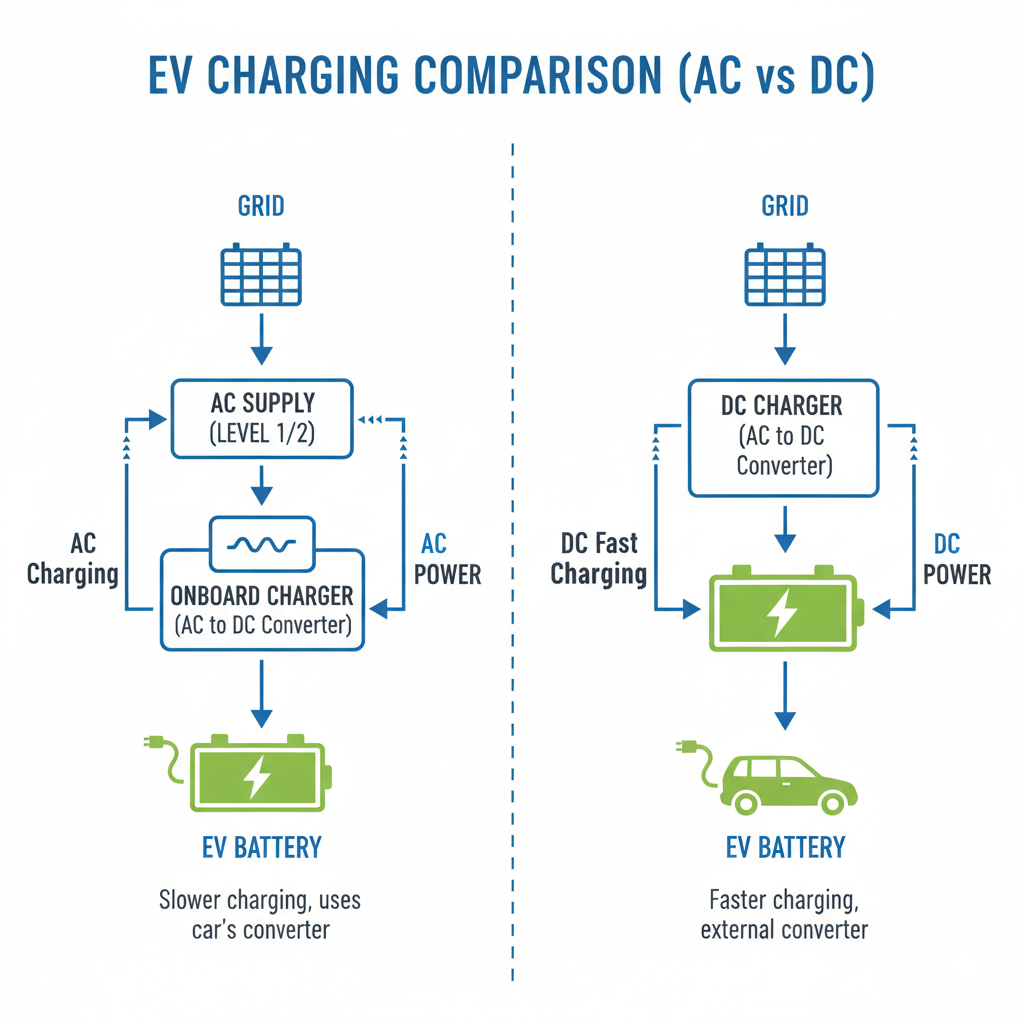
Electric vehicle batteries store energy as direct current (DC), while the power grid supplies alternating current (AC). Before charging the battery, this electricity must be converted from AC to DC.
AC charging – Conversion happens inside the vehicle through the onboard charger.
DC fast charging – Conversion happens inside the charging station and power is delivered directly to the battery.
Because the conversion occurs outside the vehicle, DC fast charging enables much higher charging speeds.
Step 4: Battery Management System Controls Charging
The battery management system monitors:
Battery temperature
Charge level
Charging safety
This ensures efficient and safe charging.
EV Charging Levels Explained
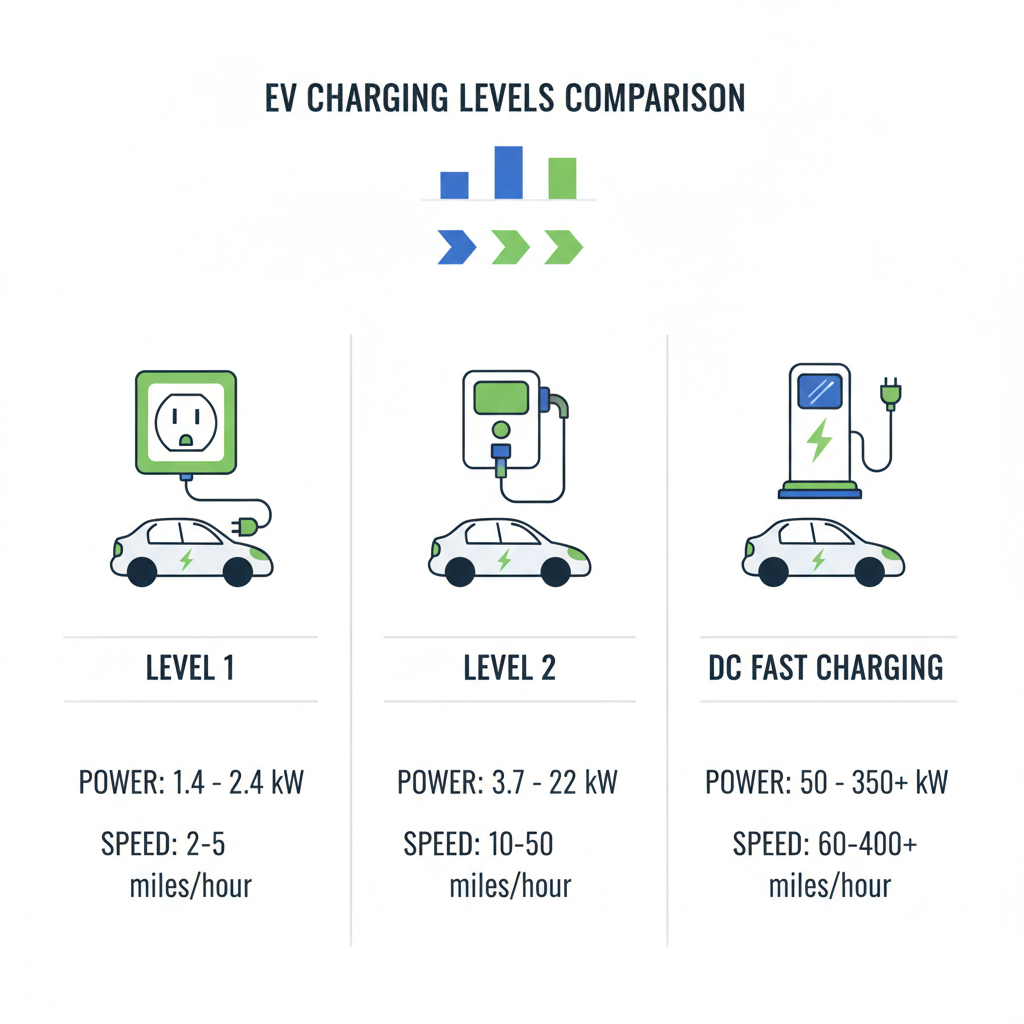
EV charging is divided into three levels based on power output and charging speed.
Level 1 Charging
Power output: 1 to 2 kW Charging speed: 3 to 5 miles of range per hour
Best for:
Residential overnight charging
Low daily driving needs
Advantages:
No special installation required
Widely accessible
Level 2 Charging
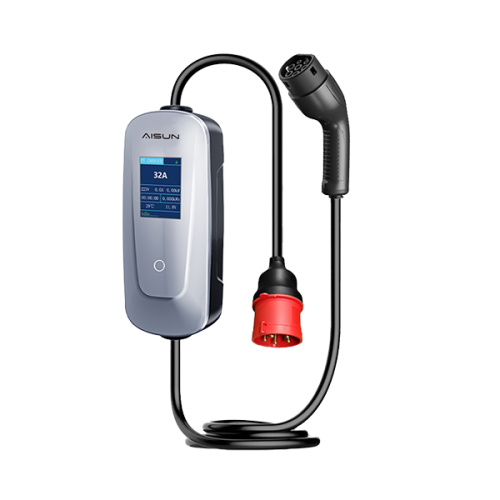
Power output: 7 to 22 kW Charging speed: 20 to 75 miles of range per hour
Best for:
Home charging
Workplace charging
Commercial charging locations
Level 2 charging is the most common daily charging solution.
DC Fast Charging
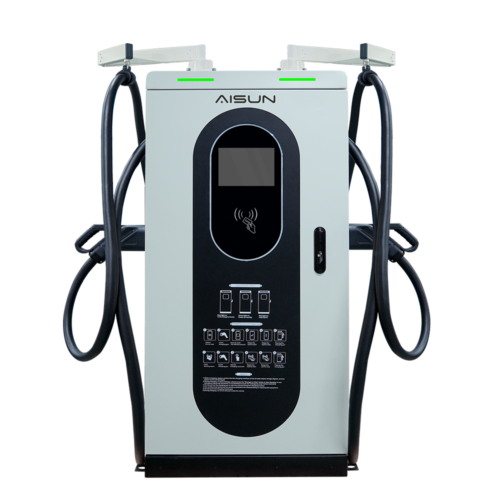
Power output: 50 to 350 kW Charging speed: 100 to 250 miles of range in 20 to 40 minutes
Best for:
Highway travel
Public charging stations
Fleet charging operations
DC fast charging provides rapid charging capability.
AC vs DC Charging: What’s the Difference
The main difference is where power conversion occurs.
Feature
AC Charging
DC Fast Charging
Power conversion location
Inside vehicle
Inside charger
Charging speed
Moderate
Fast
Typical use
Home, workplace
Public fast charging
DC charging allows faster charging because it bypasses onboard charger limitations.
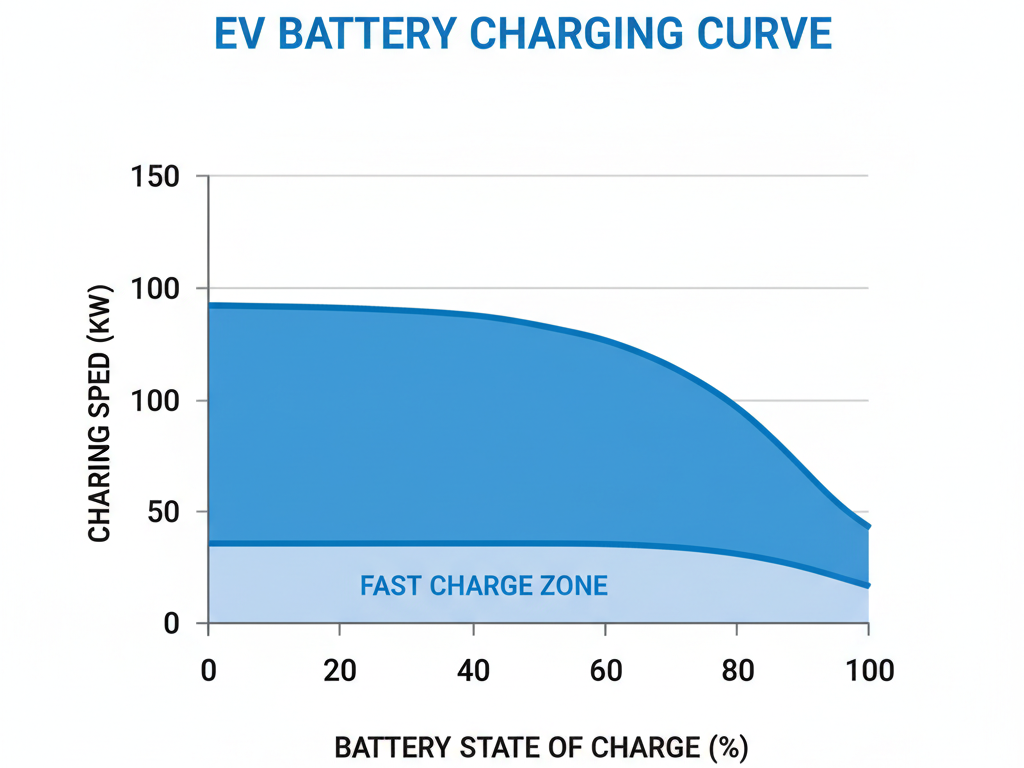
Why Charging Speed Slows After 80%
Charging speed naturally slows as battery charge level increases.
This occurs because:
Battery resistance increases
Heat generation increases
Battery protection systems reduce charging speed
Charging is fastest between 10% and 80% battery level. This protects battery lifespan and safety.
What Determines EV Charging Speed
EV charging speed is influenced by several technical and environmental factors. Even when using a high-power charger, the actual charging rate depends on both the vehicle and charging conditions.
Key factors that determine charging speed include:
Vehicle charging capability Every electric vehicle has a maximum charging rate determined by its onboard systems. If a vehicle can only accept 100 kW, it will not charge faster even when connected to a 350 kW charger.
Charger power output Charging stations have different power levels. Higher-power chargers can deliver energy faster, but the vehicle must support that charging rate.
Battery state of charge (SOC) Charging is typically fastest when the battery is at a lower charge level. As the battery approaches full capacity, the charging speed gradually decreases.
Electrical infrastructure capacity In some locations, charging power may be limited by the available electrical supply or grid capacity.
EV Charging Connectors Explained
Charging connectors provide safe electrical connection. Common connector types include:
CCS
NACS
CHAdeMO
Type 1 and Type 2
Connector compatibility depends on vehicle design and region.
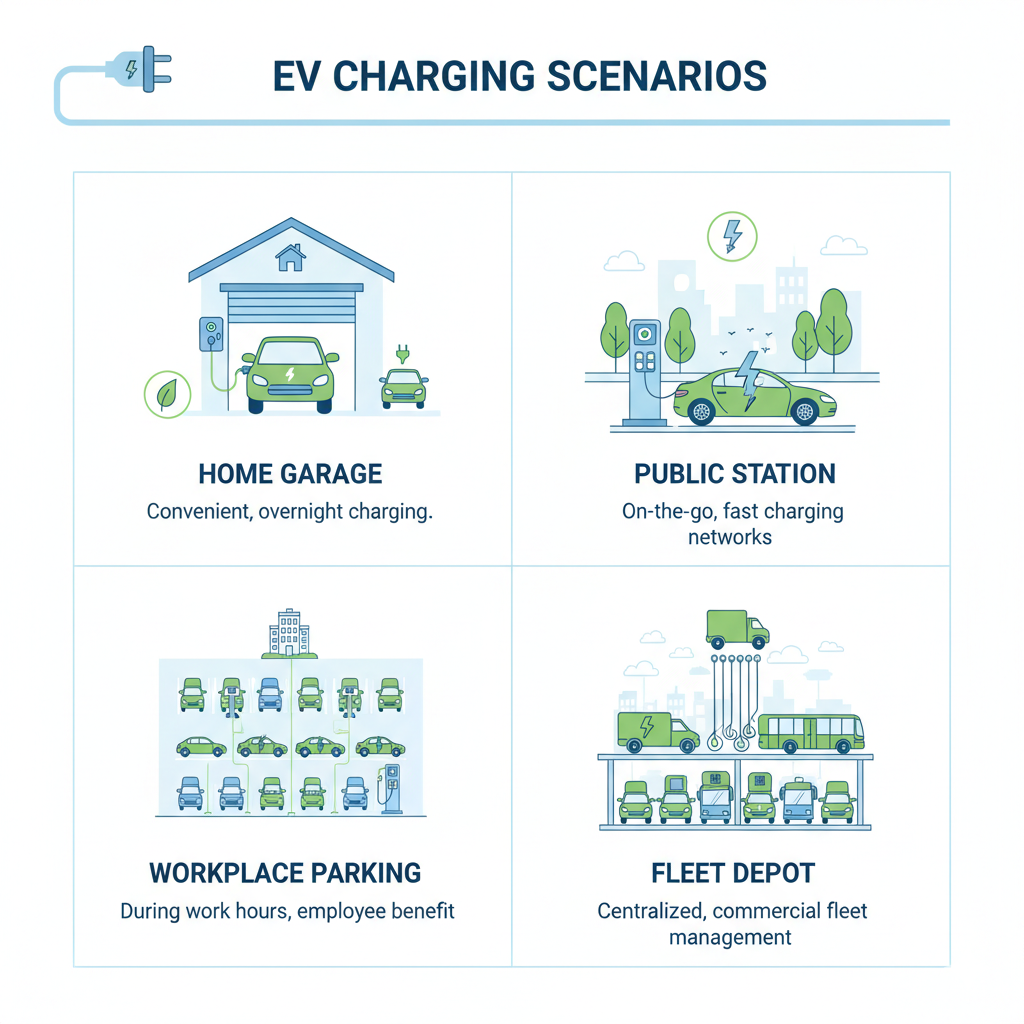
Where EV Charging Happens in Real Life
EV charging occurs across several environments.
Home Charging
Home charging is the primary charging method for most EV drivers. Benefits:
Convenient
Cost-effective
Overnight charging capability
Public Charging
Public charging supports long-distance travel and urban charging needs. Locations include:
Parking areas
Retail locations
Highway charging stations
Workplace Charging
Workplace charging enables electric vehicles to recharge during working hours at offices or company parking facilities. This allows drivers to extend their daily driving range conveniently while their vehicles remain parked throughout the workday.
Fleet Charging
Fleet charging supports commercial electric vehicle operations. Used in:
Delivery fleets
Commercial fleets
Service fleets
Mobile EV Charging
Mobile charging provides flexible charging without fixed infrastructure. Used for:
EV charging technology continues advancing. Future developments include:
Faster charging speeds
Expanded infrastructure
Flexible charging deployment
Improved charging accessibility
Conclusion
EV charging connects the power grid, charging equipment, vehicle systems, and battery management technology. Understanding charging levels, speed, and infrastructure helps drivers and businesses plan charging more effectively. As EV adoption grows, charging technology and infrastructure will continue to improve.
Subscribe the newsletter to get updated to news and promotions
Cookies give you a personalized experience,Сookie files help us to enhance your experience using our website, simplify navigation, keep our website safe and assist in our marketing efforts. By clicking "Accept", you agree to the storing of cookies on your device for these purposes. Click "Adjust" to adjust your cookie preferences.For more information, review our Cookie Policy