EV Charger Types Explained: Levels, Connectors, and Real-World Use
Home / Blog / Guidelines / EV Charger Types Explained: Levels, Connectors, and Real-World Use
28 Jan, 2026
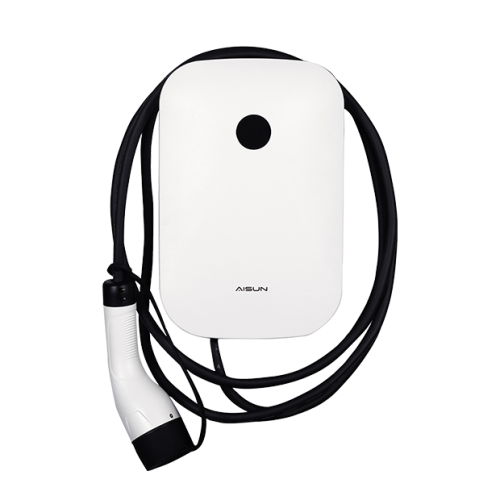
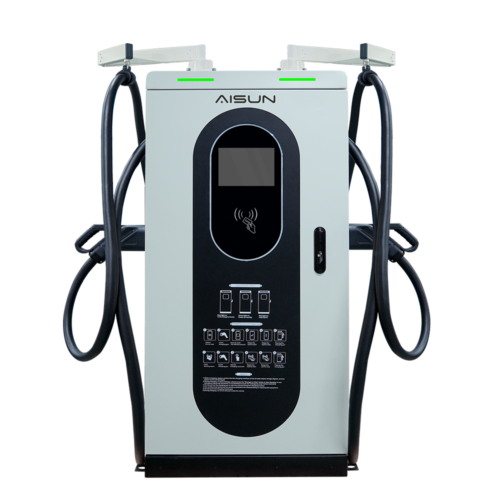
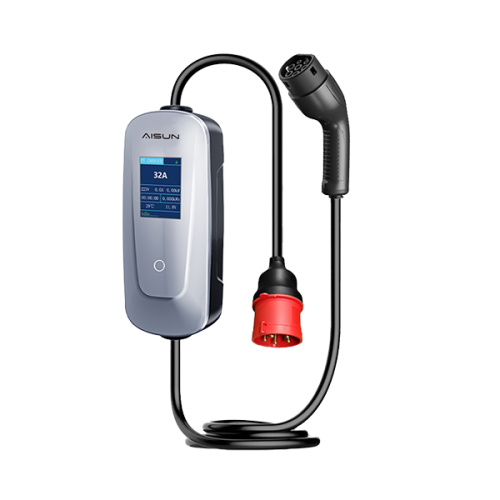
EV charger types
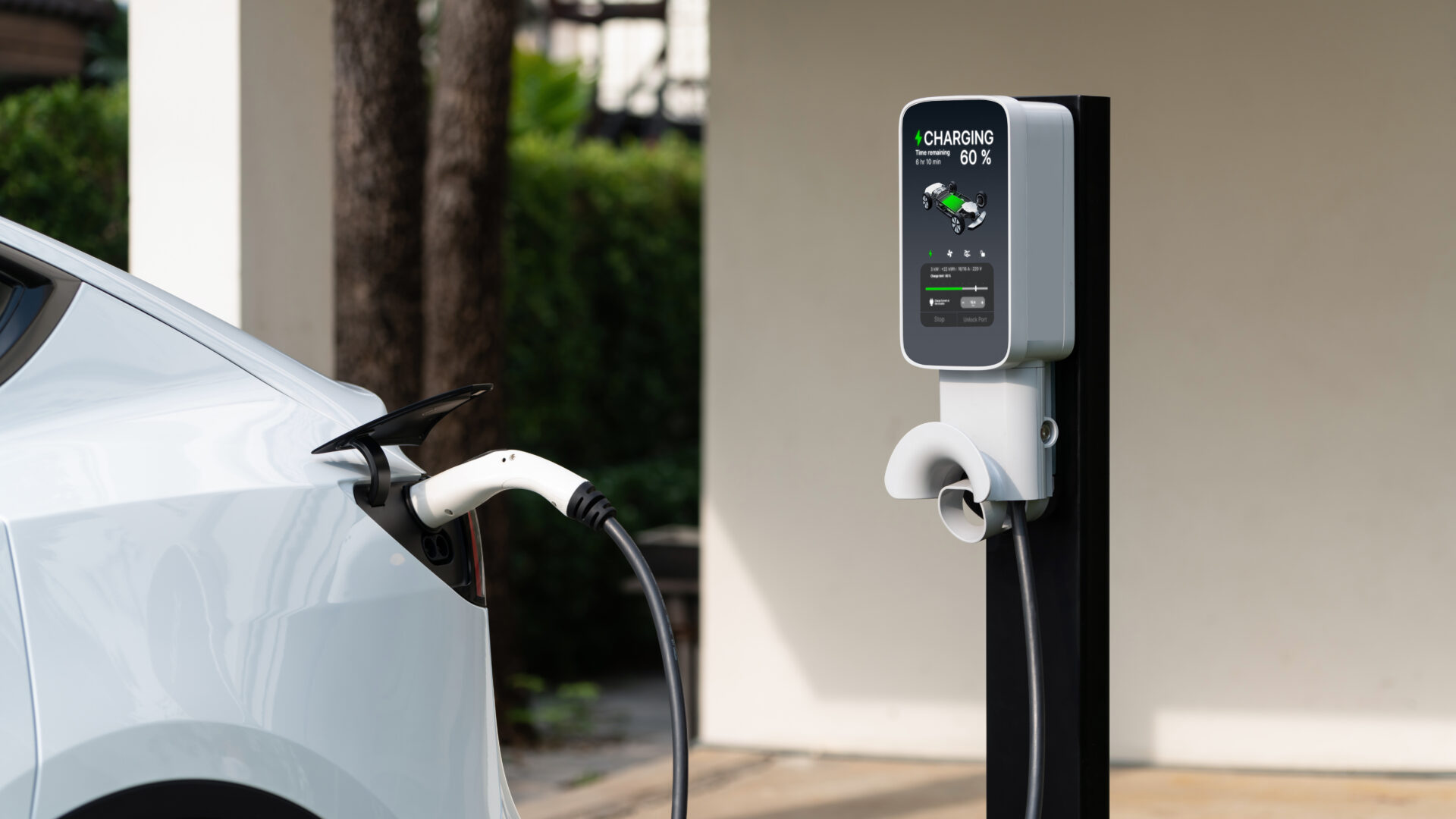
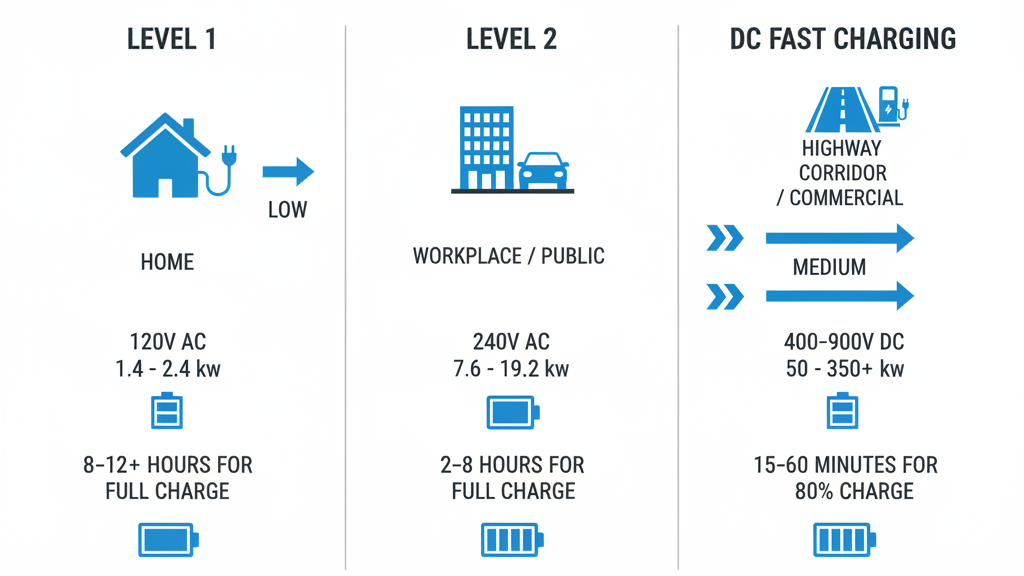
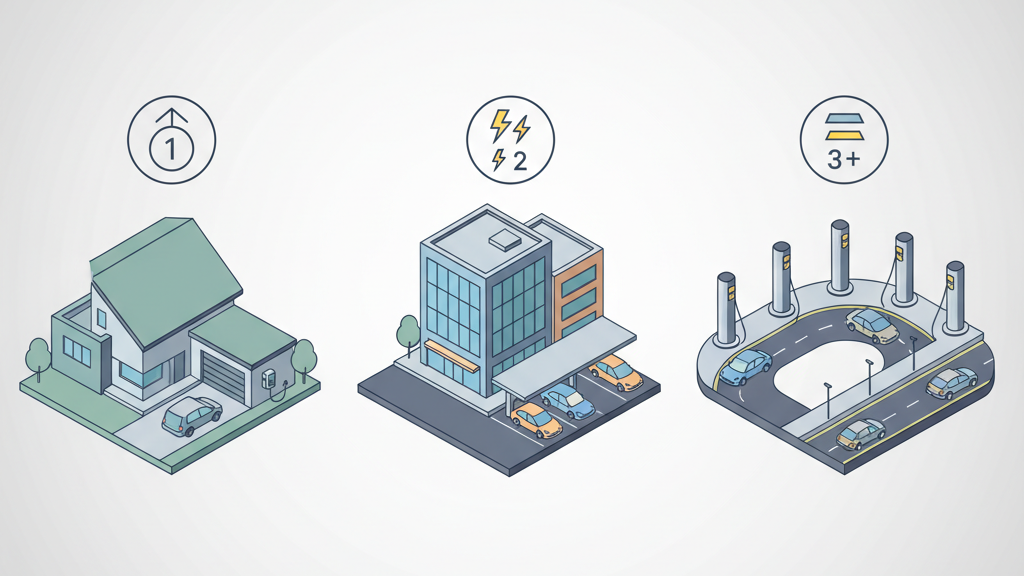
EV charging levels
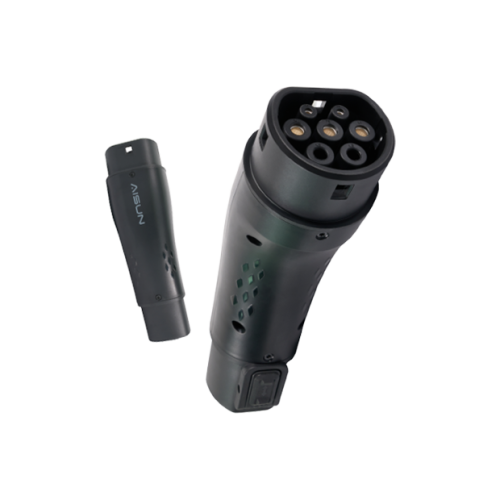
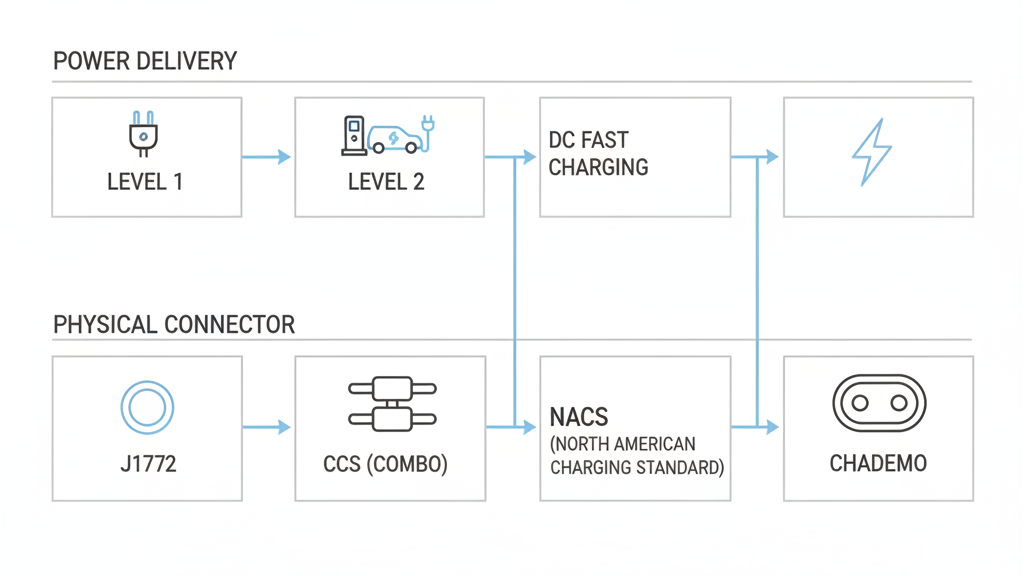
EV connector types
When people search EV charger types, they often mean two different things:
Charging level: how much power the charger can deliver
Connector type: what plug fits the vehicle inlet and charging station cable
Once you separate these two ideas, the topic becomes clear. Charging level drives charging power and time, while connector type determines compatibility. This guide explains both and shows how to choose the right approach for residential, workplace, and public charging environments.
How EV Charger Types Are Classified
Many pages mix charging levels and connector standards together. A cleaner way to think about EV charger types is:
Charging level = speed category Level 1, Level 2, DC fast charging
Connector type = plug standard Type 1, Type 2, CCS
A charger can be Level 2 and still offer different connectors depending on the region and station design. Likewise, two stations may use the same connector family but deliver very different charging power.
EV charger types by charging level
Charging level
Power delivery
Best-fit environments
Typical dwell time
Key planning notes
Level 1
AC
Residential sites with light daily demand
Long, steady charging windows
Lowest infrastructure requirement, often too slow for higher daily mileage or short overnight recovery windows
Level 2
AC
Residential, workplace, destination public sites
Multi-hour dwell time
Most common installed option, practical daily routine, requires safe code-compliant electrical installation
Corridor sites, public hubs, fleet turnaround sites
Short stop, high turnover
Performance depends on vehicle charge acceptance, battery state and temperature, and station power allocation; charging often tapers at higher state of charge
EV charger types by connector
Connector type
Charging current
Typical charging level
Regional prevalence
Planning considerations
Type 1
AC
Level 1 / Level 2
Common in some markets
Primarily used for AC charging; compatibility depends on vehicle inlet and regional standards
Type 2
AC
Level 2
Widely used in many regions
Common choice for AC charging infrastructure; supports shared residential, workplace, and destination sites
Supports DC fast charging; site power capacity and connector availability drive real-world performance
Connector type determines whether the charging interface physically and electrically matches the vehicle. Planning should prioritize connector compatibility at key sites, then evaluate charging level and available power capacity.
CCS is commonly used for DC fast charging, depending on the region.
A site may provide multiple cables and connector options. Planning should always start with connector compatibility, then evaluate charging level and site power capacity.
Choosing the right EV charger type for your situation
Residential charging
A typical residential approach is straightforward:
Most common installed choice: Level 2
Works for lighter demand profiles: Level 1
Not typical for daily residential routine: DC fast charging
How to decide
If daily energy demand is moderate to high and overnight recovery matters, Level 2 is usually the practical choice.
If daily demand is low and dwell time is long, Level 1 may be sufficient.
What to check
Electrical service capacity and panel headroom
Circuit availability and installation requirements
Hardwired versus plug-in configuration based on local code and site conditions
Workplace charging
Workplace charging is most effective when it matches typical parking duration and expected utilization:
Best match for most sites: Level 2
Less common: Level 1 unless dwell time is long and demand is low
Use-case driven: DC fast charging for high turnover or operational needs
Why Level 2 fits
Vehicles are typically parked for hours
Charging can be distributed across the workday
Infrastructure cost and charging performance align well for shared use
Public and corridor charging
Public charging generally falls into two operational patterns:
Destination charging: Level 2 for longer stops
Corridor and high-turnover charging: DC fast charging for quick replenishment
Planning guidance
Destination sites benefit from Level 2 where vehicles dwell for meaningful periods.
Corridor sites prioritize DC fast charging where rapid throughput is required.
Connector availability at these locations is often the deciding factor for site selection and route reliability.
Common misconceptions about EV charger types
A fast charger is fast for every vehicle
Charging speed is limited by the vehicle, the battery condition, and the station’s available power.
The same plug means the same charging speed
Connector type indicates fit, not power. Charging level and station power capability drive speed.
Higher kW always saves time
Charging power typically tapers as state of charge increases. The time benefit depends on the charging window and the vehicle’s charging curve.
Level 2 is “slow”
Level 2 is designed for dependable daily charging during hours-long dwell time, which is why it is widely used for residential and workplace charging.
Quick decision guide
Choose Level 1 when demand is low and dwell time is long.
Choose Level 2 for dependable daily charging at residential and workplace sites.
Use DC fast charging where rapid turnaround and throughput matter.
Confirm connector compatibility first, then evaluate charging level and site power capacity.
FAQ
What is the best EV charger type for residential charging? For many residential charging scenarios, Level 2 provides the most practical balance of charging speed and daily usability, assuming the electrical infrastructure supports it.
Are EV charger types the same as EV connector types? No. Charger type commonly refers to Level 1, Level 2, or DC fast charging. Connector type refers to the plug standard such as Type 1, Type 2, or CCS.
Can an adapter solve connector mismatches? In some cases, yes, depending on vehicle support, station policies, and approved adapter options. Use only supported solutions and follow applicable guidance.
Why does DC fast charging slow down at higher state of charge? Charging power often reduces as the battery fills to protect the battery and manage heat, so peak rates usually occur earlier in the session.
Summary
EV charger types become straightforward once two ideas are separated: charging level and connector type. Level 1 and Level 2 support routine AC charging, while DC fast charging supports rapid replenishment for public and corridor use. Connector compatibility determines whether charging access is available, and charging level plus site power determine what performance is realistic.
Understanding these differences helps planners, operators, and site owners select charging equipment that matches real power demand, connector compatibility, and usage patterns.
Subscribe the newsletter to get updated to news and promotions
Cookies give you a personalized experience,Сookie files help us to enhance your experience using our website, simplify navigation, keep our website safe and assist in our marketing efforts. By clicking "Accept", you agree to the storing of cookies on your device for these purposes. Click "Adjust" to adjust your cookie preferences.For more information, review our Cookie Policy